"Accretion"
"Accretion"
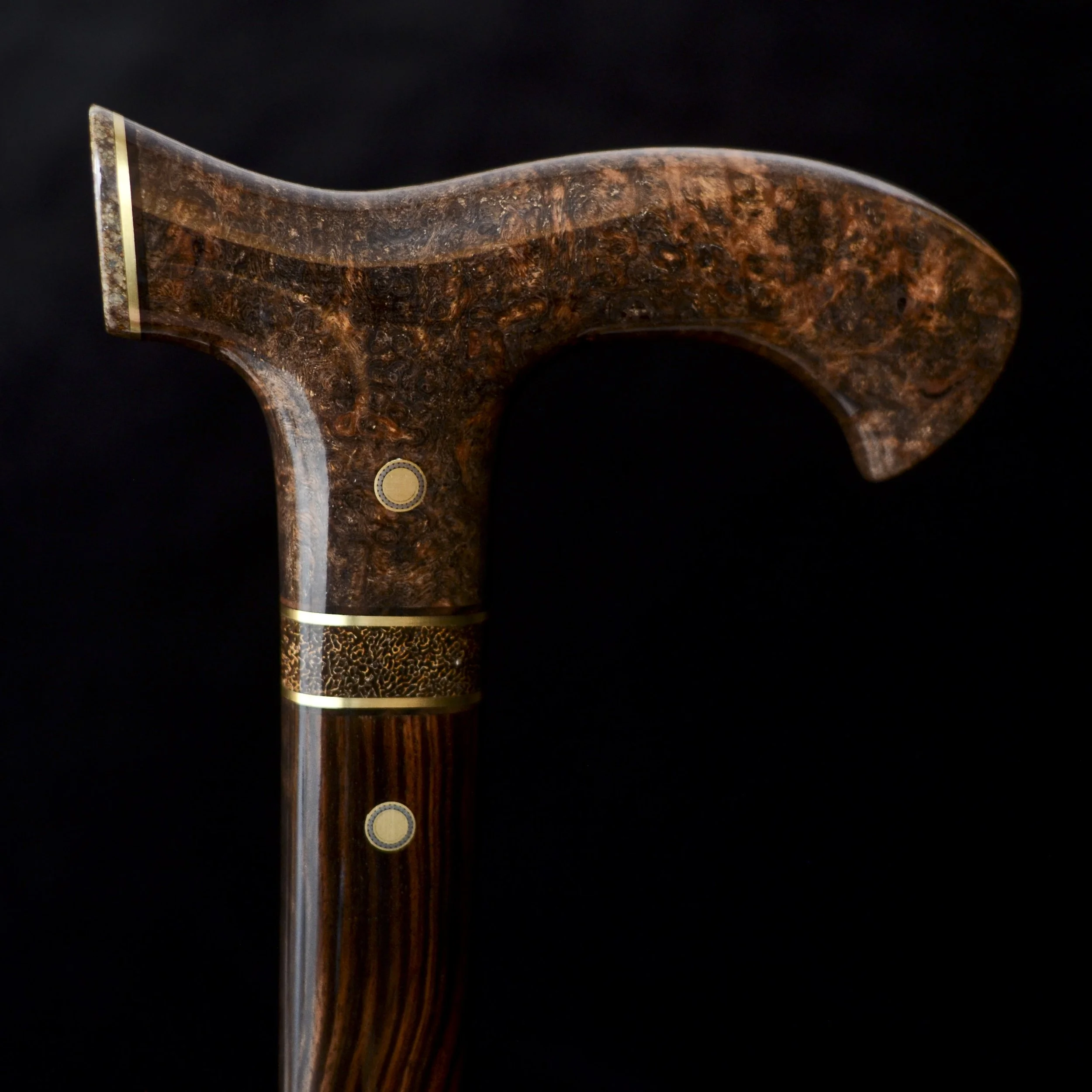
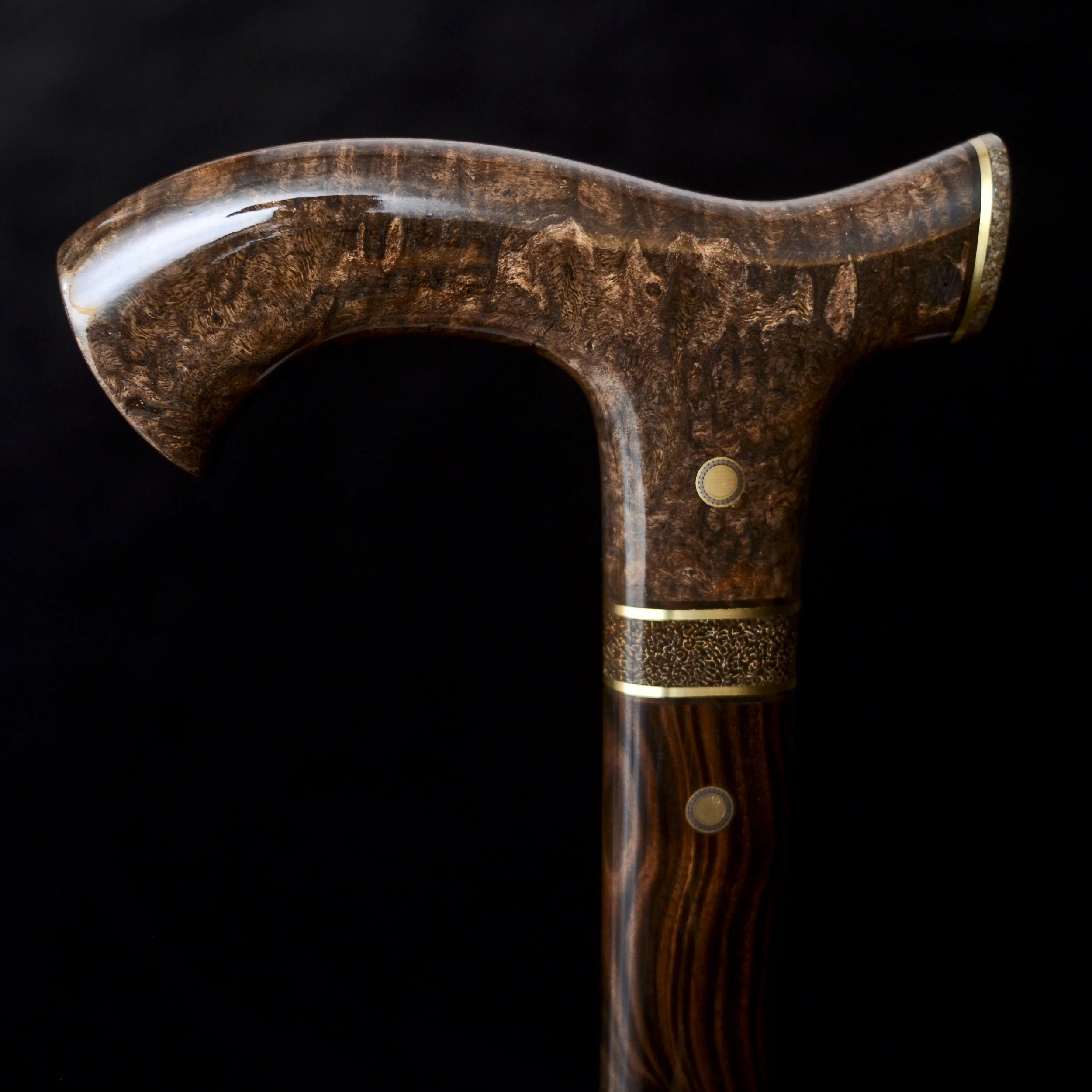
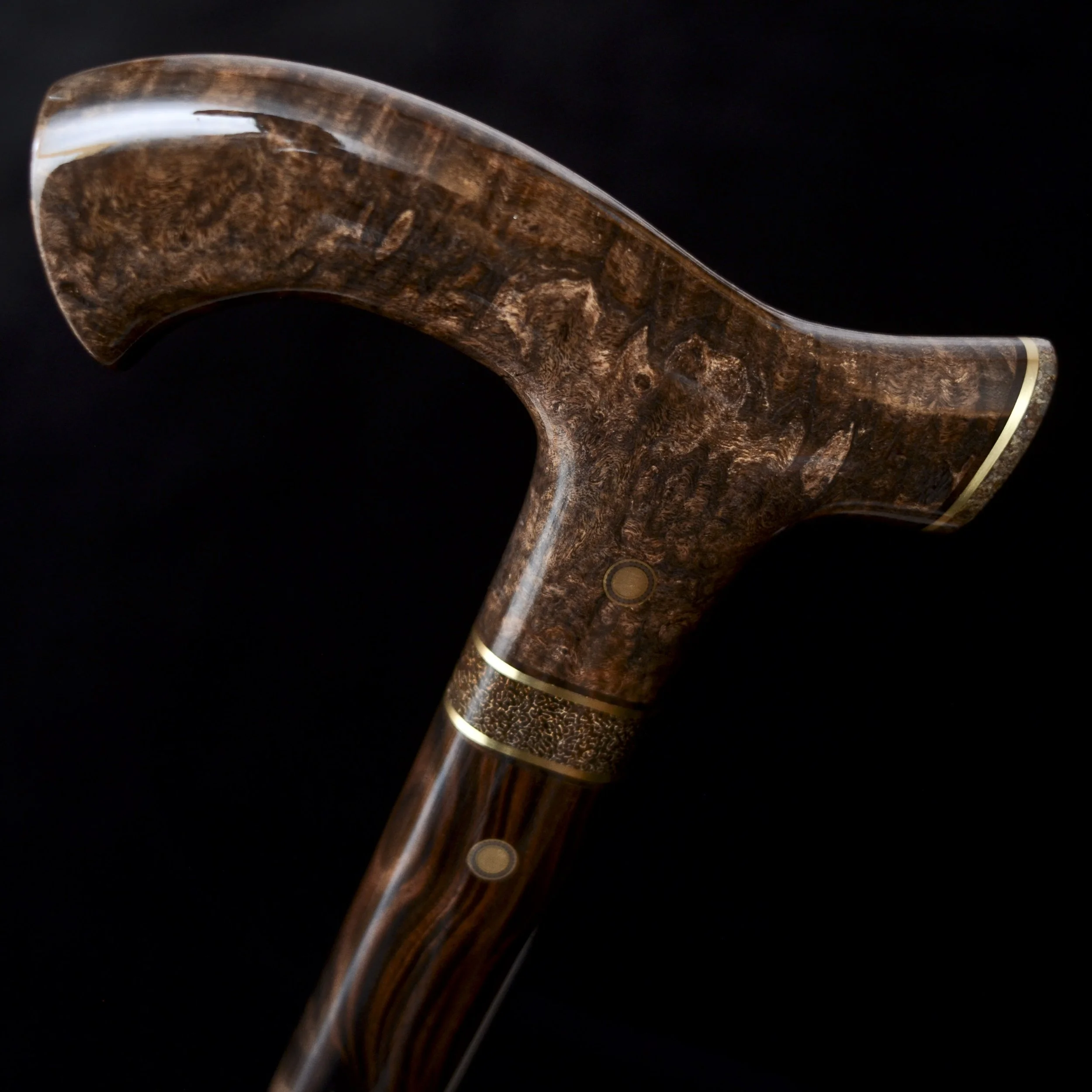
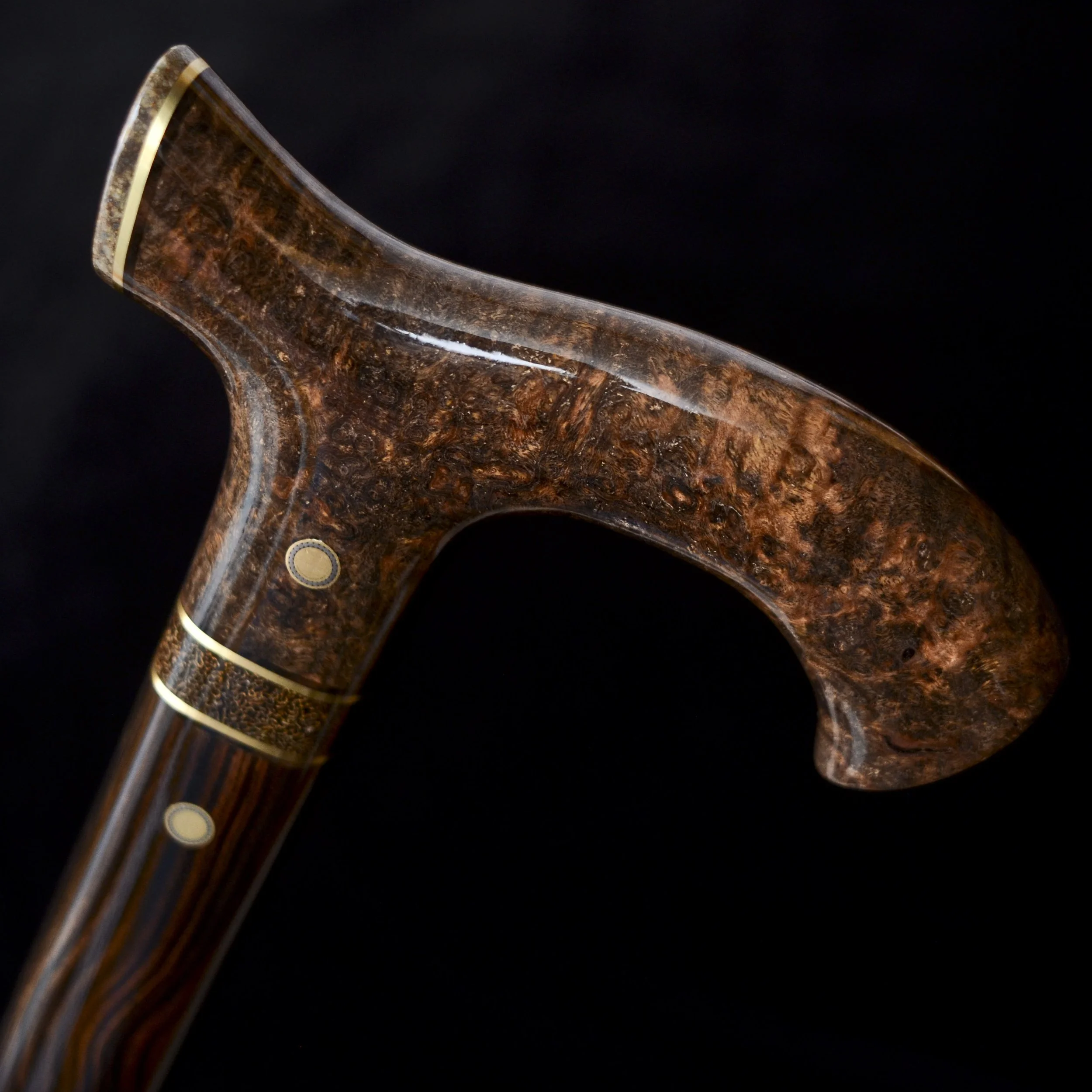
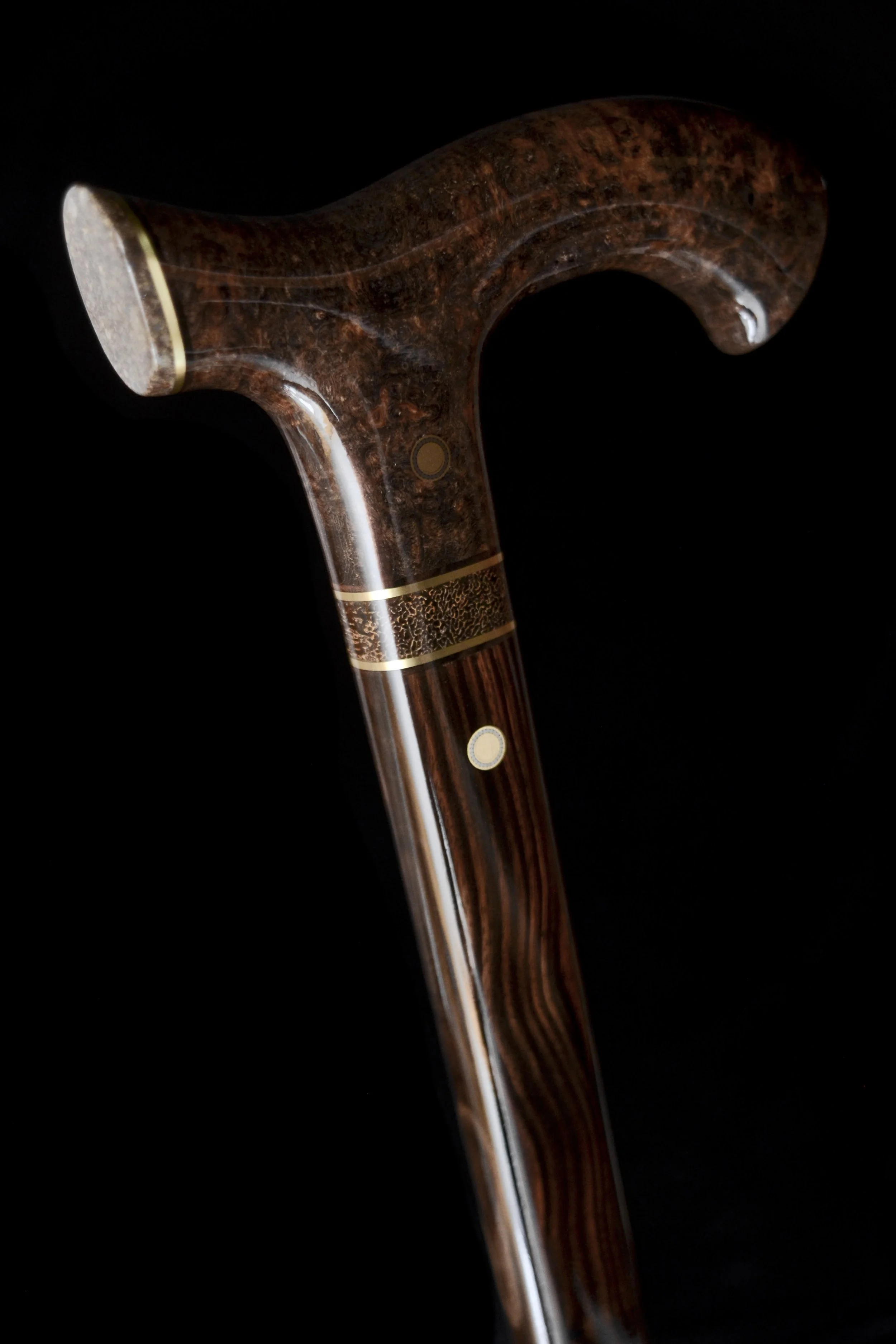
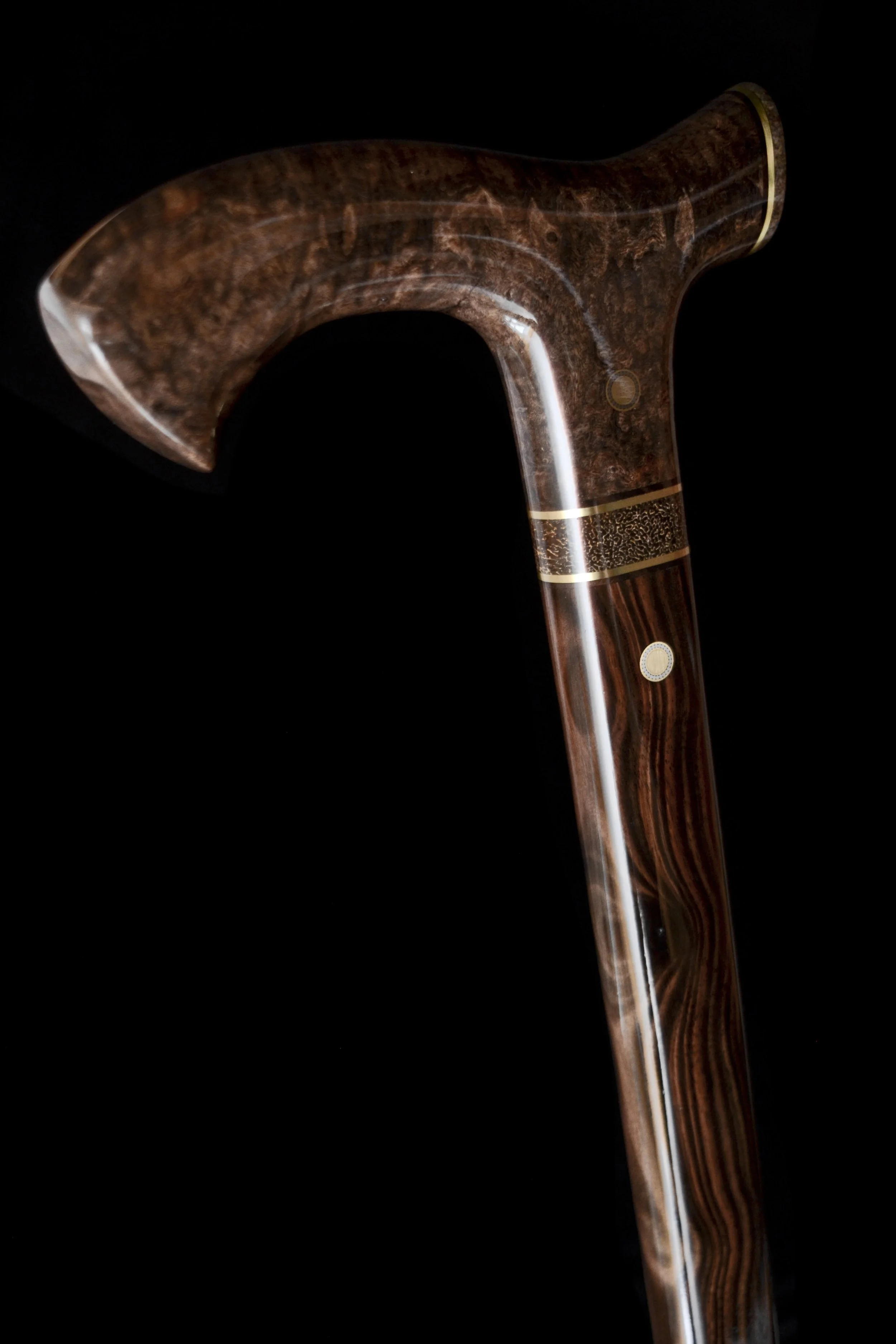
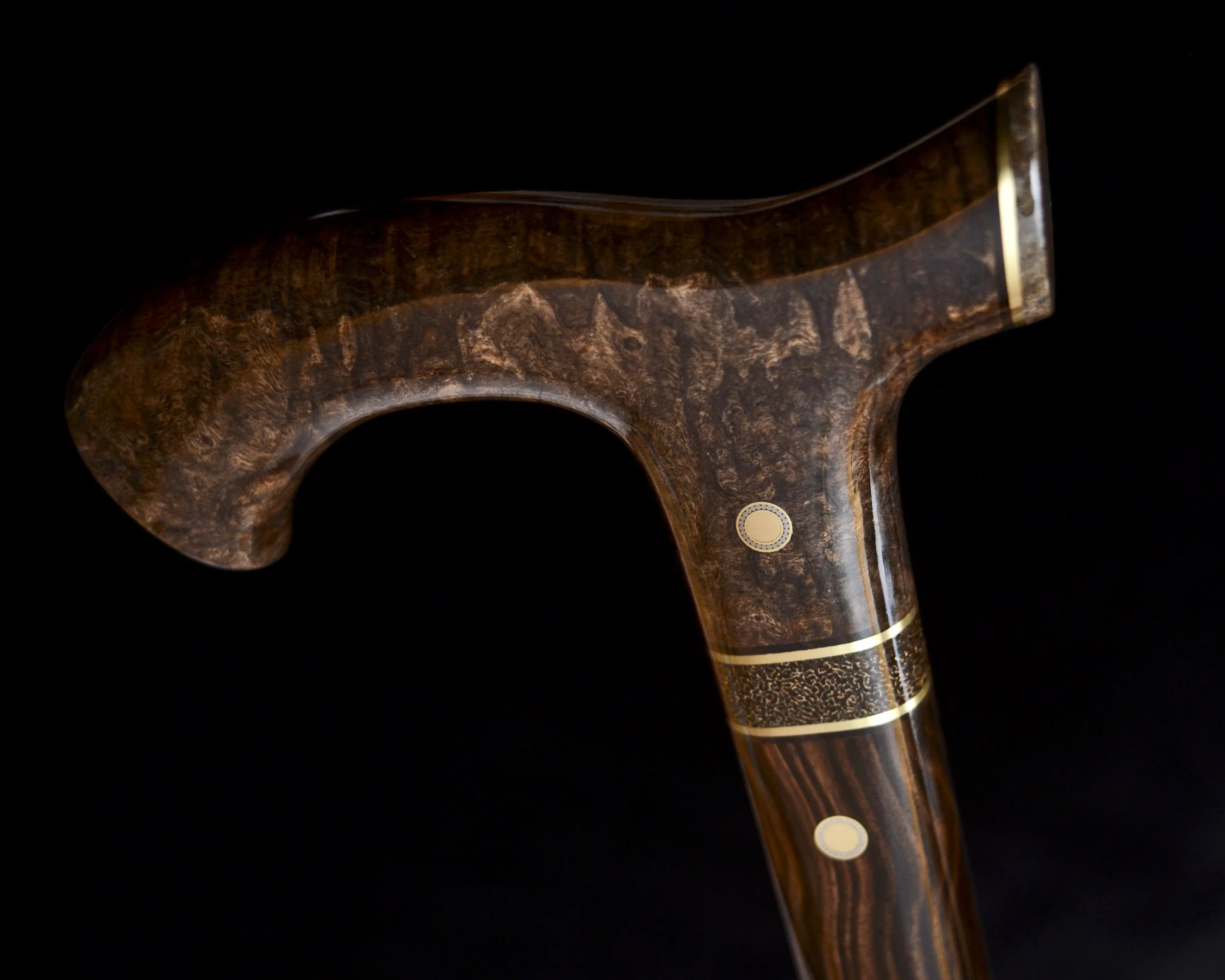
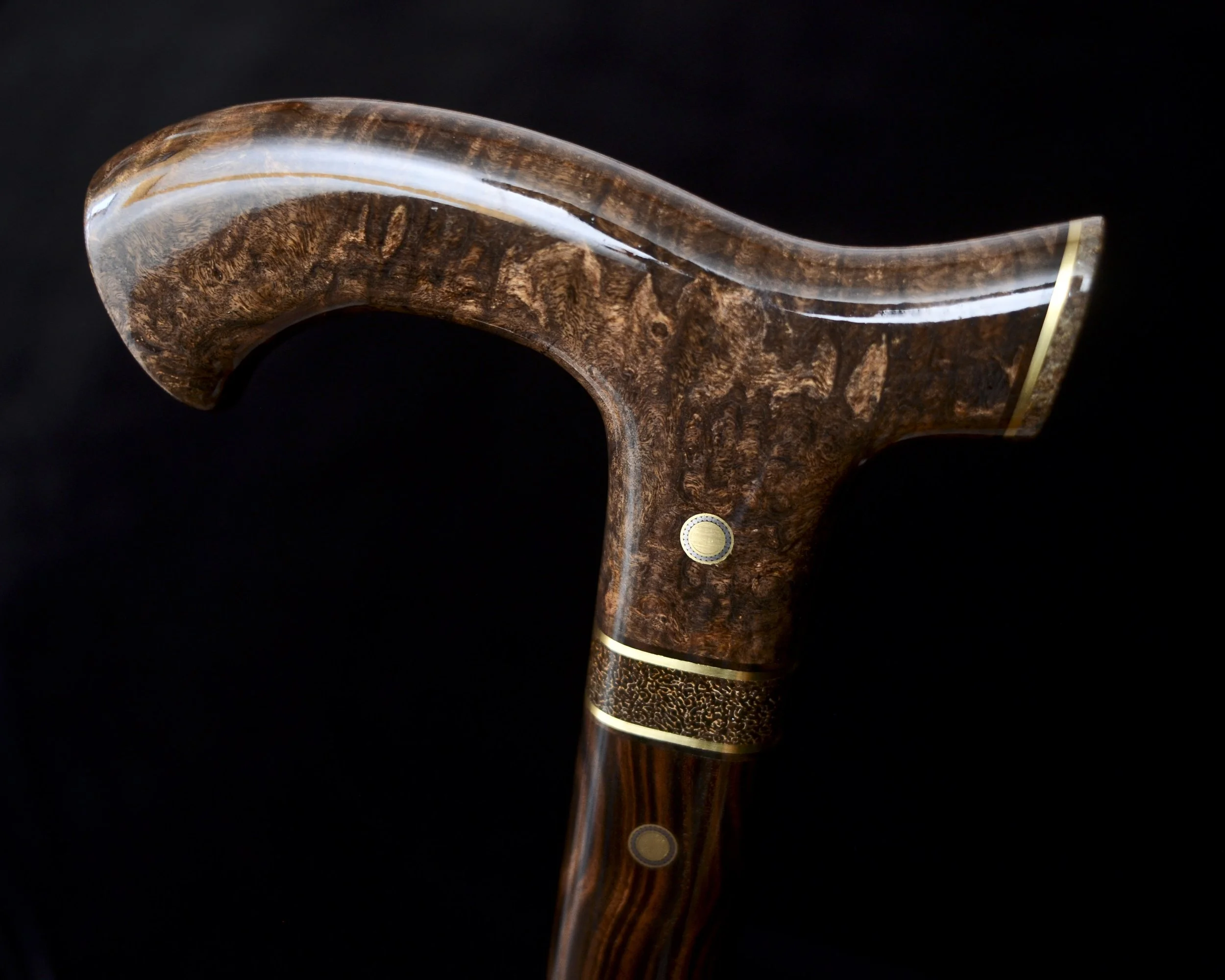
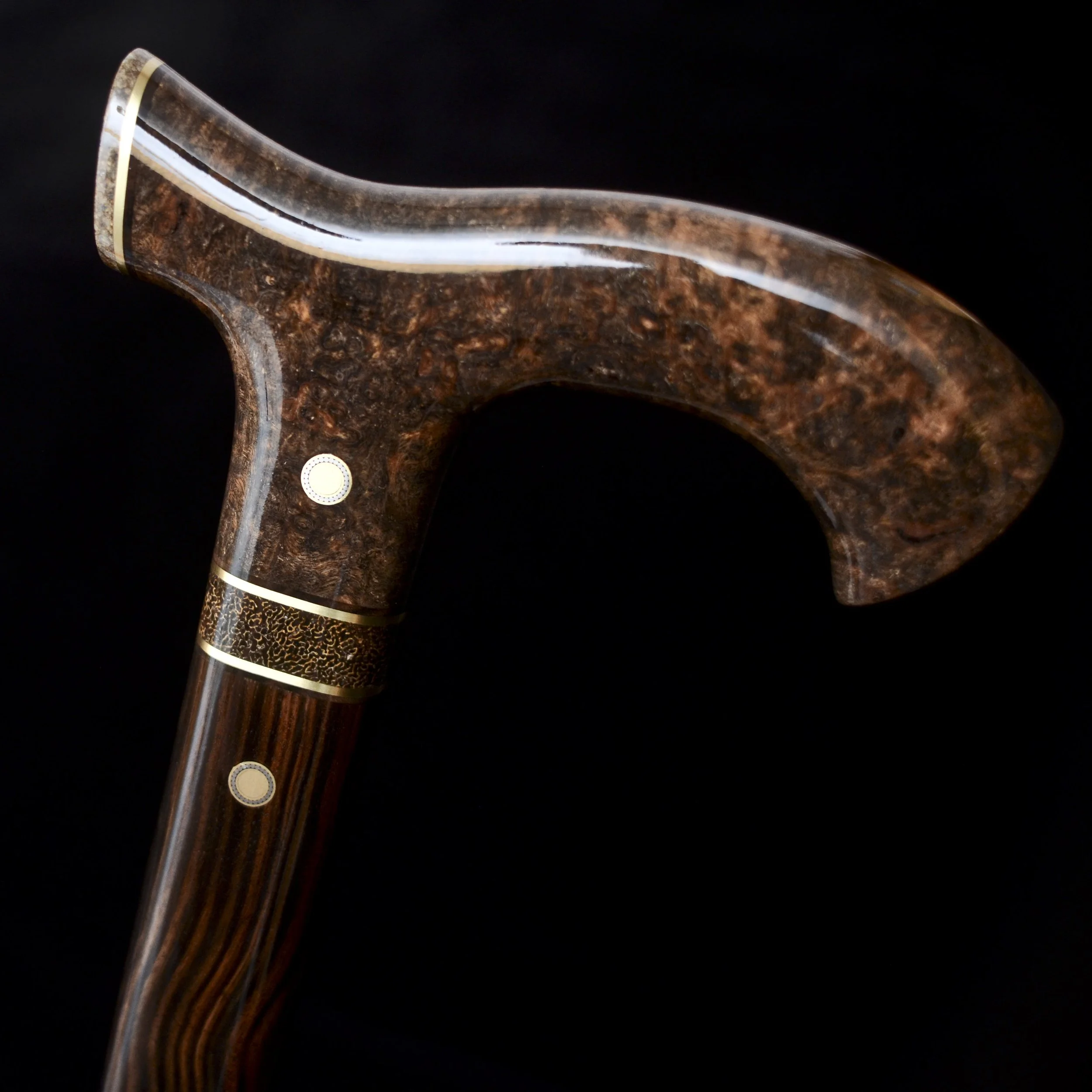
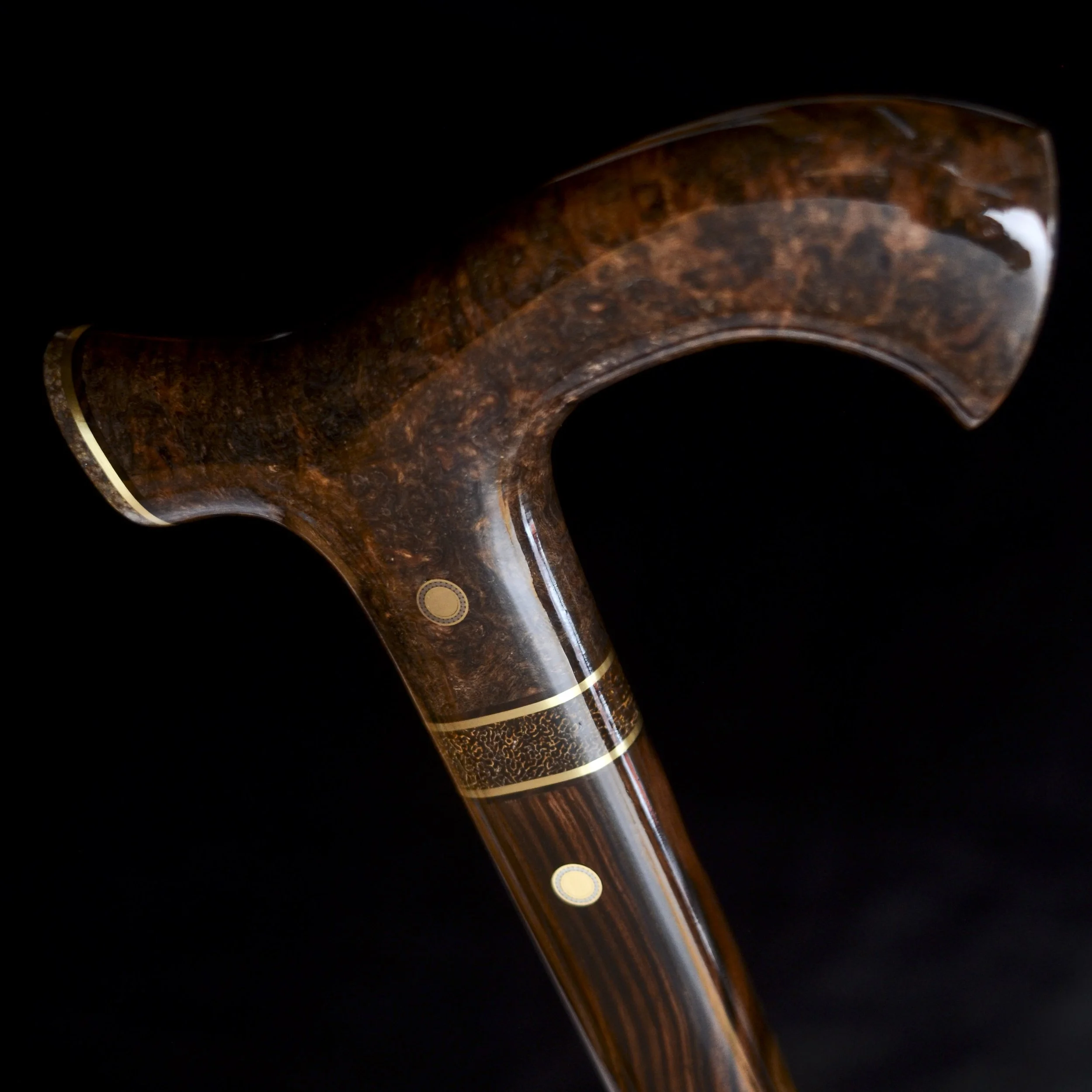
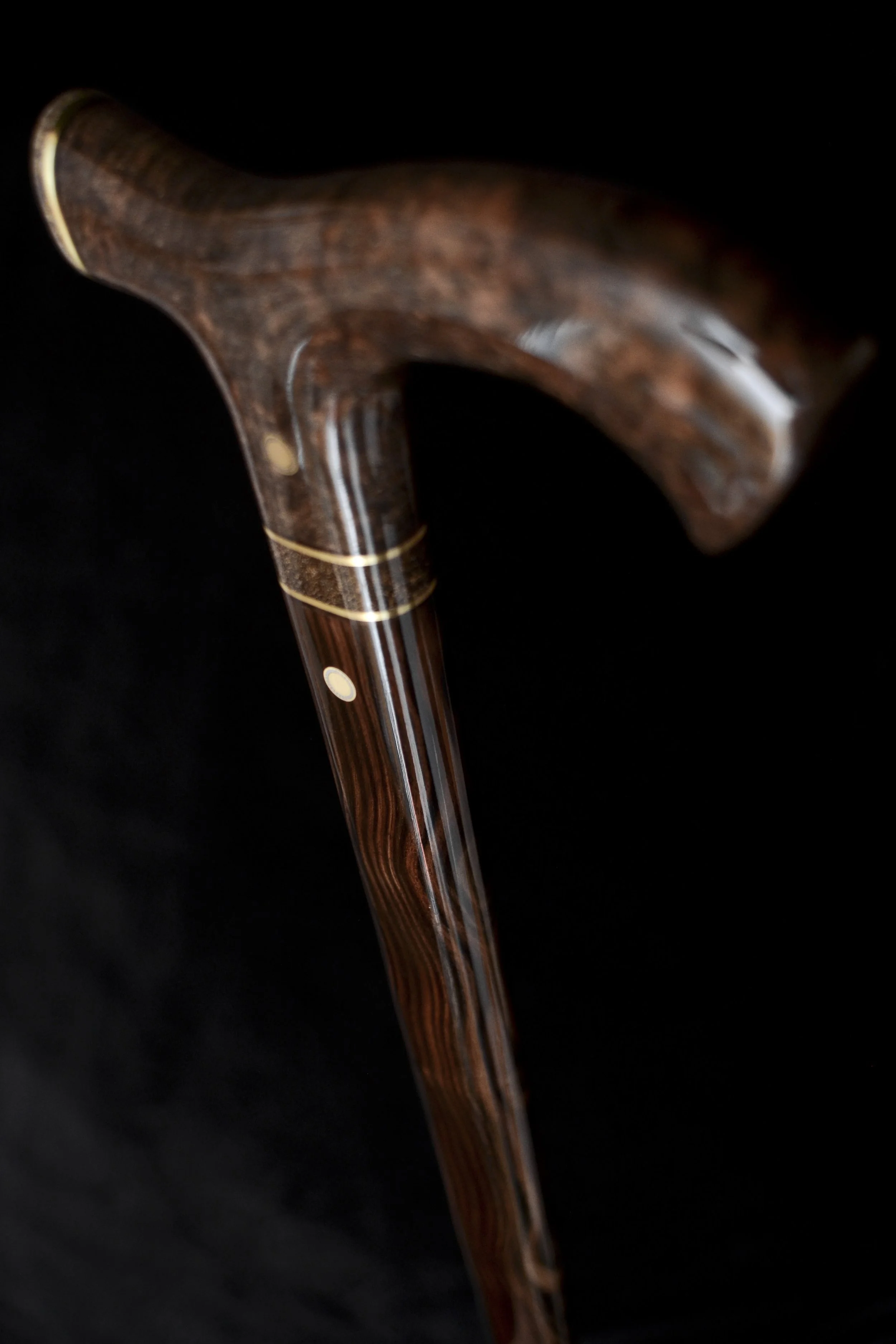
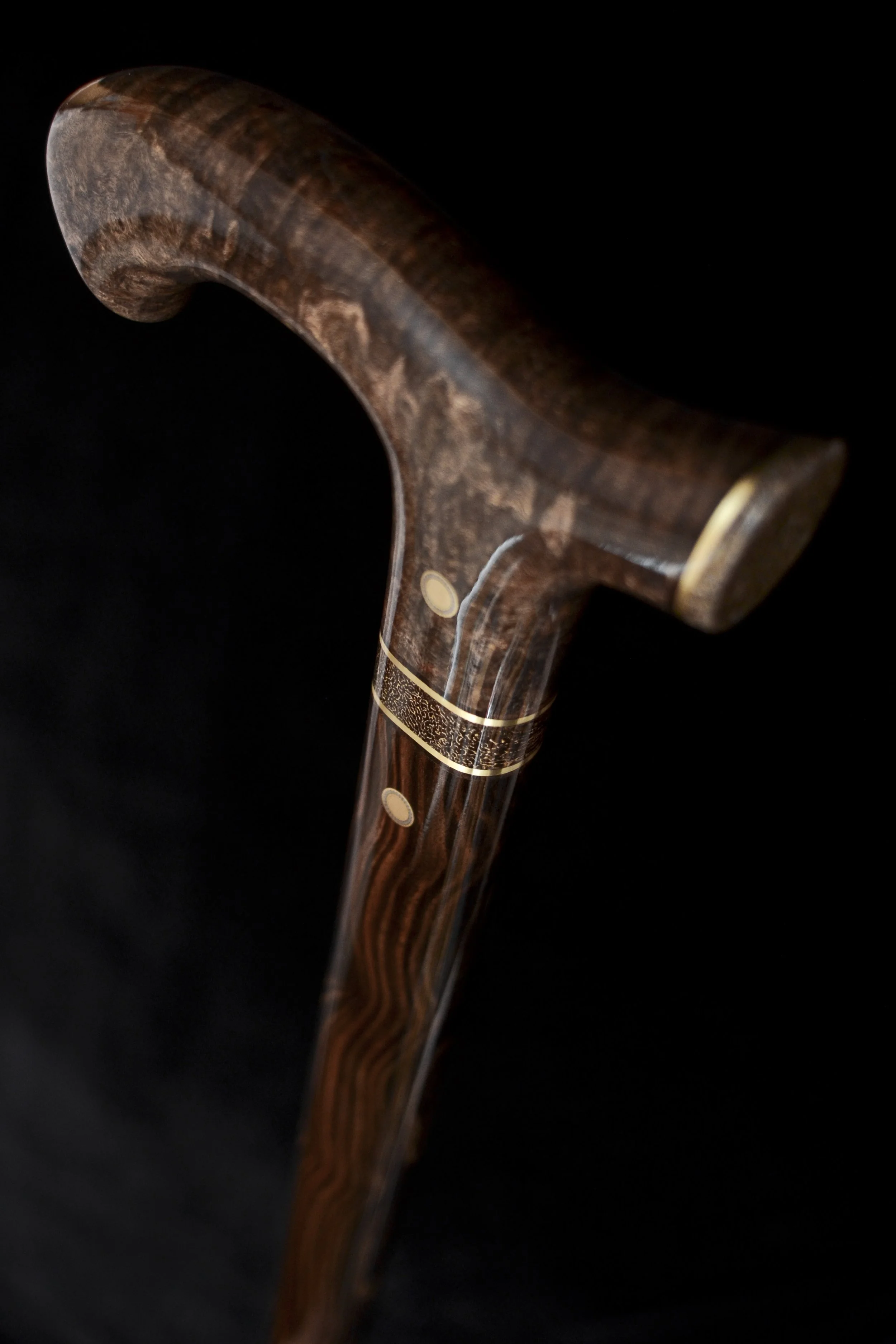
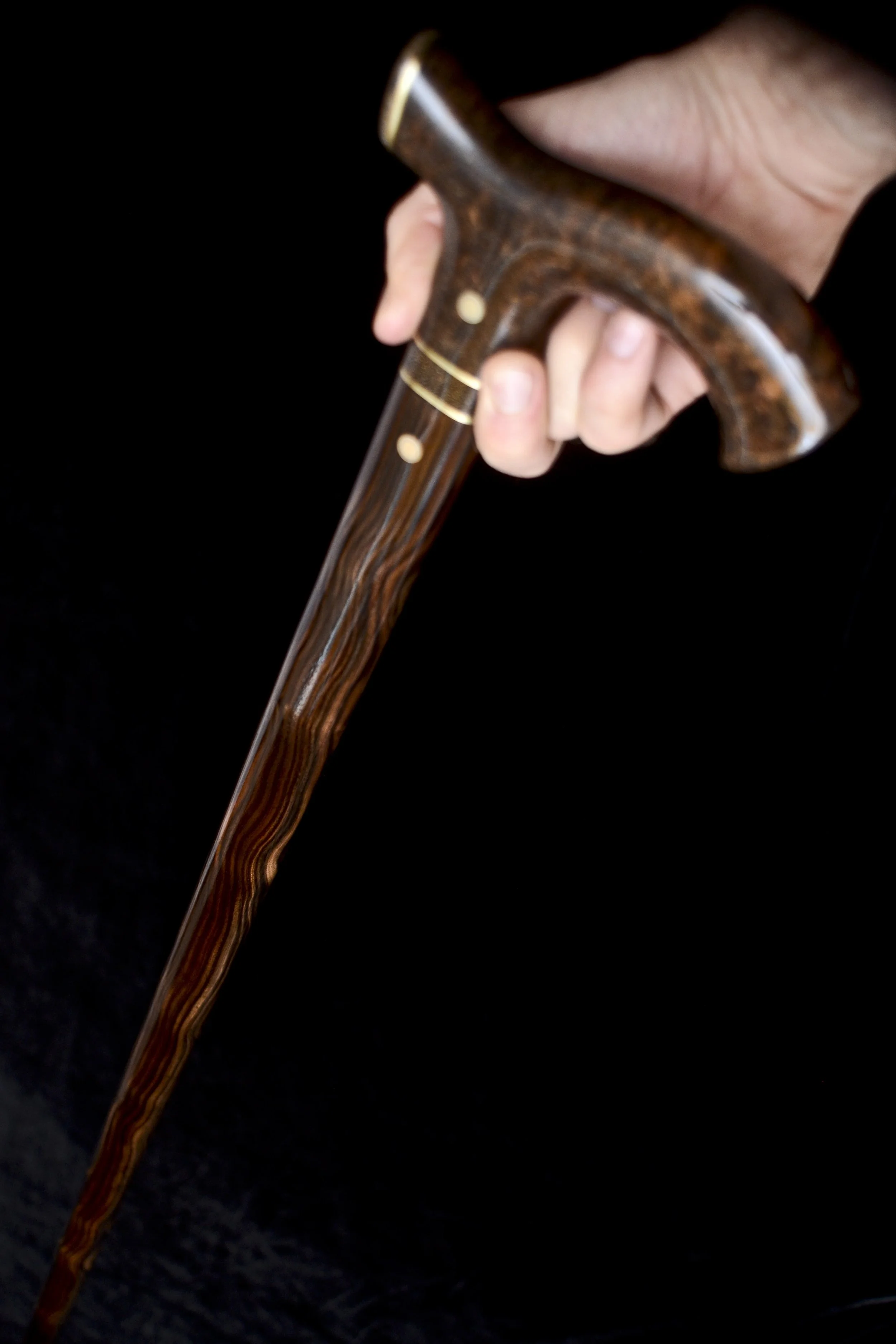
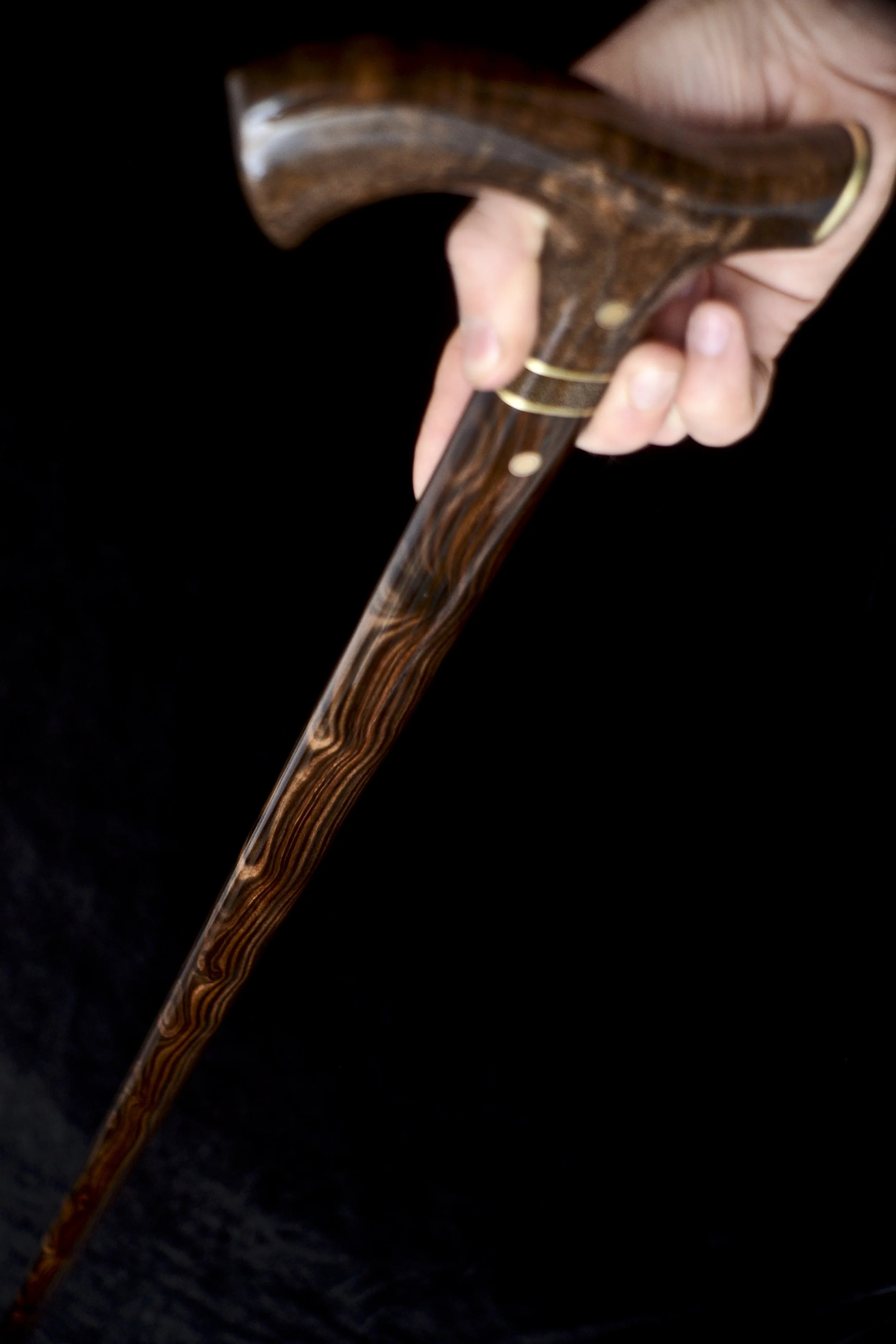
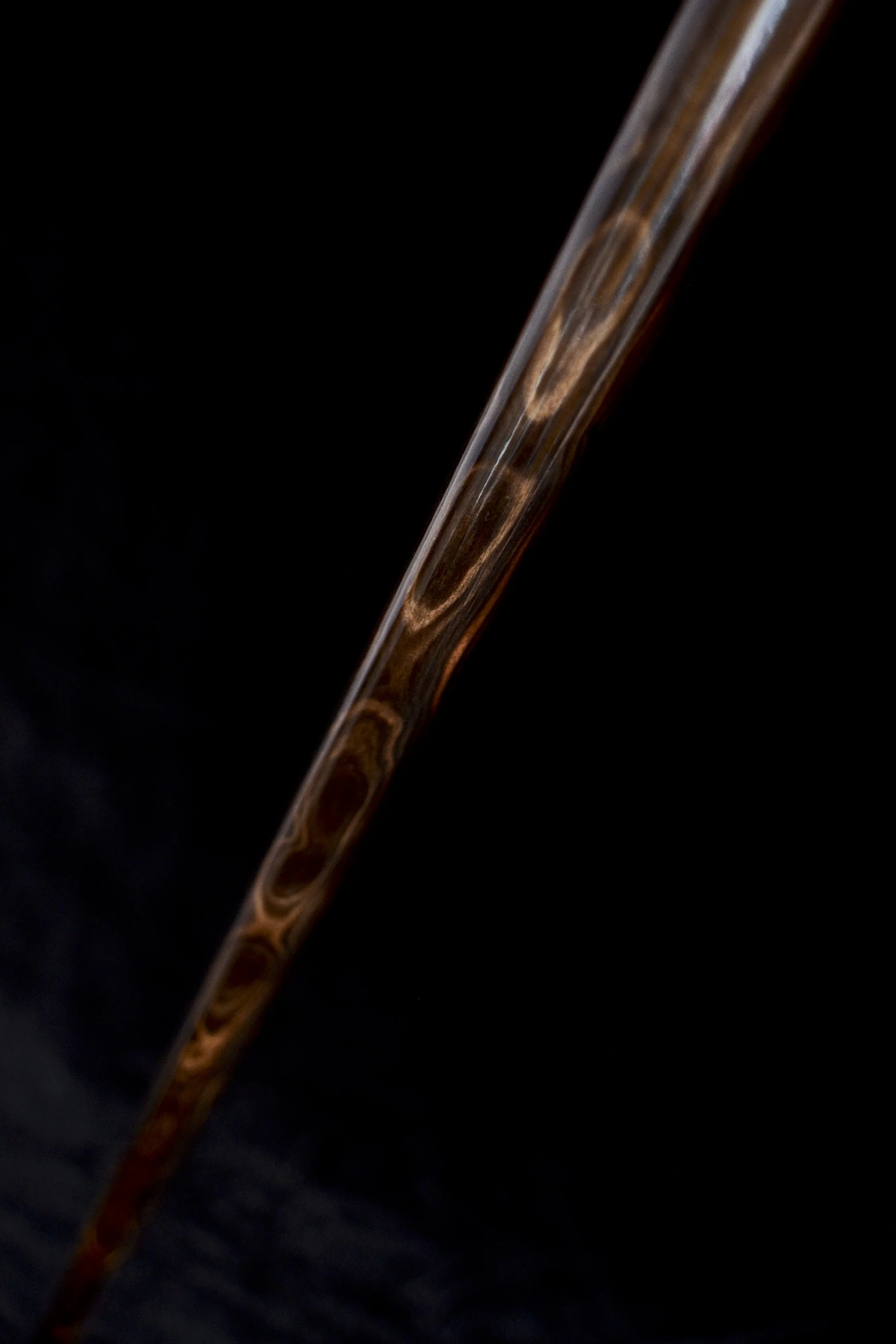
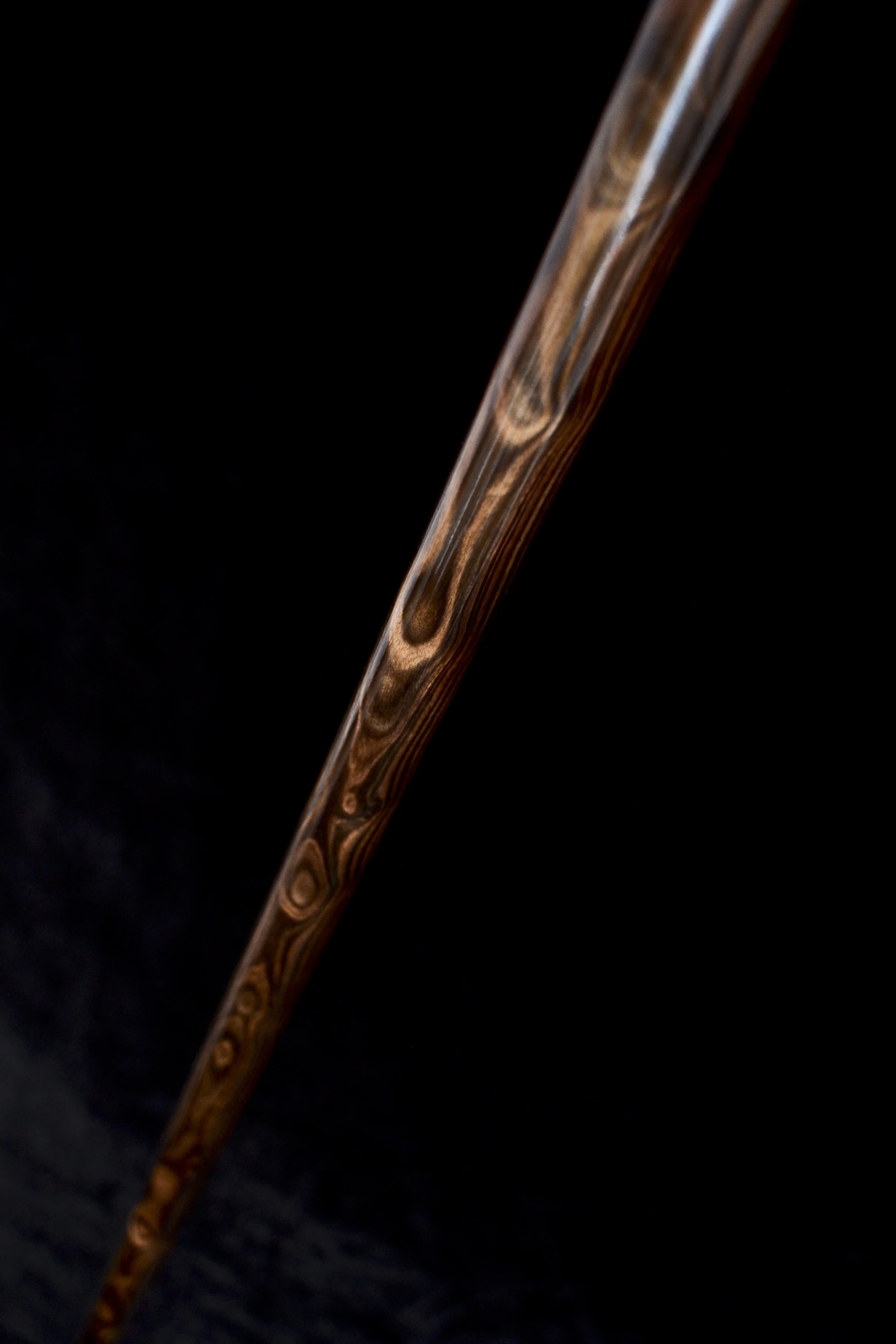
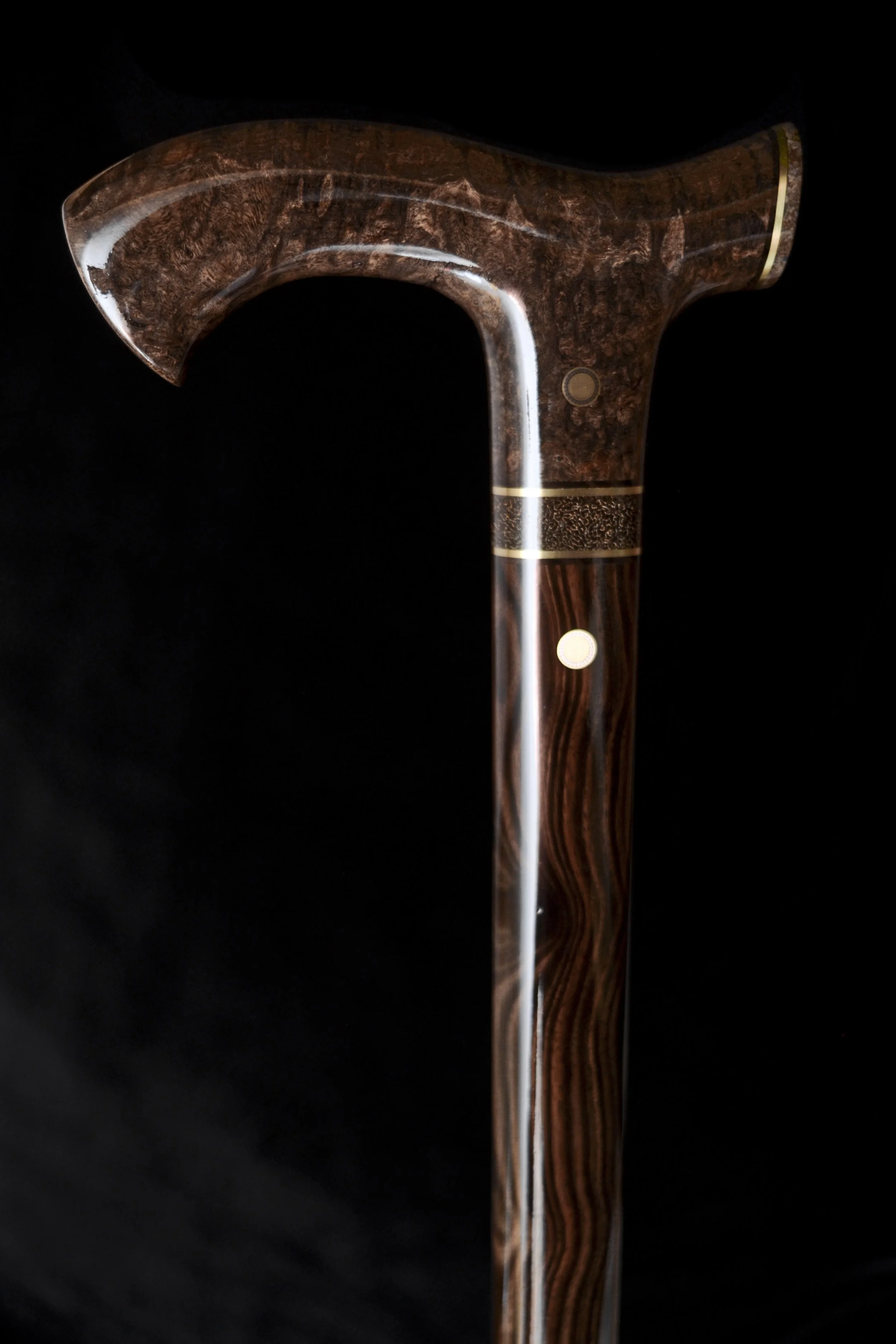
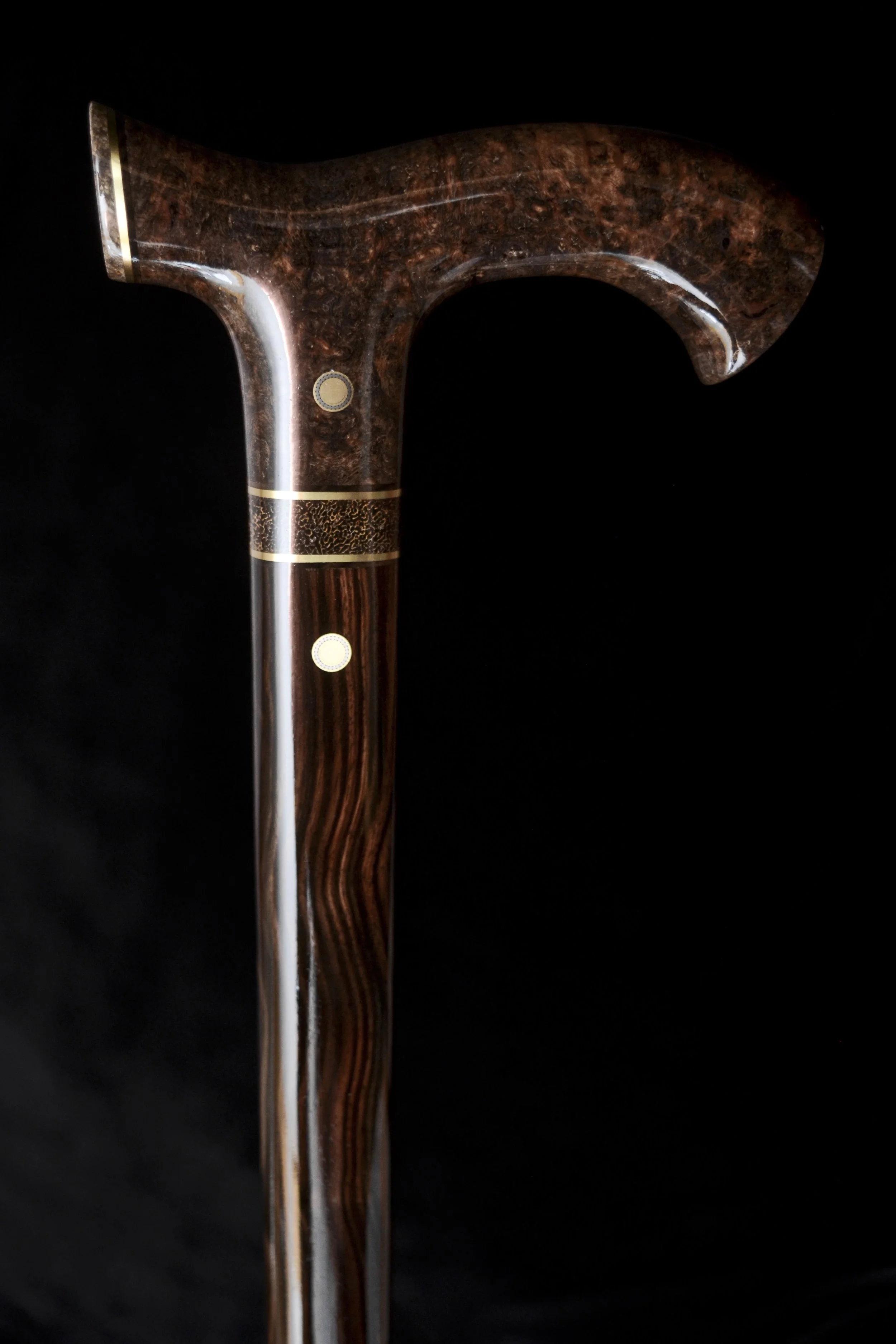
“Accretion” is now my personal favorite cane in my collection, its materials are all exquisite and their harmony combines to make this a very special piece of functional artwork.
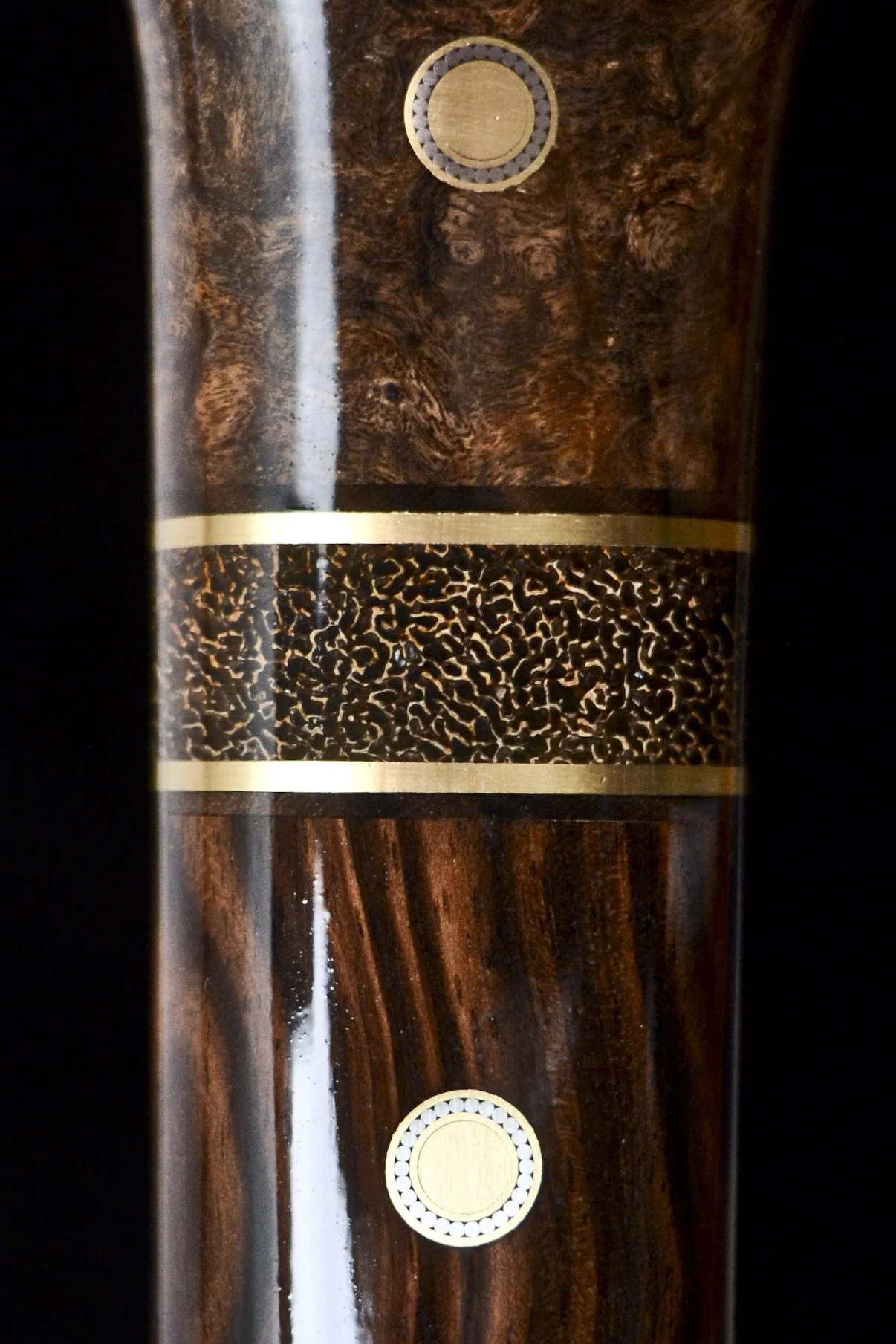
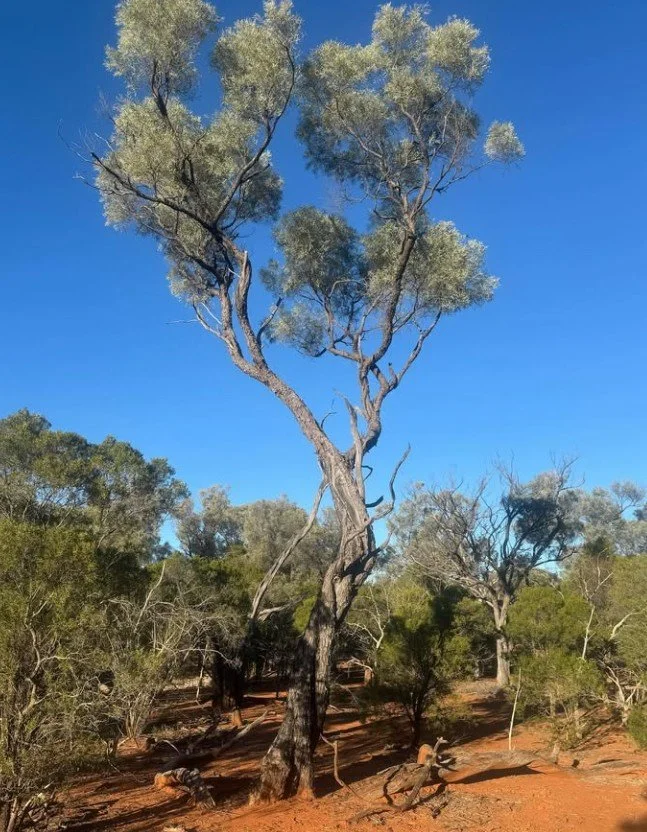
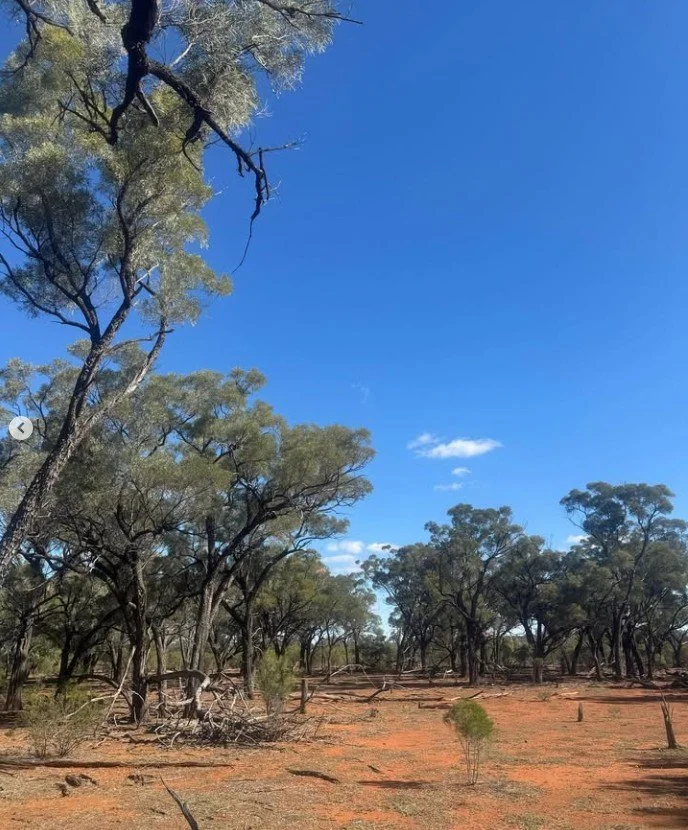
The handle is gidgee burl wood, this is the only example of burl in this species that I have ever seen, and even my Australian timber contacts have ever seen, at least large enough to be of use. Gidgee is rare wood to begin with but this burl figured gidgee is “once in a lifetime” wood. Gidgee is an arid region acacia species that grows on the fringes of the Australian outback. This small, stunted tree produces wood that’s basically tied for being the densest wood in the world! You can see this unique tree species in the last two pictures.
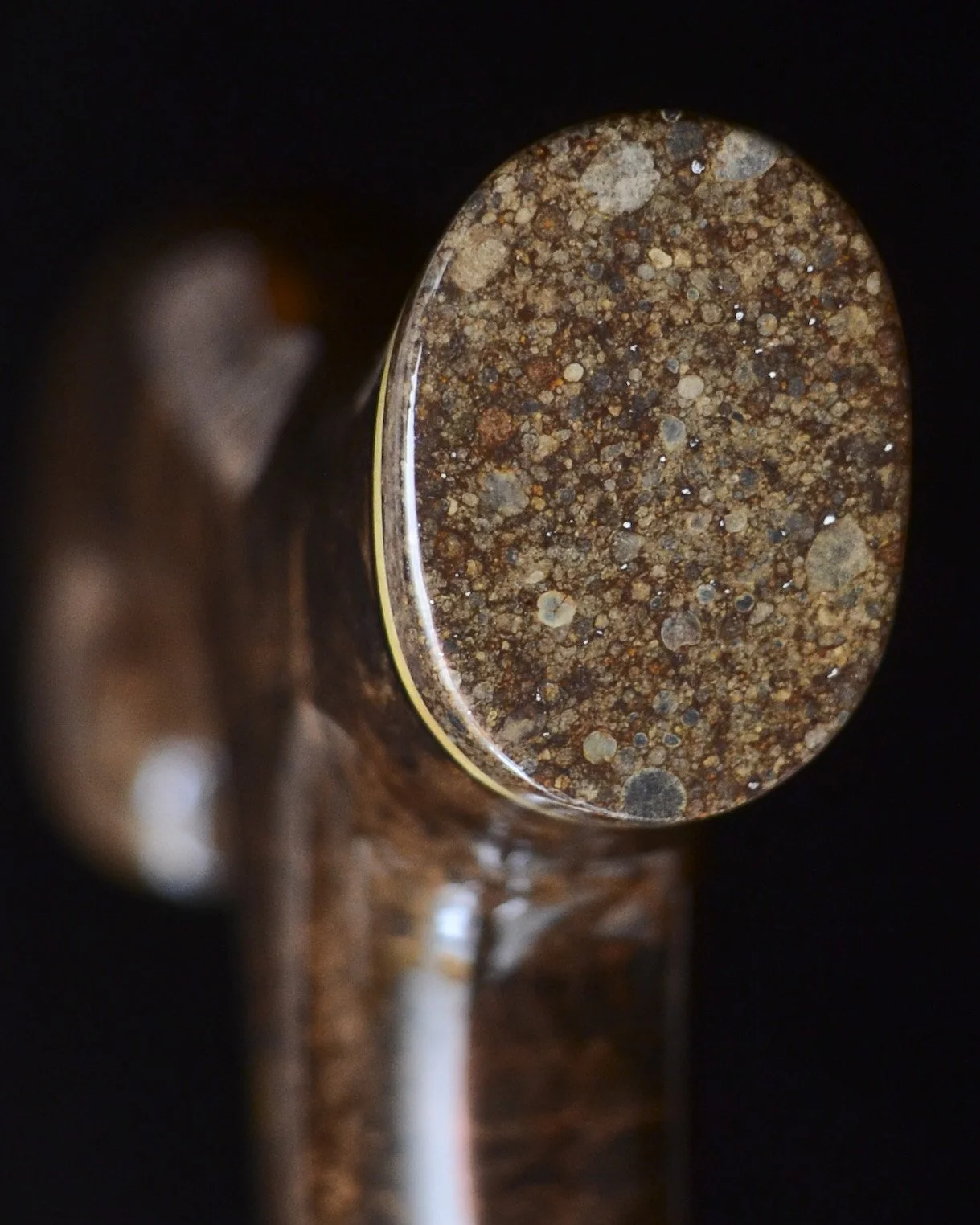
On the front end of the handle is a piece of meteorite from outer space. The meteorite is officially classified as an “LL3 Chondrite” with the name: “NWA 17669”. With close observation there are many small spherical shapes in the meteorite, these are called “chondrules” which are essentially the very earliest building blocks of the solar system. When the nebula that birthed our solar system first began the process of accretion, these tinny chondrules were the first to form, about 4.6 Billions years ago. This is a prime example of chondrules, its loaded with them. There are also a few flex of iron that shine as well.
The divider centerpiece has its own story, its an ancient piece of bone from an extinct ice age horse species! The leg bone was excavated from the Siberian Permafrost in Russia a few years ago, carefully dried, and finally stabilized with resin. The horse species was most likely the “Lena Horse” which was a uniquely adapted species for the ice age tundra that went extinct around 5,000 years ago. This bone is likely much older, a fascinating piece of natural history.
Finally ”Accretion” has stand-out macassar ebony shaft from Sulawesi island. Its grain is tightly striped with black and dark browns and has a gentle ripple along its length that forms beautiful grain effects. This is my best piece of Macassar ebony.
A heavy weight cane, sturdy and substantial feeling. Users of small stature my tire with extended use; could still be used and enjoyed by most anyone. Daily use functional but probably best to consider for special occasion use. Total length measures 38” and can be shortened to fit.
For more information on the NWA 17669 meteorite, follow this link to The Meteoritical Society website page: https://www.lpi.usra.edu/meteor/metbull.cfmsea=NWA+17669&ants=&nwas=&falls=&valids=&stype=contains&lrec=100&map=ge&browse=&country=All&srt=name&categ=All&mblist=All&rect=&phot=no&strewn=no&snew=0&pnt=Normal+table&sfor=names&code=85145
M A T E R I A L S
Handle – Gidgee burl from Australia
Divider – Ancient Extinct Ice Age Horse Leg Bone from Siberia
Shaft – Macassar Ebony from Indonesia
Meteorite - NWA (North West Africa) 17669
Rubber tip
Every Gillis Cane is a photographed original, you'll always receive the exact cane in the images.