TraDitional Handles
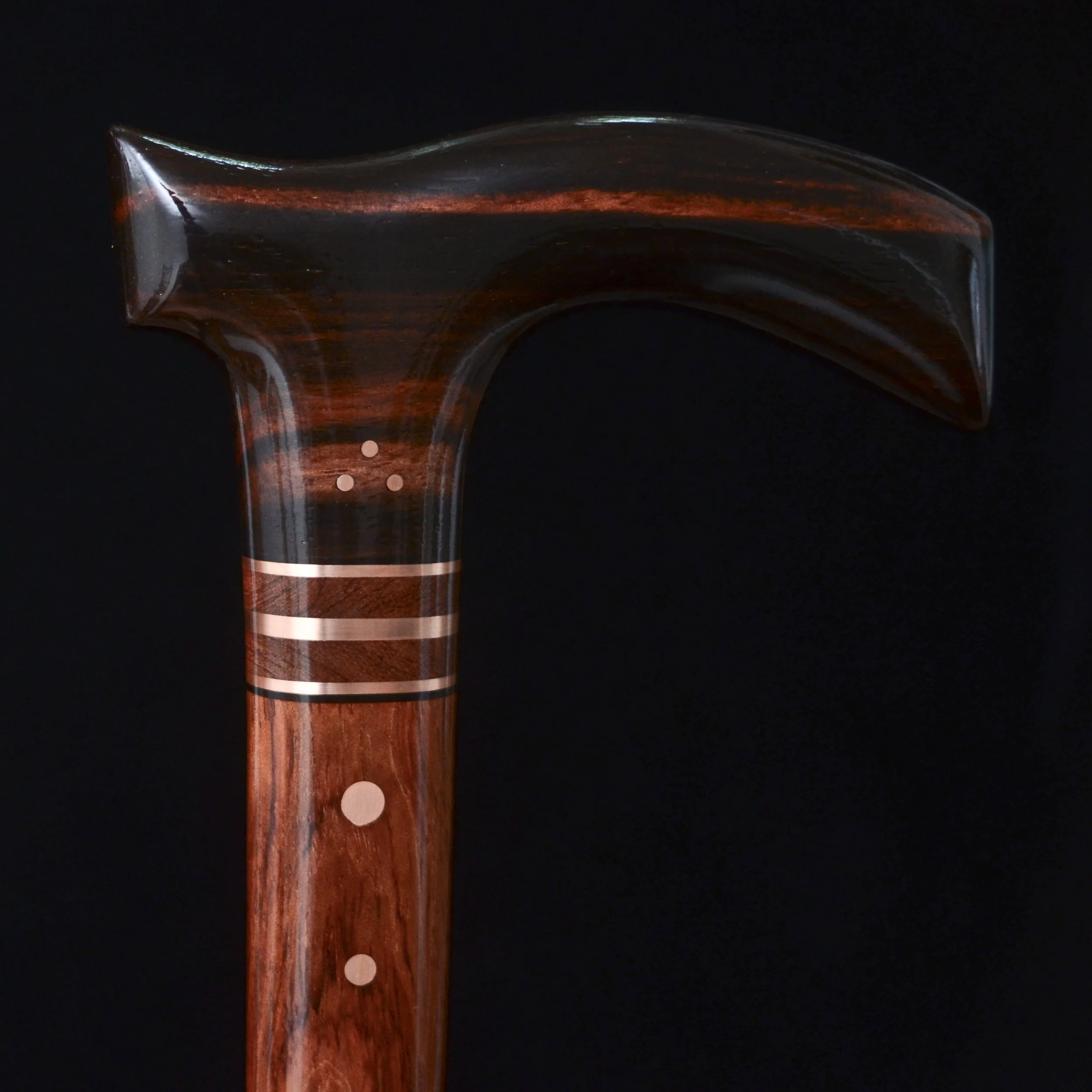
Here is a beautiful ebony and bubinga wood traditional walking cane with handsomely striped grain and rich colors. Macassar ebony is rare and one of the most prized woods around the world. Its beautiful grain is dark but striped and has a variety of warm colors ranging from black, into chocolate browns, into orangey browns. Macassar ebony is also very dense, durable, and an ideal wood for a strong walking cane that will last for generations. The shaft is bubinga wood, a wood regarded equally as a rosewood species and more attractive than some too! Bubinga is from Africa and has a high density and great durability, not to mention its gorgeous colors. In the divider are two layers of end grain oriented bubinga pieces and three layers of warm copper with copper pins. The cane has a solid and sturdy feel, suitable for daily use by most anyone.
D E T A I L S
Cane Length: 38" (can be shortened to fit, just leave a note with your order)
Cane Weight: 1 lb. 5 oz.
Handle Material: Macassar Ebony from Indonesia
Divider Material: Solid copper and Bubinga from Africa
Shaft Material: Bubinga from Africa
Includes Rubber Tip
Every Gillis Cane is a photographed original, you’ll always receive the exact cane in the images.
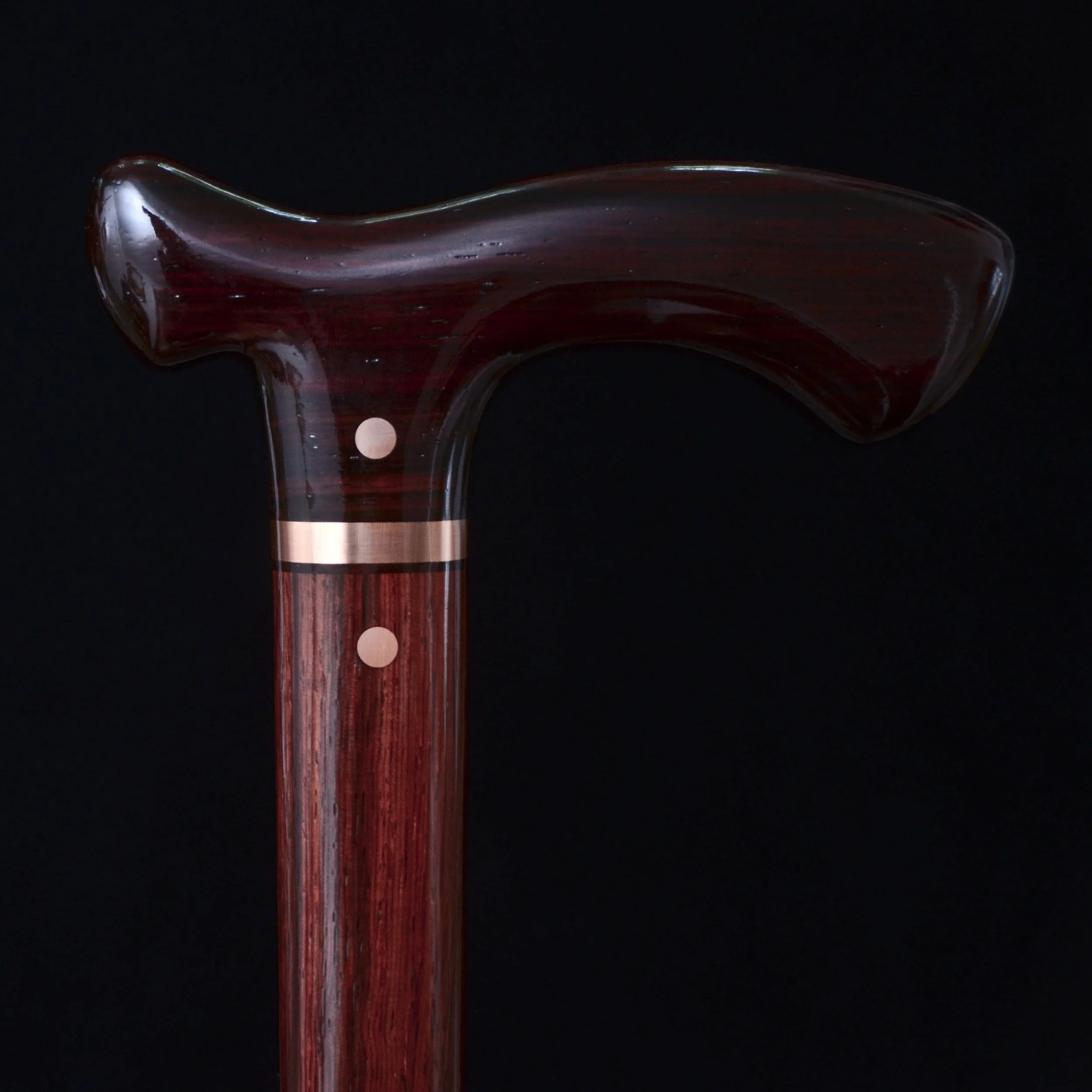
Here’s a wonderful, heirloom quality walking cane made with some of the prettiest of all rosewoods. The handle is one of my personal favorite woods, and one of the rarest among the rosewood species, its Bois de rose from Madagascar with a scientific name: Dalbergia Maritima. It’s obviously quite dark, but Bois de rose has a wonderful maroon red/dark purple color and a chatoyant grain. It requires some bright environments to fully appreciate, but this is a gorgeous wood with a fine chatoyance. Its also very dense and heavy and feels great in hand. Bois de rose was always a rare and precious wood, but has become extremely rare in recent years, once its gone it’ll be gone for good.
The shaft is an excellent example of a rare rosewood species from S. E. Asia; it’s obscure, particularly in the West, it’s most common name is its Latin Scientific name: Dalbergia Oliveri, or “Oliveri” for short. It has rich, warm colors, high density, and a shimmery grain.
Such a beauty! This rosewood cane is fully functional.
D E T A I L S
Cane Length: 38" (can be shortened to fit, just leave a note with your order)
Cane Weight: 1 lb. 10 oz. (Has a hefty feel)
Handle Material: Bois De Rose from Madagascar
Divider Material: Solid copper
Shaft Material: Dalbergia Oliveri Rosewood
Includes Rubber Tip
Every Gillis Cane is a photographed original, you’ll always receive the exact cane in the images.
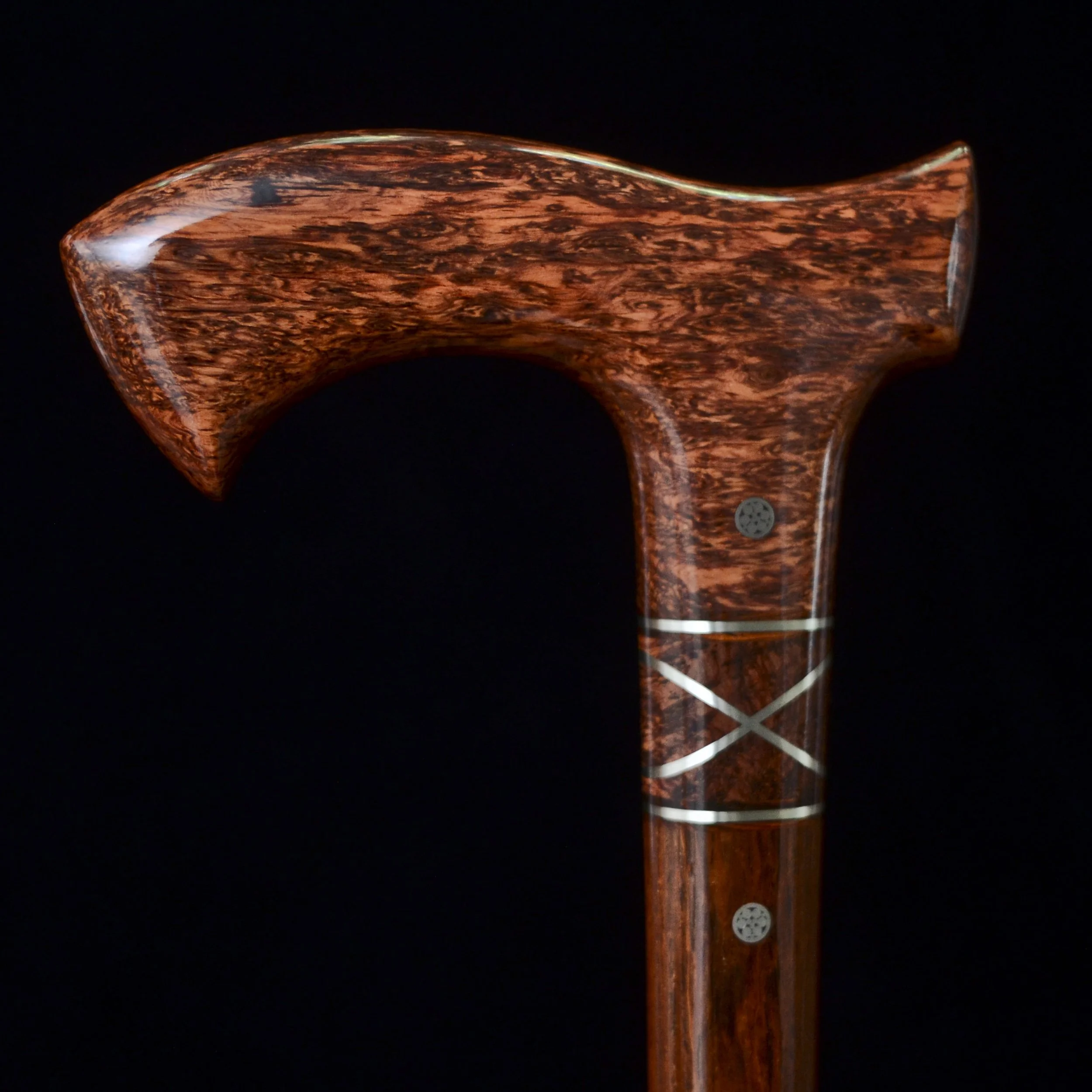
This cane is handmade using museum-worthy birdseye figured Siamese rosewood. Without figure Siamese rosewood is one of the most coveted and scarce of all woods, its also one of the most colorful, dense, and stable of all the rosewoods making it an excellent material. This figured example is exquisite and something I consider “once in a lifetime wood”. The shaft is Cocobolo from Mexico, a complementing red color and also a dense, durable rosewood, a fine example. This cane is built to be used and enjoyed. It can be used daily and would function well for that purpose but classy enough for the most formal occasions. In hand It has the substantial feel of something made out of quality materials.
D E T A I L S
Cane Length: 38" (can be shortened to fit, just leave a note with your order)
Cane Weight: 1 lb. 8 oz.
Handle Material: Siamese Rosewood (Dalbergia Cochinchinensis) from Vietnam
Divider Material: Solid nickel silver metal and matching Siamese rosewood
Shaft Material: Cocobolo Rosewood (Dalbergia Retusa) from Mexico
Includes Rubber Tip
Every Gillis Cane is a photographed original, you’ll always receive the exact cane in the images.
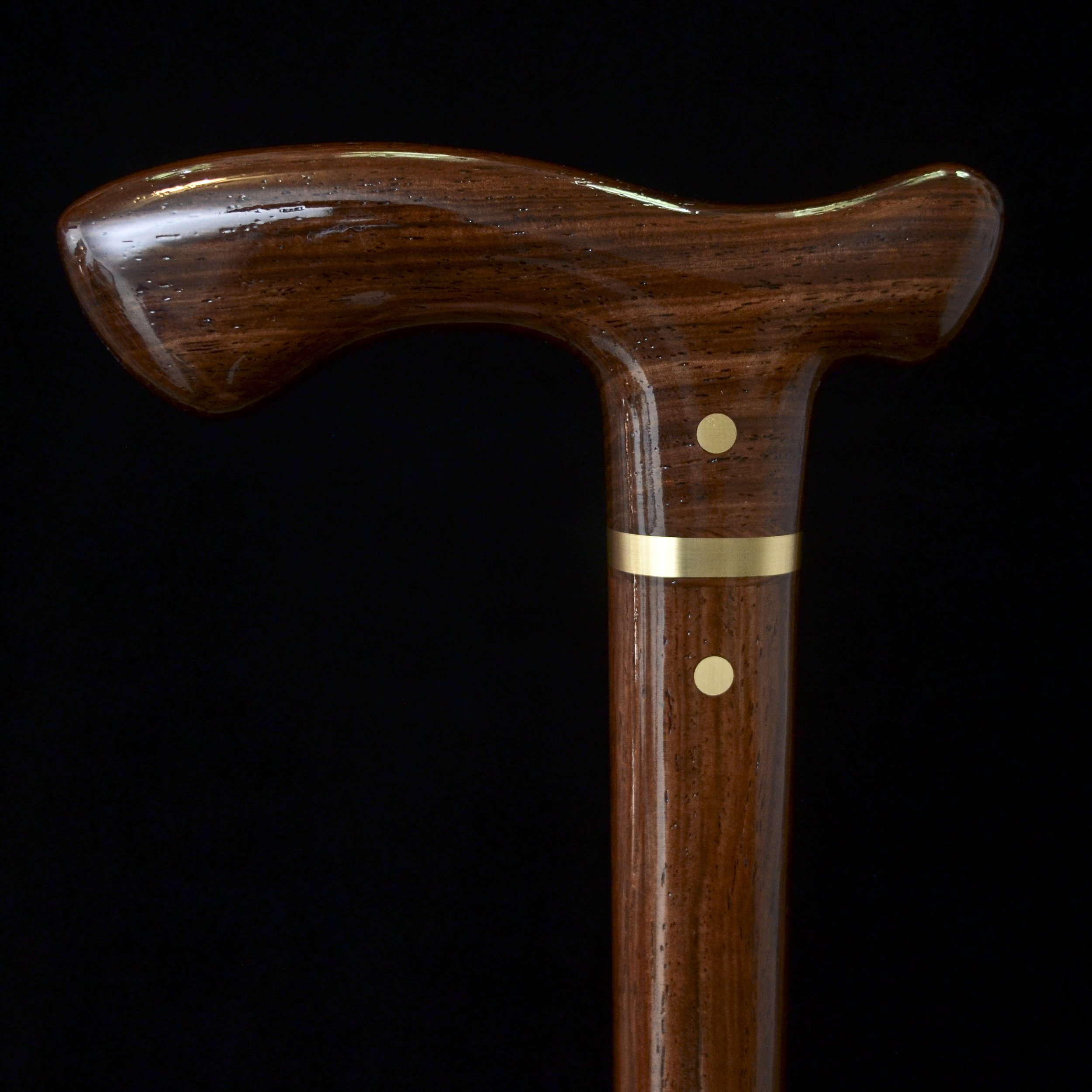
This piece is made exclusively with leadwood, a rare exotic wood from Mozambique. This wood is appropriately named because it is profoundly heavy for wood. Leadwood is actually one of the finest wood for an extremely durable cane, not only is leadwood heavy and hard but its bending strength measured scientifically as “modulus of rupture” is exceptionally high. There are more scientific measurements for the characteristics of wood, this one is good at them all. A very functional cane but not for someone of small stature. Would make a great self defense cane.
D E T A I L S
Cane Length: 38" (can be shortened to fit, just leave a note with your order)
Cane Weight: 1 lb. 13 oz. (Among my heaviest! not advised for someone small in stature)
Handle Material: leadwood from Mozambique
Divider Material: Solid Brass
Shaft Material: leadwood from Mozambique
Includes Rubber Tip
Every Gillis Cane is a photographed original, you’ll always receive the exact cane in the images.
Curled Handles
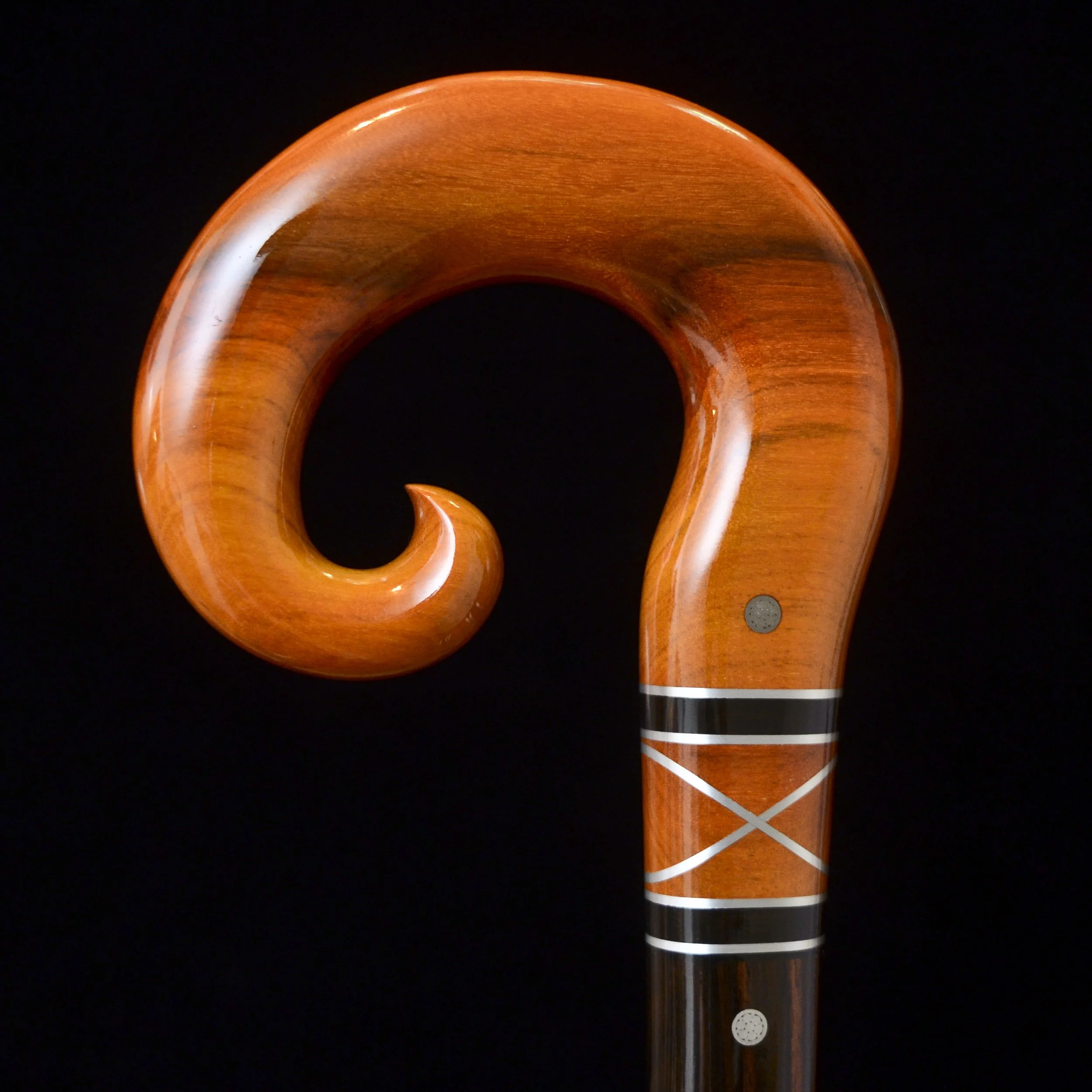
Wow! what an eye-catching cane. That handle is no less vibrant in person, its Pernambuco wood from Brazil, or “Brazil wood”. This is a very famous wood responsible for the naming of the country Brazil. This wood was so highly sought after by European explorers for hundreds of years that it is now near extinction and has been a protected species for decades. Aside from its remarkable pumpkin orange color this is also a dense and durable hardwood. It is paired with a dark macassar ebony shaft, its grain is subtle but easier to appreciate in person, its tightly striped with orangy-brown and blacks. Though uniquely styled this is a comfortable and functional cane, suitable for daily use if desired. It has the substantial and solid feel of a quality piece of workmanship.
D E T A I L S
Cane Length: 38" (can be shortened to fit, just leave a note with your order)
Cane Weight: 1 lb. 10 oz. (has a hefty feel)
Handle Material: Pernambuco from Brazil
Divider Material: Aluminum, steel, and Pernambuco
Shaft Material: Macassar Ebony from Indonesia
Includes Rubber Tip
Every Gillis Cane is a photographed original, you’ll always receive the exact cane in the images.
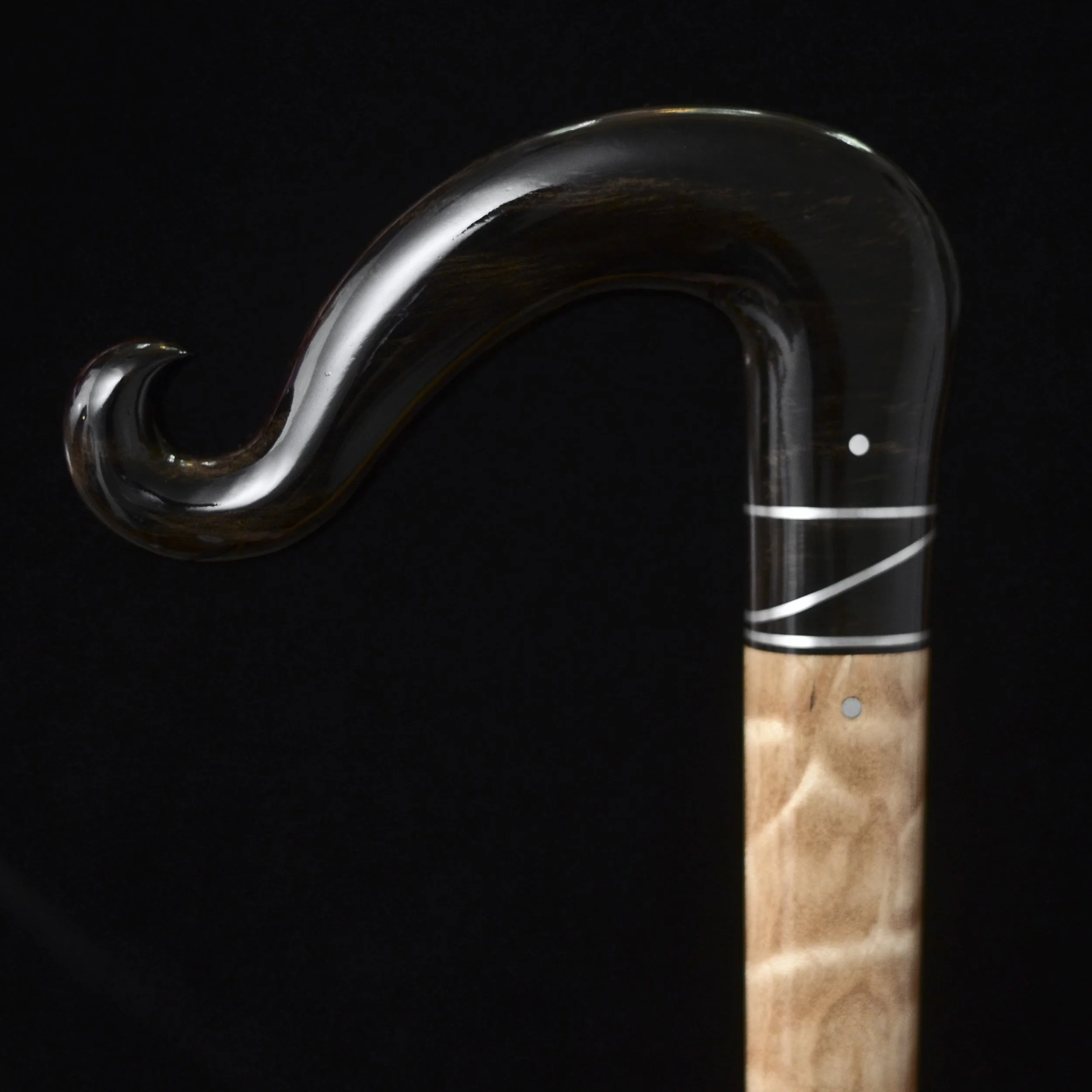
Here is a high-contrast curl cane with a black ebony handle and quilted maple shaft. The handle is Nigerian Ebony, one of the most desirable and well-regarded woods in the world for its unique, natural blackness. This slow growing wood is very dense and unless held under bright light looks totally black. The shaft is quilt figured with amazing “bubbly” looking grain with excellent chatoyancy- amazing wood! It is not pristine and does have a few defects, but its overall appearance is outstanding. A fully functional cane, appropriate for daily use by most anyone.
D E T A I L S
Cane Length: 38" (can be shortened to fit, just leave a note with your order)
Cane Weight: 1 lb.
Handle Material: Nigerian Ebony
Divider Material: Nigerian Ebony and Aluminum
Shaft Material: Maple from Oregon
Includes Rubber Tip
Every Gillis Cane is a photographed original, you’ll always receive the exact cane in the images.
Modern Handles
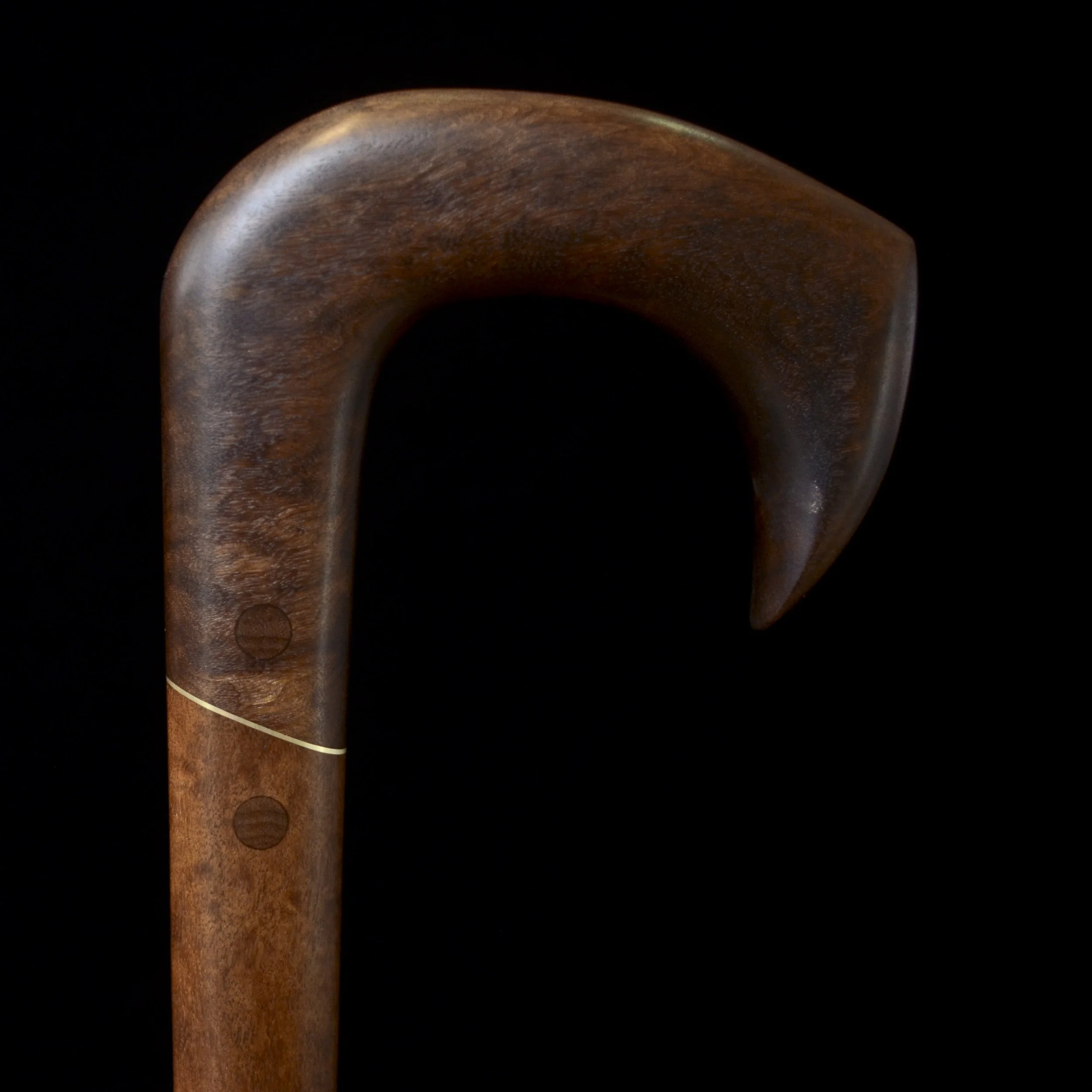
A stylish, modern cane in my stunning “eagle talon” handle shape made entirely out of a rare exotic wood from Brazil called Imbuia. Imbuia is rare from overharvesting and is now a protected species, its scarce on the market. These pieces are also figured, a light pomelle in the handle and curl in the shaft! The appearance of Imbuia is not too different from Walnut with a nice shimmer and definite golden hues. The cane has a natural, matte Danish oil finish and should function nicely as a daily use piece.
D E T A I L S
Cane Length: 38" (can be shortened to fit, just leave a note with your order)
Cane Weight: 1 lb.
Handle Material: Imbuia from Brazil
Divider Material: Thin, solid brass layer and Imbuia pins
Shaft Material: Imbuia from Brazil
Finish: Matte, Oiled
Includes Rubber Tip
Every Gillis Cane is a photographed original, you’ll always receive the exact cane in the images.
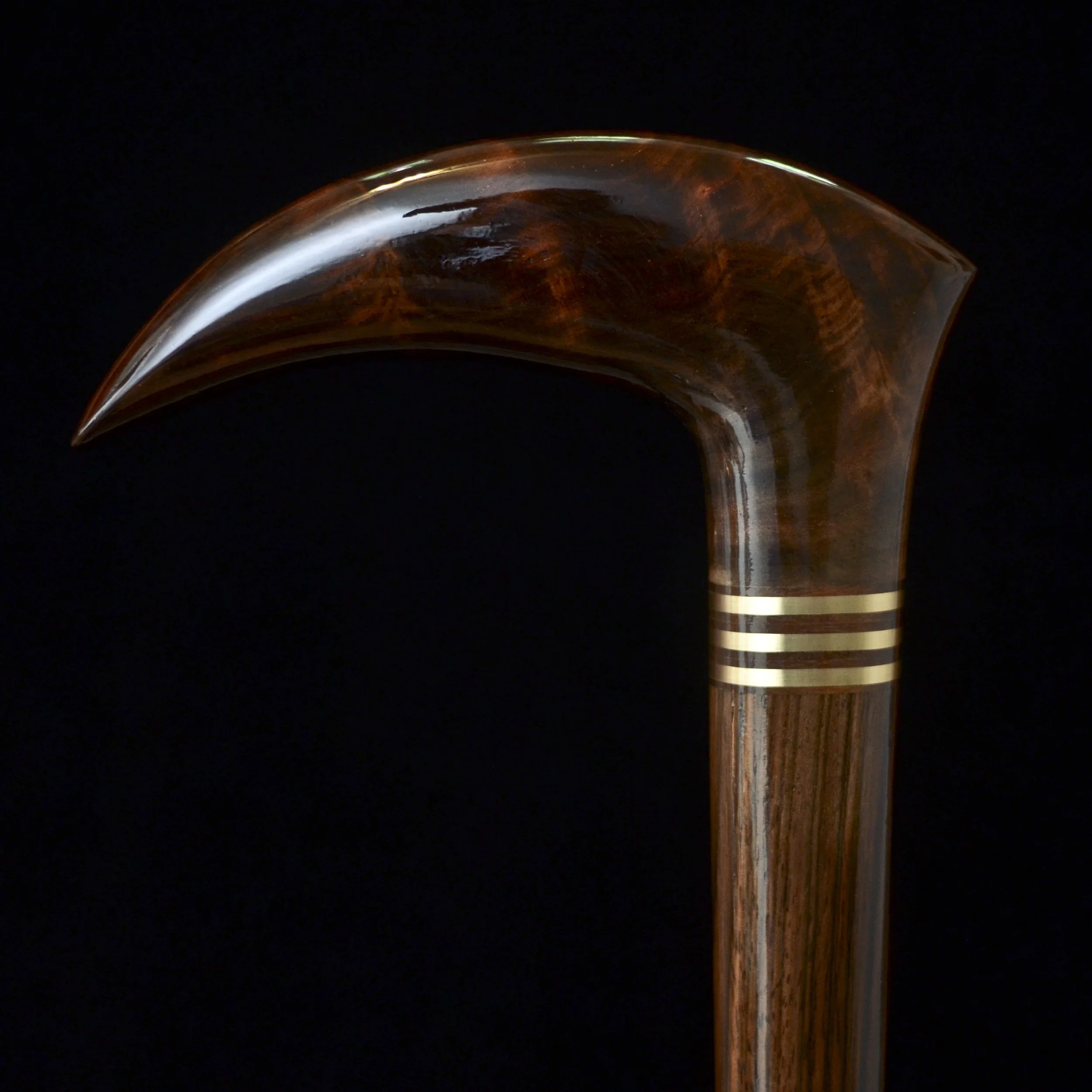
An heirloom quality cane, this piece has an outstanding handle of rare rosewood set over top of unique ebony wood. The rosewood handle is Siamese rosewood with a scientific name: Dalbergia Cochinchinensis. This is one of the most coveted and scarce of all woods, its also one of the most colorful, dense, and stable of all the rosewoods making it an excellent material. This example of Siamese rosewood has an array of colors ranging from green to reds and its grain is quilt figured, this is extremely rare grain and coloration. Siam rosewood is also a very chatoyant wood with gain that interacts dynamically with light to beautiful effect.
The shaft is Kalimantan ebony from the S. E. Asian Island of Borneo. This rare ebony is very dense and heavy and extremely scarce, a unique variety of ebony wood. Its appearance is also unique, it has a chatoyant grain and in bright light it has green highlights in the grain, sometimes its called “green ebony” even though it is subtle. The grain is tightly striped and especially nice. Finally its divider is solid brass and genuine lignum wood.
This cane is built and intended to be used and enjoyed. It can be used daily and would function well for that purpose with its comfortable handle and nice feel. In hand It has the substantial feel of something made out of quality materials.
D E T A I L S
Cane Length: 38" (can be shortened to fit, just leave a note with your order)
Cane Weight: 1 lb. 7 oz.
Handle Material: Siamese Rosewood (Dalbergia Cochinchinensis)
Divider Material: Solid brass and Genuine Lignum from Central America
Shaft Material: Kalimantan ebony from Borneo
Includes Rubber Tip
This cane can not ship outside of the United States due to CITES Appendix I regulations for genuine lignum wood
Burl Handles
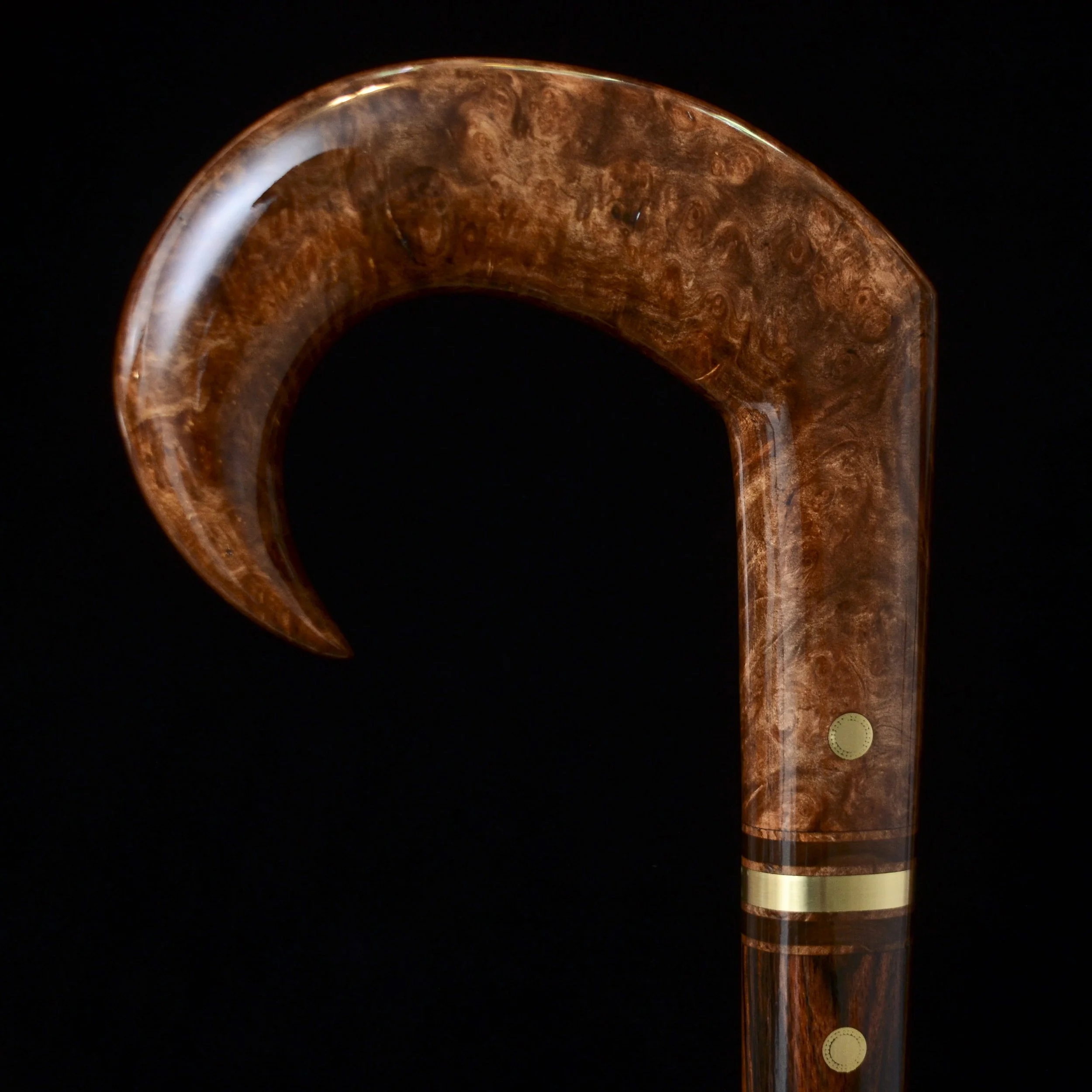
An exhibition worthy piece of functional artwork, this raptor’s claw cane is made using exquisite ebony burl wood! This a very obscure species of scarce ebony from Indonesia with a Latin scientific name of “Diospyros poncei”. This is actually my first cane using this species from a burl I sourced many years ago, and it is especially large a piece for so special a wood. Its grain in intricate with swirls, rays, and burl “eye” figure. A special piece of wood! In the divider are thin layers of matching ebony burl, two layers of genuine lignum wood, and a center of solid brass and intricate brass mosaic pins. The shaft is macassar ebony also from Indonesia, it shows a very nice cathedral grain pattern along its length and contrasting stripes. This special cane is perfectly functional and has a great feel in the hand.
D E T A I L S
Cane Length: 38" (can be shortened to fit, just leave a note with your order)
Cane Weight: 1 lb. 7 oz.
Handle Material: Diospyros poncei burl wood from Indonesia
Divider Material: Solid brass and Genuine Lignum (densest wood in the world!)
Shaft Material: Macassar Ebony from Indonesia
Includes Rubber Tip
This cane can not ship outside of the United States due to CITES Appendix I regulations for genuine lignum wood
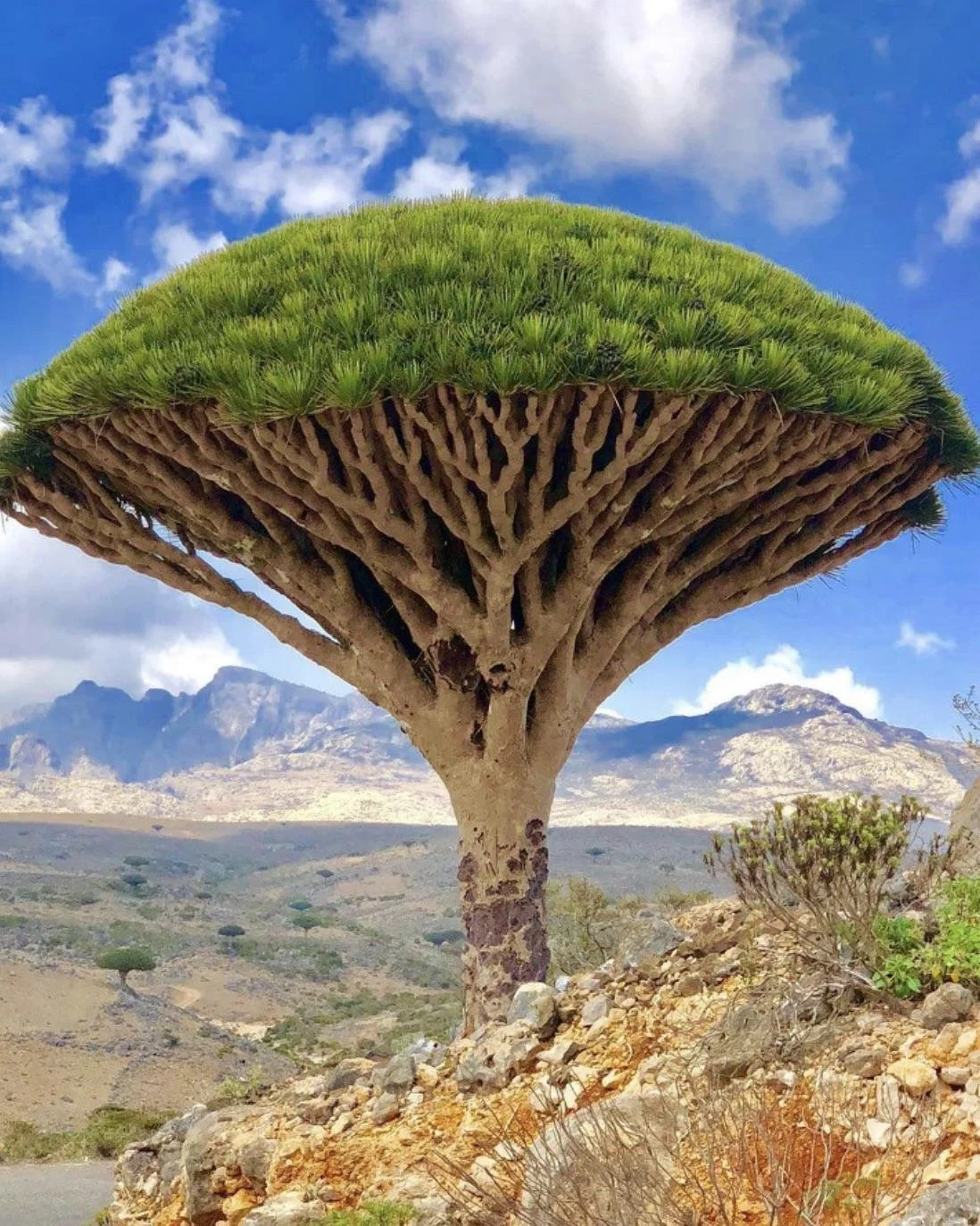
This heirloom quality cane is a rare opportunity to own an amazing wood called "dragon's blood" in burl figured form. This species is extremely rare, but burl wood is much rarer even still. I have now made a handful of canes with this burl wood over the past few years, all from the same burl, and this one is above average burl eye density so its a great example. The trees are protected and endemic to one small island called Socotra that is part of the country Yemen. The last image is of one of the dragon’s blood trees in its natural range, they are some of the most other-worldly tree species. This wood is is a once is a lifetime opportunity and once my stock runs out It’ll be gone for good. The shaft is an obscure wood I’ve only used a couple of times, its called “Balsamo wood” from S. America. Its very dense and durable and has a fantastic chatoyant effect. Perfectly functional but best considered as a special occasion cane. It’s weight is average, it has the respectable feel of dense, quality hardwoods and excellent craftsmanship. Total length measures 38" and can be shortened to fit.
The last image is of a Dragon's Blood Tree (Dracaena cinnabari).
M A T E R I A L S
Handle – Dragon's Blood Tree (Dracaena cinnabari)
Divider – Brass, thin Narra
Shaft – Balsamo Wood from
Rubber tip
Carved Handles

Sed purus sem, scelerisque ac rhoncus eget, porttitor nec odio. Lorem ipsum dolor sit amet.

Vivamus pellentesque vitae neque at vestibulum. Donec efficitur mollis dui vel pharetra.

Praesent id libero id metus varius consectetur ac eget diam. Nulla felis nunc, consequat laoreet lacus id.

Donec id justo non metus auctor commodo ut quis enim. Mauris fringilla dolor vel condimentum imperdiet.

Commodo cursus magna, vel scelerisque nisl consectetur et. Donec id elit non mi porta gravida at eget metus.

Lorem ipsum dolor sit amet, consectetur adipiscing elit. Vestibulum id ligula porta felis euismod semper.

Quisque iaculis facilisis lacinia. Mauris euismod pellentesque tellus sit amet mollis.

Sed purus sem, scelerisque ac rhoncus eget, porttitor nec odio. Lorem ipsum dolor sit amet.

Vivamus pellentesque vitae neque at vestibulum. Donec efficitur mollis dui vel pharetra.

Praesent id libero id metus varius consectetur ac eget diam. Nulla felis nunc, consequat laoreet lacus id.

Donec id justo non metus auctor commodo ut quis enim. Mauris fringilla dolor vel condimentum imperdiet.

Commodo cursus magna, vel scelerisque nisl consectetur et. Donec id elit non mi porta gravida at eget metus.
Lorem ipsum dolor sit amet, consectetur adipiscing elit. Vestibulum id ligula porta felis euismod semper.
Quisque iaculis facilisis lacinia. Mauris euismod pellentesque tellus sit amet mollis.
Sed purus sem, scelerisque ac rhoncus eget, porttitor nec odio. Lorem ipsum dolor sit amet.
Vivamus pellentesque vitae neque at vestibulum. Donec efficitur mollis dui vel pharetra.
Praesent id libero id metus varius consectetur ac eget diam. Nulla felis nunc, consequat laoreet lacus id.
Donec id justo non metus auctor commodo ut quis enim. Mauris fringilla dolor vel condimentum imperdiet.
Commodo cursus magna, vel scelerisque nisl consectetur et. Donec id elit non mi porta gravida at eget metus.
Lorem ipsum dolor sit amet, consectetur adipiscing elit. Vestibulum id ligula porta felis euismod semper.
Quisque iaculis facilisis lacinia. Mauris euismod pellentesque tellus sit amet mollis.
Sed purus sem, scelerisque ac rhoncus eget, porttitor nec odio. Lorem ipsum dolor sit amet.
Vivamus pellentesque vitae neque at vestibulum. Donec efficitur mollis dui vel pharetra.
Praesent id libero id metus varius consectetur ac eget diam. Nulla felis nunc, consequat laoreet lacus id.
Donec id justo non metus auctor commodo ut quis enim. Mauris fringilla dolor vel condimentum imperdiet.
Commodo cursus magna, vel scelerisque nisl consectetur et. Donec id elit non mi porta gravida at eget metus.
Lorem ipsum dolor sit amet, consectetur adipiscing elit. Vestibulum id ligula porta felis euismod semper.
Quisque iaculis facilisis lacinia. Mauris euismod pellentesque tellus sit amet mollis.
Sed purus sem, scelerisque ac rhoncus eget, porttitor nec odio. Lorem ipsum dolor sit amet.
Vivamus pellentesque vitae neque at vestibulum. Donec efficitur mollis dui vel pharetra.
Bird Canes
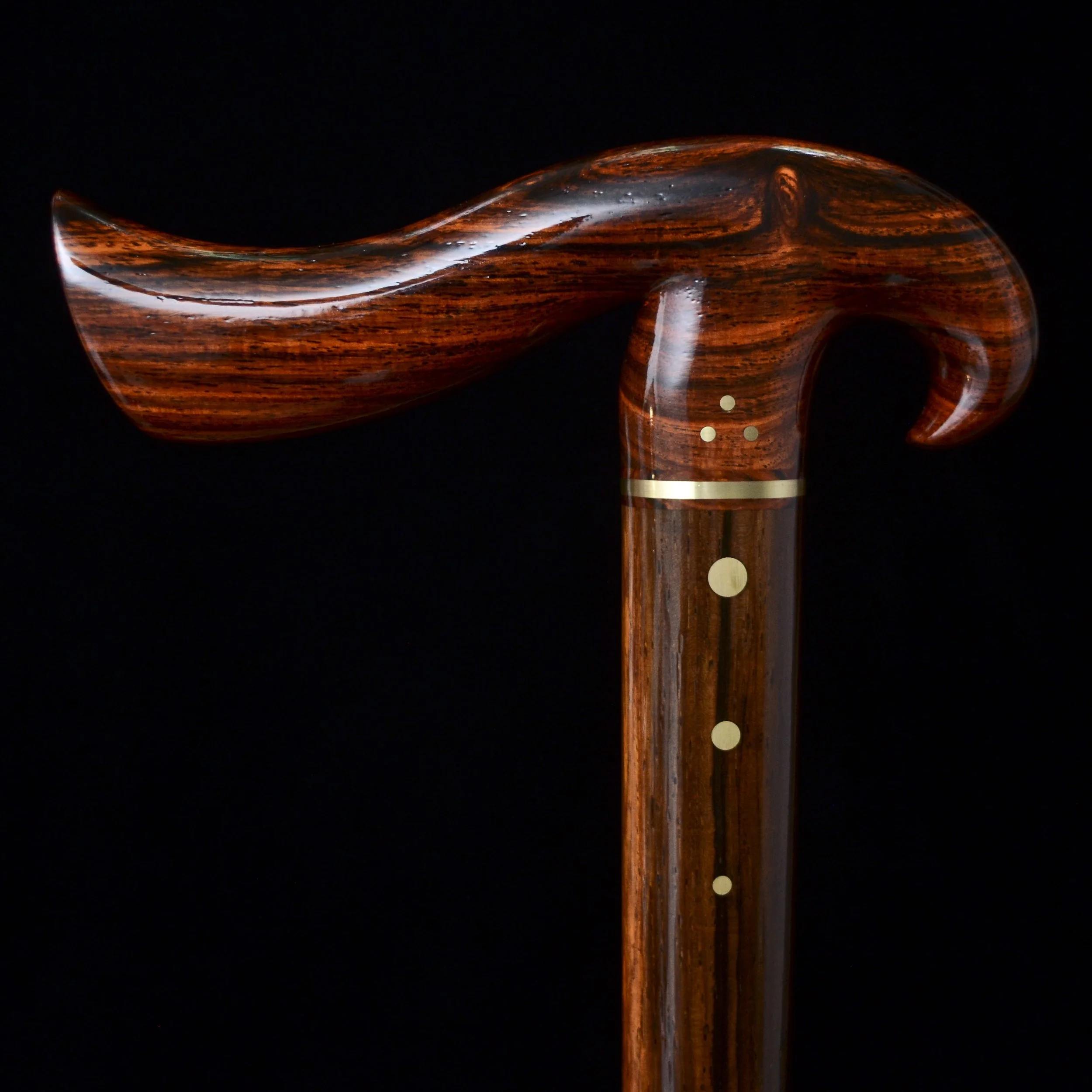
An heirloom quality cane, “Flame” has an outstanding handle of rare rosewood set over top of a different rosewood. The handle is Siamese rosewood with a scientific name: Dalbergia Cochinchinensis. This is one of the most coveted and scarce of all woods, its also one of the most colorful, dense, and stable of all the rosewoods making it an excellent material. This example of Siamese rosewood has vibrant red colors and contrast in its grain with a fine chatoyance. Outstanding material that speaks well for itself. The shaft is Cocobolo from Mexico, darker than the handle but has complementing colors and black line figure. This cane is built to be used and enjoyed. It can be used daily and would function well for that purpose. In hand It has the substantial feel of something made out of quality materials.
D E T A I L S
Cane Length: 38" (can be shortened to fit, just leave a note with your order)
Cane Weight: 1 lb. 7 oz.
Handle Material: Siamese Rosewood (Dalbergia Cochinchinensis) from Vietnam
Divider Material: Solid brass
Shaft Material: Cocobolo Rosewood (Dalbergia Retusa) from Mexico
Includes Rubber Tip
Every Gillis Cane is a photographed original, you’ll always receive the exact cane in the images.
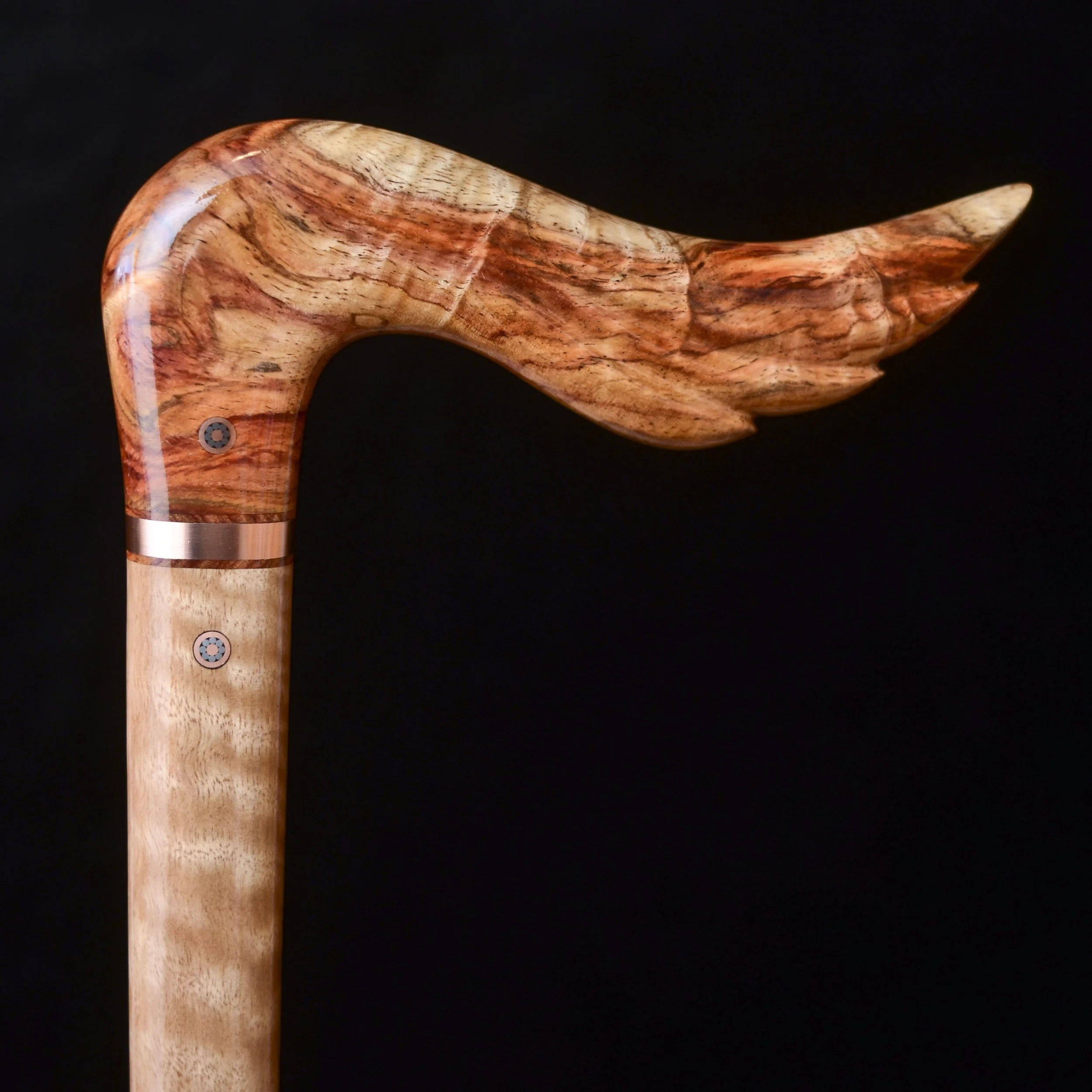
This elegant walking cane features a Hainan rosewood handle caved into the likeness of a birds' wing. This wood is the generally the most expensive wood in the entire world, even bead sized pieces of Hainan rosewood can sell for hundreds of dollars. Its scarcity is due largely to demand for centuries leading the species to near extinction. Hainan rosewood was the wood of choice of the Chinese emperor's furniture for several dynasties, such pieces only exist in museums today. This particular piece of Hainan rosewood is outstanding quality, the best I have to offer. It also has curl figure in it making it rarer and its chatoyant qualities even more accentuated. The copper divider complements the warm colorful tones of the rosewood. A shaft of curly Eucalyptus wood from Australia is another beautiful and chatoyant piece. Perfectly functional, but best considered as a special occasion use cane. Medium in weight, suitable for most people to use and enjoy. Total length measures 38" and can be shortened to fit.
M A T E R I A L S
Handle – Hainan Rosewood from Hainan China
Dividers – Copper and thin Tulipwood Rosewood from Brazil
Shaft – Eucalyptus from Australia
Rubber tip
Every Gillis Cane is a photographed original, you’ll always receive the exact cane in the images.

Gift Card
Usable for any item on GillisCanes.com
Never expires, always honored.
Travel Canes

Gift Card
Usable for any item on GillisCanes.com
Never expires, always honored.
Lapidary Canes
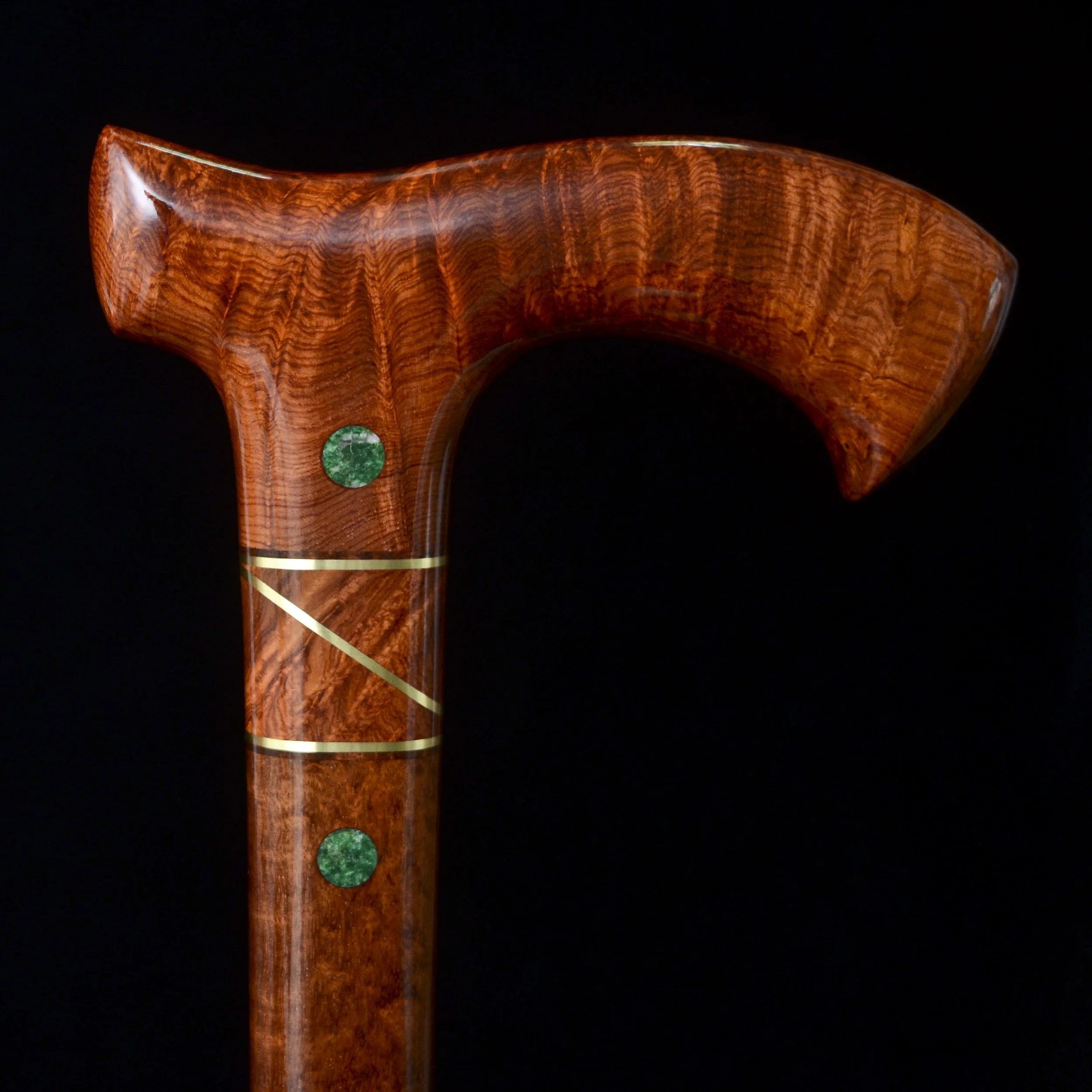
A museum-worthy piece with outstanding rosewood burl and intricate figured wood top to bottom, some of my finest work. The handle is burl wood from the Dong Nai region of Southern Vietnam, its incredibly obscure and called: Dalbergia dongnaiensis. Interestingly, this was later discovered to be the same biological special as Dalbergia Oliveri, but the trees and wood had regional differences that were thought to be different species for decades until recent genetic study. This old “Dong Nai” rosewood is beyond rare, especially with such exquisite grain and rich color. In the divider is matching rosewood with solid brass and lapidary pins of “cobra verde” stone, a variety of serpentine from Brazil. Finally the shaft is a central American hardwood called “Granadillo” that has a lot of quality similarities with the rosewoods. This example has one of the rarest forms of figure called “pomelle”, that has a beautiful visual effect from top to bottom. This is functional artwork, its feels excellent in the hand and could be used daily if desired, or used for special occasions.
D E T A I L S
Cane Length: 38" (can be shortened to fit, just leave a note with your order)
Cane Weight: 1 lb. 7 oz.
Handle Material: Dalbergia Dongnaiensis burl from Southern Vietnam
Divider Material: Solid brass and Cobra Verde stone
Shaft Material: Granadillo from Central America
Includes Rubber Tip
Every Gillis Cane is a photographed original, you’ll always receive the exact cane in the images.
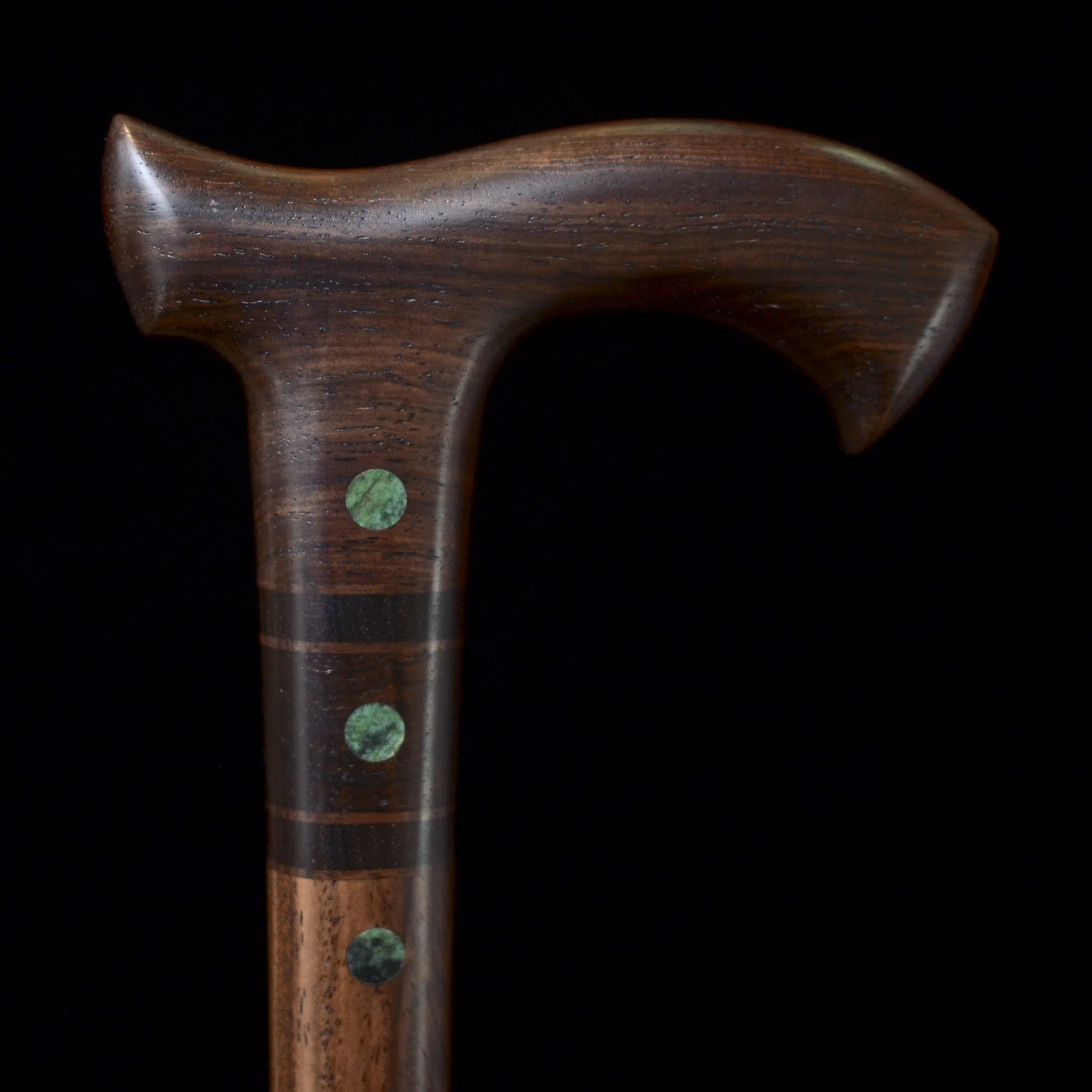
The cane I would grab first to take a walk. This piece is made using excellent exotic woods and jade stone, but in package that has subtlety and softness, a harmonious combination. The handle and shaft are leadwood from Mozambique, a wood appropriately named for its weight is considerable! In the divider are two layers of dark Brazilian rosewood (Dalbergia Nigra), and a larger centerpiece of chocolate Siam rosewood with strong chatoyant, figured grain; and of course, pins of green jade stone that finish the cane so nicely. It has a natural and smooth Danish oil finish. Would make an excellent and durable daily use cane that should age gracefully.
D E T A I L S
Cane Length: 38" (can be shortened to fit, just leave a note with your order)
Cane Weight: 1 lb. 13 oz. (Among my heaviest! not advised for someone small in stature)
Handle Material: leadwood from Mozambique
Divider Material: Brazilian rosewood (Dalbergia Nigra), and Siam rosewood (Dalbergia Cochinchinensis) from Vietnam
Shaft Material: leadwood from Mozambique
Includes Rubber Tip
Every Gillis Cane is a photographed original, you’ll always receive the exact cane in the images.
This cane cannot be shipped outside the United States because it contains Brazilian Rosewood (Dalbergia nigra), which is regulated under CITES Appendix I.
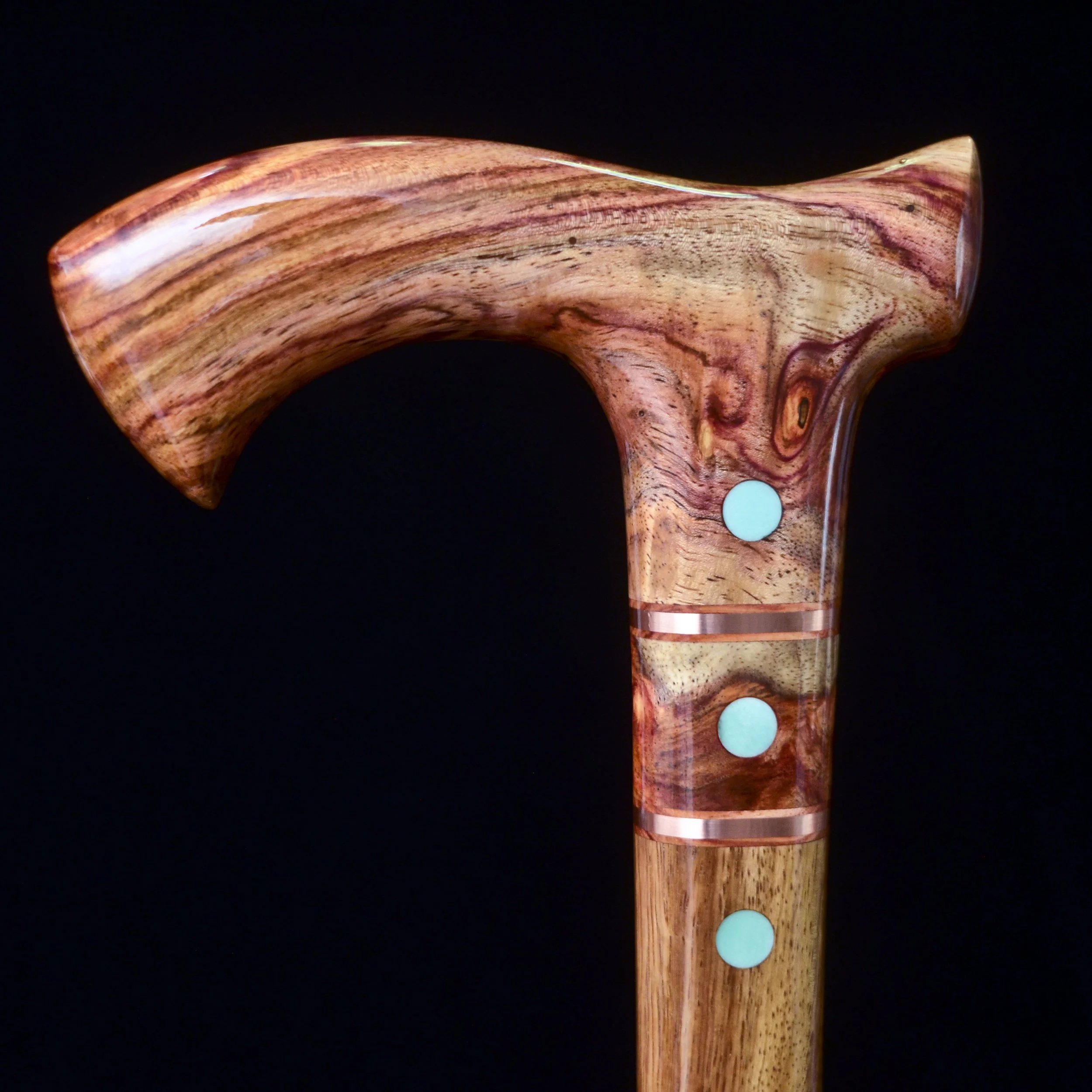
A beauty! This rosewood cane has spectacular colors and wood grains. The handle is a special species called Hainan rosewood with a scientific name: Dalbergia Oderifera. This is perhaps the most precious and scarce of all the rosewoods, the result of demand for centuries leading the species to near extinction. Hainan rosewood was the wood of choice of the Chinese emperor's furniture for several dynasties. Such pieces only exist in museums today. This particular handle has outstanding quality Hainan rosewood with a vibrant array of pink, peach, red, and orange colors and wild grain features, and it is quite a chatoyant wood as well. Its easy to see why this wood is so highly coveted, it is a special offering!
In the divider is matching Hainan rosewood but even more wildly figured grain and two layers of solid copper. The thin layers are the same wood as the shaft, Senegal rosewood, another rarity with a very similar story though not quite to the same degree. Its a critically endangered species that is subject to illegal logging and trafficking. It’s in very high demand in China as its considered one of the “hongmu” or China’s list of rosewood species. (Hainan rosewood is considered the queen of the hongmu) Senegal rosewood is not one of the “true” rosewoods that are all Dalbergia species, but it is a related species and just as attractive, its scientific name is Pterocarpus Erinaceus. It has a pleasant array of colors and a shimmery grain.
Last but not least are the lapidary (stone) pins. They are variscite stone and are close to a tiffany blue/turquoise color. They really draw the eye and add another element of interest to this special cane. Variscite is from Nevada and it is a rare semi-precious gemstone
A museum-worthy yet fully functional cane. It fits nicely in the hand and is comfortable to carry; could be used by most anyone.
D E T A I L S
Cane Length: 38" (can be shortened to fit, just leave a note with your order)
Cane Weight: 1 lb. 4 oz.
Handle Material: Hainan Rosewood (Dalbergia Oderifera) from China
Divider Material: Solid Copper and Hainan Rosewood, thin Senegal Rosewood
Shaft Material: Senegal rosewood (Pterocarpus Erinaceus)
Includes Rubber Tip
Every Gillis Cane is a photographed original, you’ll always receive the exact cane in the images.
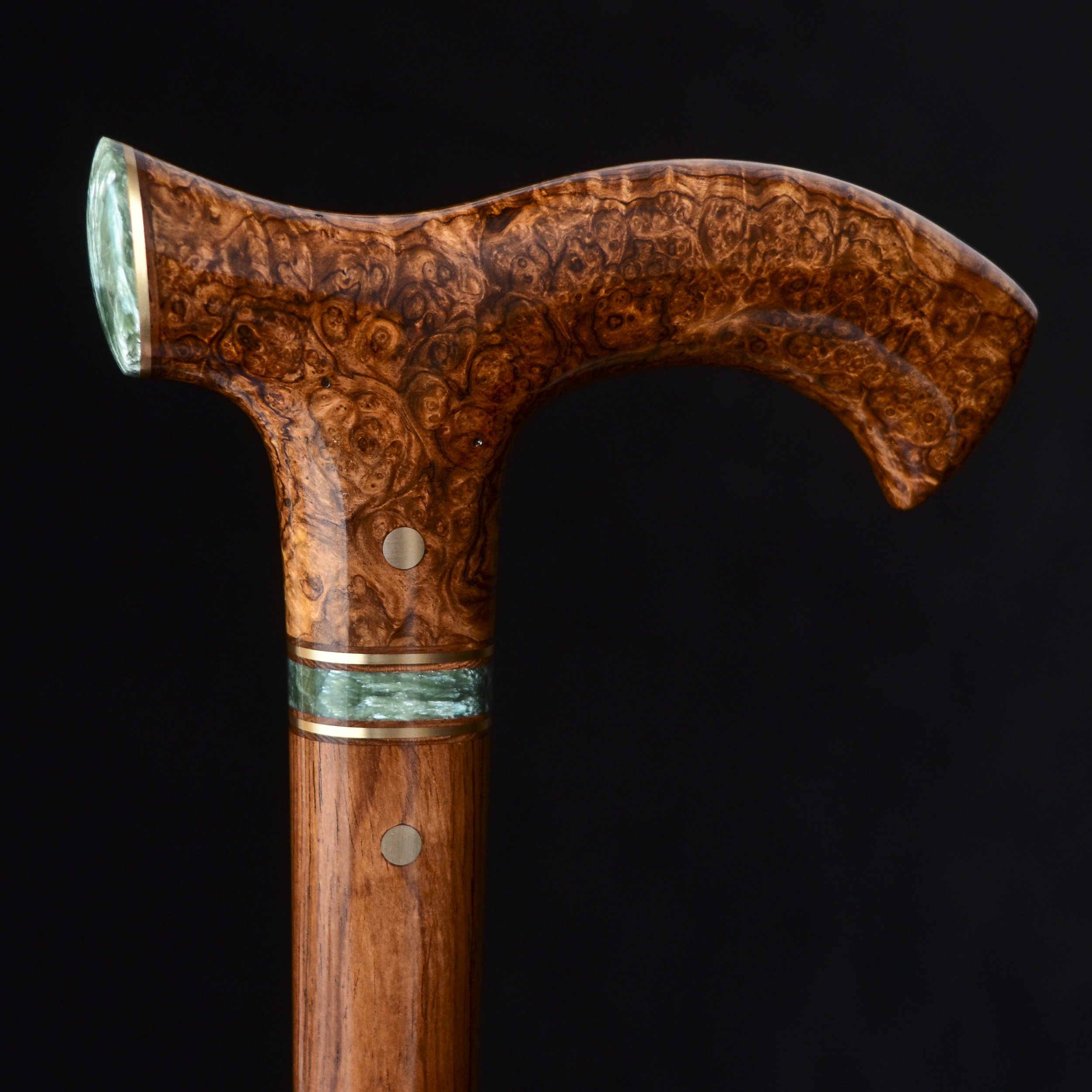
A museum worthy cane, this piece is exhibition-worthy from top to bottom. The handle is an outstanding piece of ultra rare Honduran rosewood burl with the best possible figure. Rosewoods are precious woods without any sort of figure, but rosewood burl is some of the rarest wood in the world! Honduran rosewood in particular has been a protected species for almost two decades and it has become quite scarce. Honduran rosewood is warm browns with darker browns producing a fine grain, it is also a very dense and durable wood. The end of the handle and divider have a semi-precious gemstone called “seraphinite” which comes from only one location in Siberia, Russia. seraphinite is a beautiful green color, its chatoyant like tiger-eye, and it has mica inclusions within the stone that look like frost, or snow flakes. Its a gorgeous addition. The metal is bronze. This piece is fully functional but probably best considered as a special occasion type of cane. It has a hefty, high-quality feel on account of the dense rosewood, but still suitable for most anyone to use and enjoy. Total length is 38” and can be shortened to fit.
M A T E R I A L S
Handle – Honduran Rosewood Burl
Divider – Seraphinite from Siberia and Bronze with thin Honduran Rosewood
Shaft – Honduran Rosewood
Lapidary - Seraphinite from Siberia
Rubber tip
Every Gillis Cane is a photographed original, you'll always receive the exact cane in the images.
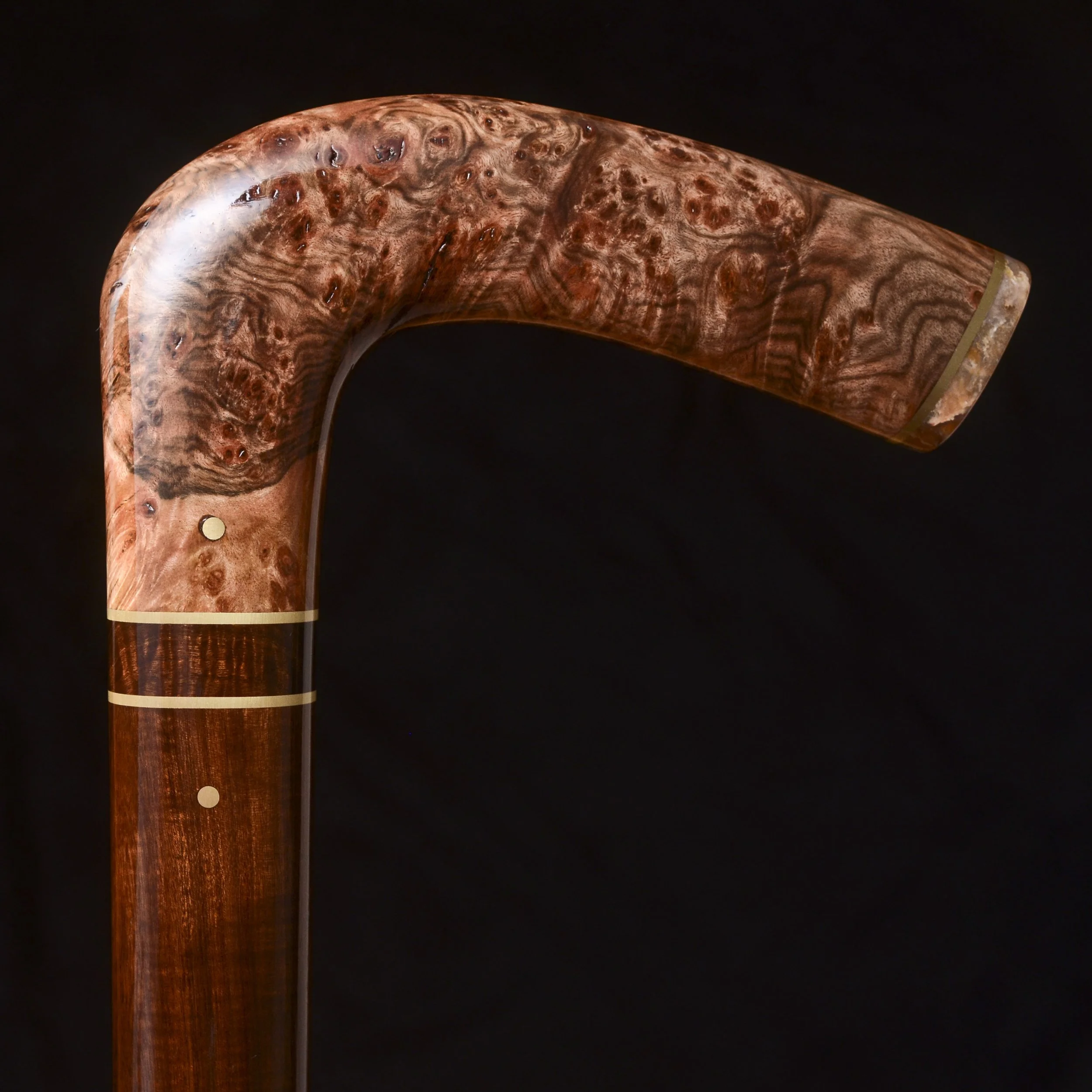
This spectacular cane has a rosewood burl handle, which is a museum worthy description regardless of which rosewood species it is. But this one is a very obscure rosewood species that doesn't have a common name, only its Latin scientific name, which is: "Dalbergia Candenatensis". This special piece of wood isn't just rare, its gorgeous, with wonderful grain patterns and a host of colors. The end of the handle is adorned with a piece of agate and the metal is brass. The divider and shaft are gidgee wood from the Australian outback with curl figure. Gidgee is the second densest wood in the world, nearly tied with Lignum Vitae. Gidgee is a stubby, stunted, semi-arid region tree; high quality material is very rare. Total length measures 38" and can be shortened to fit. This is a heavy cane. Not recommended as a weight-bearing cane, suitable as a balance aid; wrist strap recommended.
M A T E R I A L S
Handle – Dalbergia Candenatensis burl
Divider – Brass and Gidgee
Shaft – Curl figured Gidgee from Australia
Lapidary - Agate (unknown origins, very old material from my lapidary estate collection)
Rubber tip
Every Gillis Cane is a photographed original, you’ll always receive the exact cane in the images.
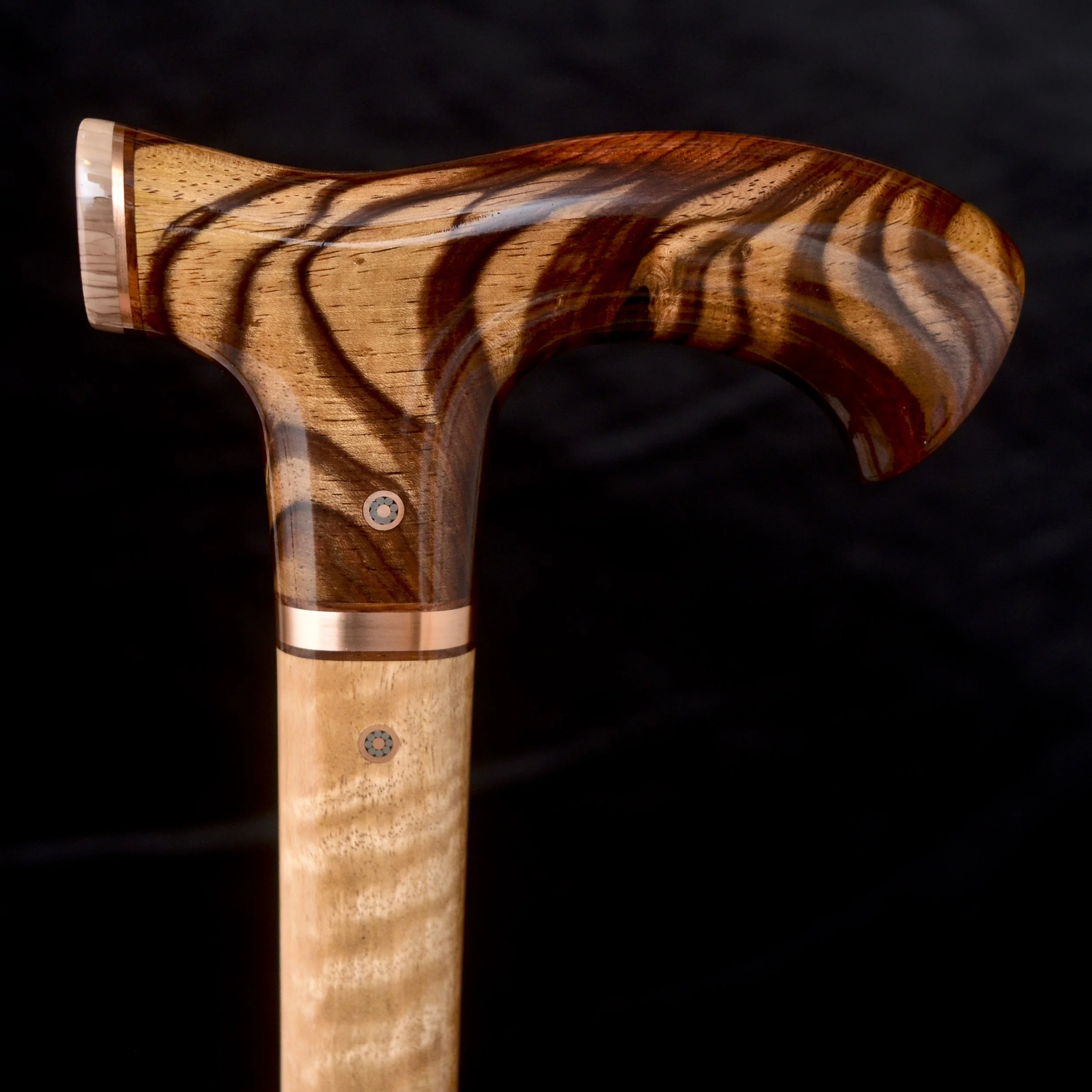
This cane is full of visually stunning and unique woods and stone. The handle is truly an incredible piece of wood that is unlike any other I’ve ever used. Its from the “Y” between two large branches of the tree, right in the middle where they split off from each other. The effect on the wood is a layered look of blond sapwood and purplish-red heartwood. Wood does not normally grow like this! The species is a rare and obscure rosewood species from S. E. Asia known only by its scientific name in the West: Dalbergia Oliveri. Having such a special figured grain in a rare species, this is “once in a lifetime” wood. On the front end of the handle is a precious little piece of landscape willow creek jasper, and its like a window into another world. Looking closely you’ll see rolling hills, mountains, and a cloudy sky, cast with a dusky sun-set color. Moving down the cane is a bright copper divider and a shaft of chatoyant, curl figured, dense and durable Eucalyptus wood. It’s average weight and can be used comfortably by almost anyone. Total length measures 38” and can be shortened to fit.
M A T E R I A L S
Handle – Dalbergia Oliveri from S. E. Asia with Figure
Divider – Copper
Shaft – Eucalyptus wood from Australia
Lapidary - Willow Creek Jasper from Idaho
Rubber tip
Every Gillis Cane is a photographed original, you’ll always receive the exact cane in the images.
Ancient Canes
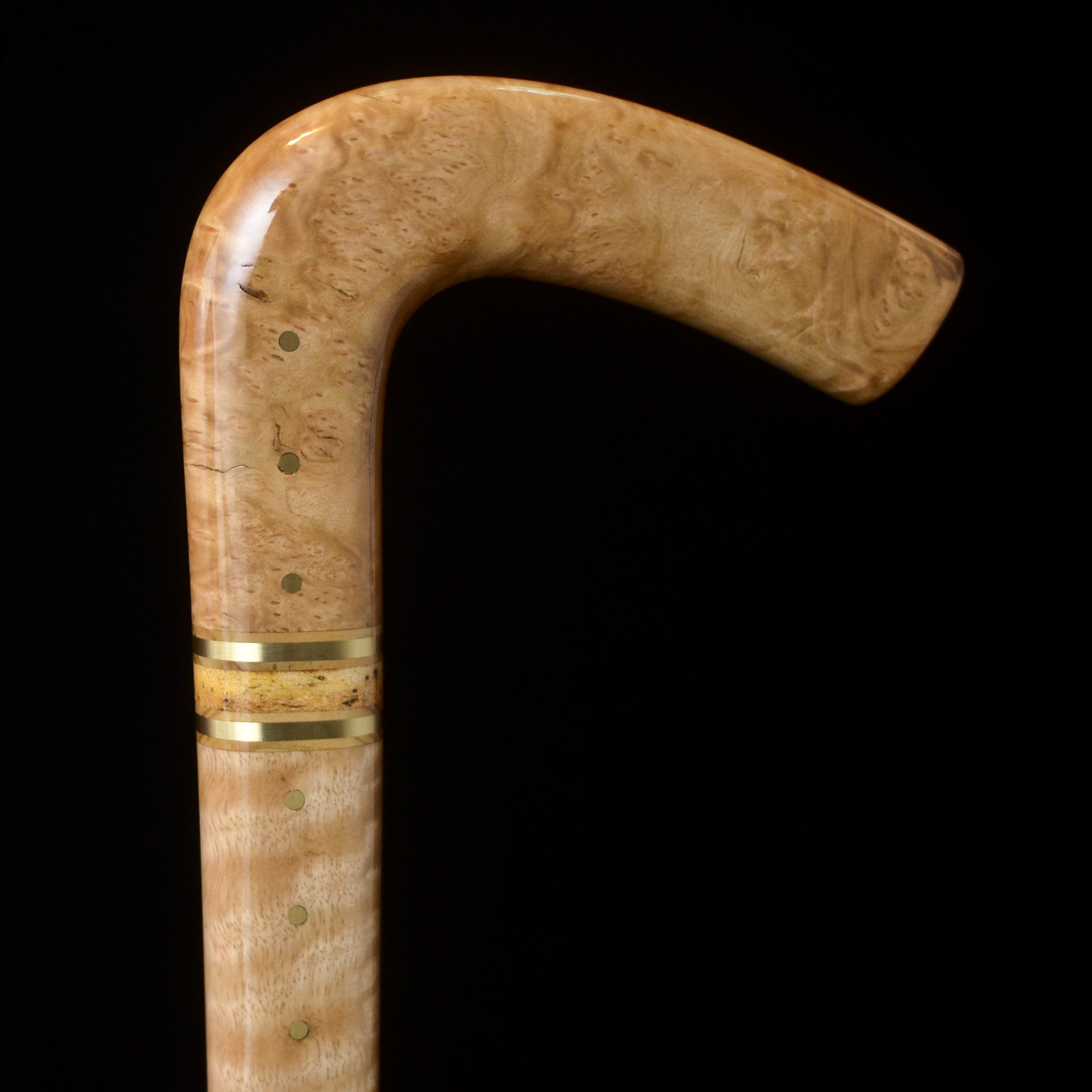
Here is a lightly colored cane full of amazing wood grains top to bottom! The handle is Yellow box burl, an Australian Eucalyptus species, and the shaft is curl figured Australian Eucalyptus of a different species. There are close to 1000 different eucalyptus species native to Australia, I’m not sure which one the shaft is but its very dense and chatoyant.
The divider centerpiece is the ancient part of this cane, its rib bone from an extinct mammal called the “Steller’s Sea Cow”. This species went extinct in the 1700’s, just a few decades after it was first discovered by western explorers venturing into the northern most reaches of North America. It was the largest member of the dugong family of species which includes the manatee. The Steller’s Sea Cow had likely been on decline since the last ice age and few remained. The Inuit people of Alaska had been hunting and co-existing with this species for thousands of years, and it was during excavations of ancient Inuit hunting grounds on St. Lawrence Island that this rib bone and others was excavated. It’s thousands of years old and tells a unique story. Despite being ancient It’s very durable bone, the Steller’s Sea Cow was massive and had the densest bones of any marine species ever known.
The thin layers of wood in the divider are cedar of Lebanon, along with solid layers of brass. A functional cane for any lover of figured wood grains.
D E T A I L S
Cane Length: 38" (can be shortened to fit, just leave a note with your order)
Cane Weight: 1 lb. 8 oz.
Handle Material: Yellow Box burl from Australia
Divider Material: Two solid brass layers, thin cedar of Lebanon
Shaft Material: Cumaru from South America
Includes Rubber Tip

Here is a striking ancient cane with my raptor’s claw handle in quilted sinker Tasmanian Myrtle wood. This myrtle is some of the nicest quilted figured ancient wood I’ve been able to source. It was recovered by hand (with chains and a landrover) out of a bog in the Tarkine rainforest in Tasmania. The same source as my ancient Tasmanian blackwood I offer occasionally. This material is several thousand years old! Preserved without decay for millennia within the bog’s oxygen deprived environment. Tasmanian myrtle wood is very chatoyant, plus with its quilted figure the effect is accentuated, its beautiful and dynamic grain! The shaft is another wood with the same story but from a totally different part of the worlk, its Ukrainian bog oak wood, probably a little older than the myrtle at approximately 7,000 years old! This cane is dark but even in relatively dim room light its grain can still be appreciated, in sunlight its grain is excellent.
Cane weight is medium, suitable for most any user. It is daily use appropriate and functional. Total length measures 38” and can be shortened to fit.
The last image is of a “log in the bog”, ancient bog oak being found and excavated.
M A T E R I A L S
Handle – Ancient Bog Myrtle wood from Tasmania
Divider –Brass
Shaft – Bog oak from Ukraine
Rubber tip
Every Gillis Cane is a photographed original, you’ll always receive the exact cane in the images.
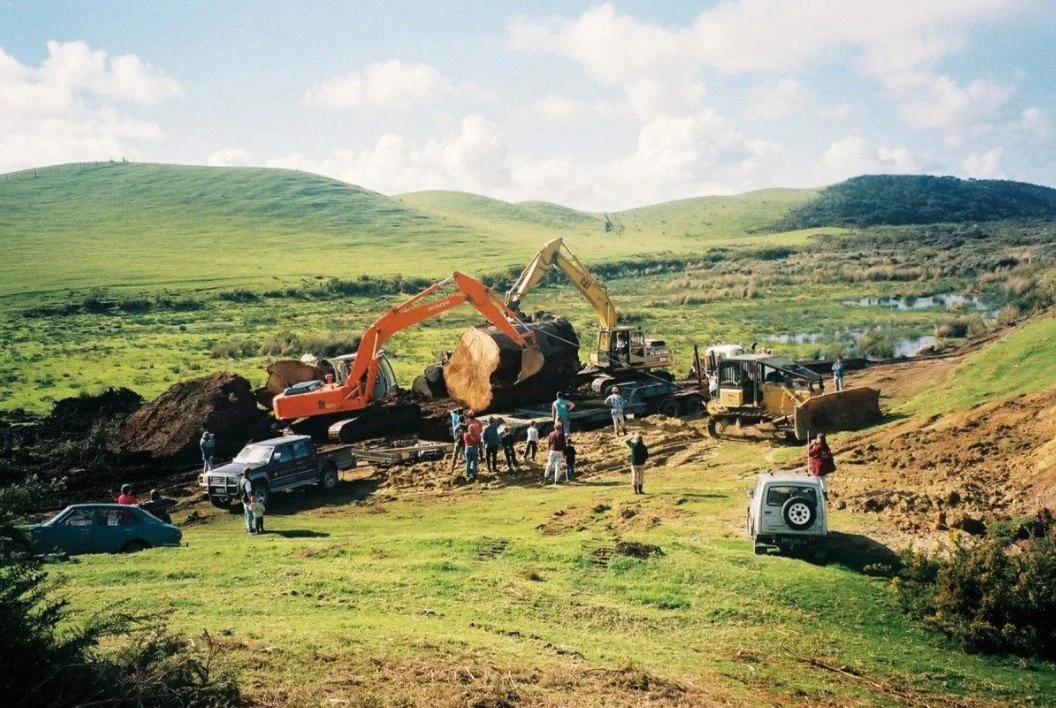
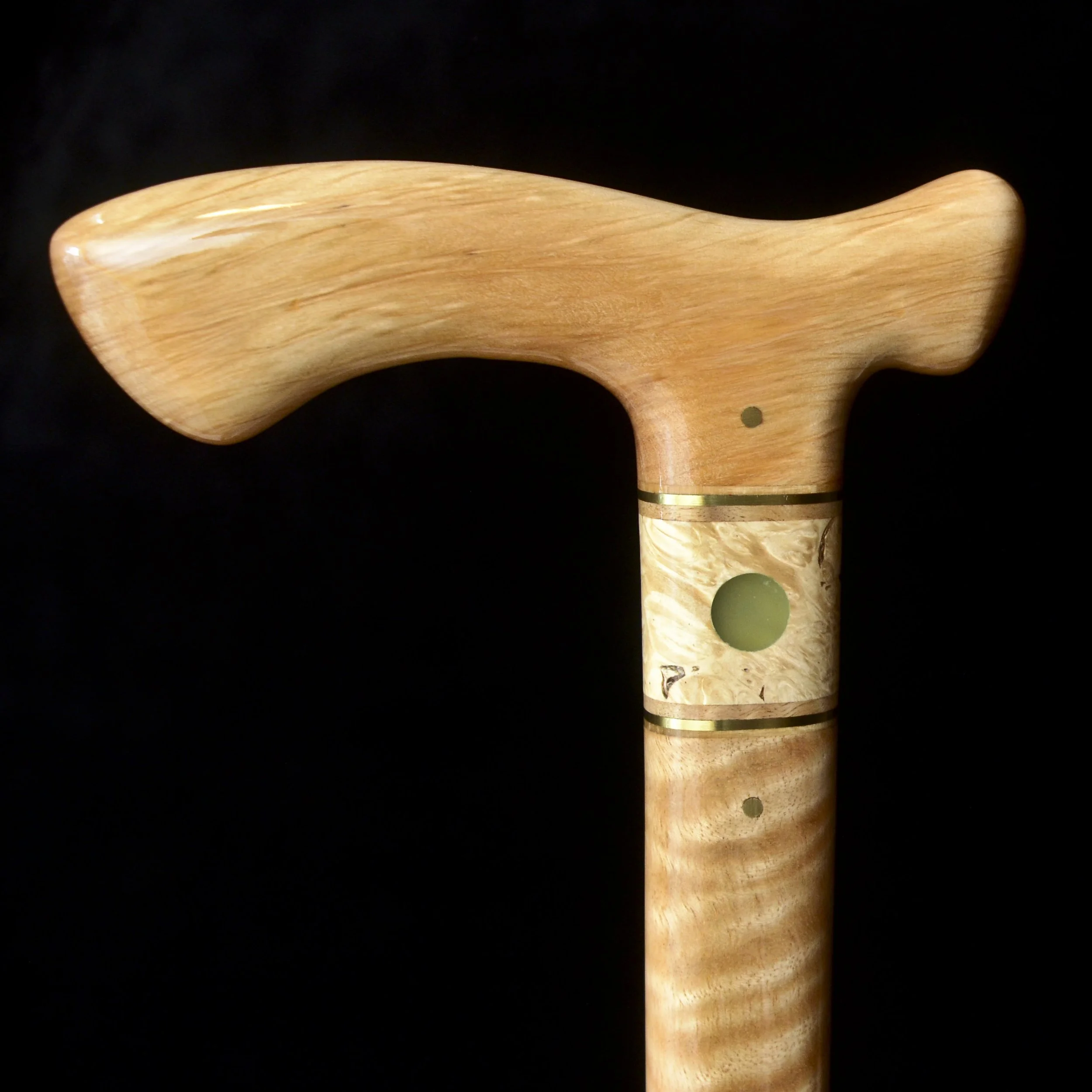
This cane is crafted using possibly the most unique material I’ve ever used. The handle and shaft are wood from an ancient kauri tree that was buried in the ground for 40,000-50,000 years! That's right, this wood dates back to the earliest cave paintings at approximately 40,000 BC. The Bering land bridge between Alaska and Russia broke apart approximately 20,000 years ago and the Woolly mammoth went extinct 8,000 years ago. It's hard to fathom 40,000 years. Wood like this is called "sinker" wood. A tree lives a typical life span but when it dies and falls it is covered in peat moss or falls into a bog, both of which create an oxygen deprived environment that perfectly preserves the wood. Ancient Kauri is the oldest "workable" wood in the world, the only wood that is older is petrified wood which is no longer wood but stone. Kauri is not just cool for being old though, its an extremely chatoyant wood with a very sparkly and dynamic grain. This effect can’t be captured in still images but its very obvious and beautiful in person, even in dim light but especially in bright light environments. The handle on this cane is my most figured ancient kauri wood I have, it has different bands, stripes, and patterns to its grain.
The end of the handle is decorated with petrified wood, the oldest “wood” being many millions of years old, but its not wood anymore and has turned to stone, colorful agate. It has a few colors, some match the kauri wood nicely, others the brass, and the red ties into the thin accent layers of Brazilian bloodwood. A beautiful and harmonious design I’m quite pleased with.
Cane weight is less than average for my work, has a quality feel and sturdy but has a weight that feels easily caried for long events. Total length measures 38” and can be shortened to fit.
The last image is of the excavation of an absolutely massive ancient kauri tree section in the northern part of New Zealand. These giant trees were likely a couple thousand years old when they fell.
M A T E R I A L S
Handle – Ancient Kauri from Northern New Zealand
Divider –Brass and Brazilian bloodwood
Shaft – Ancient Kauri from Northern New Zealand
Lapidary - Petrified wood from an estate collection of stones, unknown geographic origin.
Rubber tip
Every Gillis Cane is a photographed original, you’ll always receive the exact cane in the images.
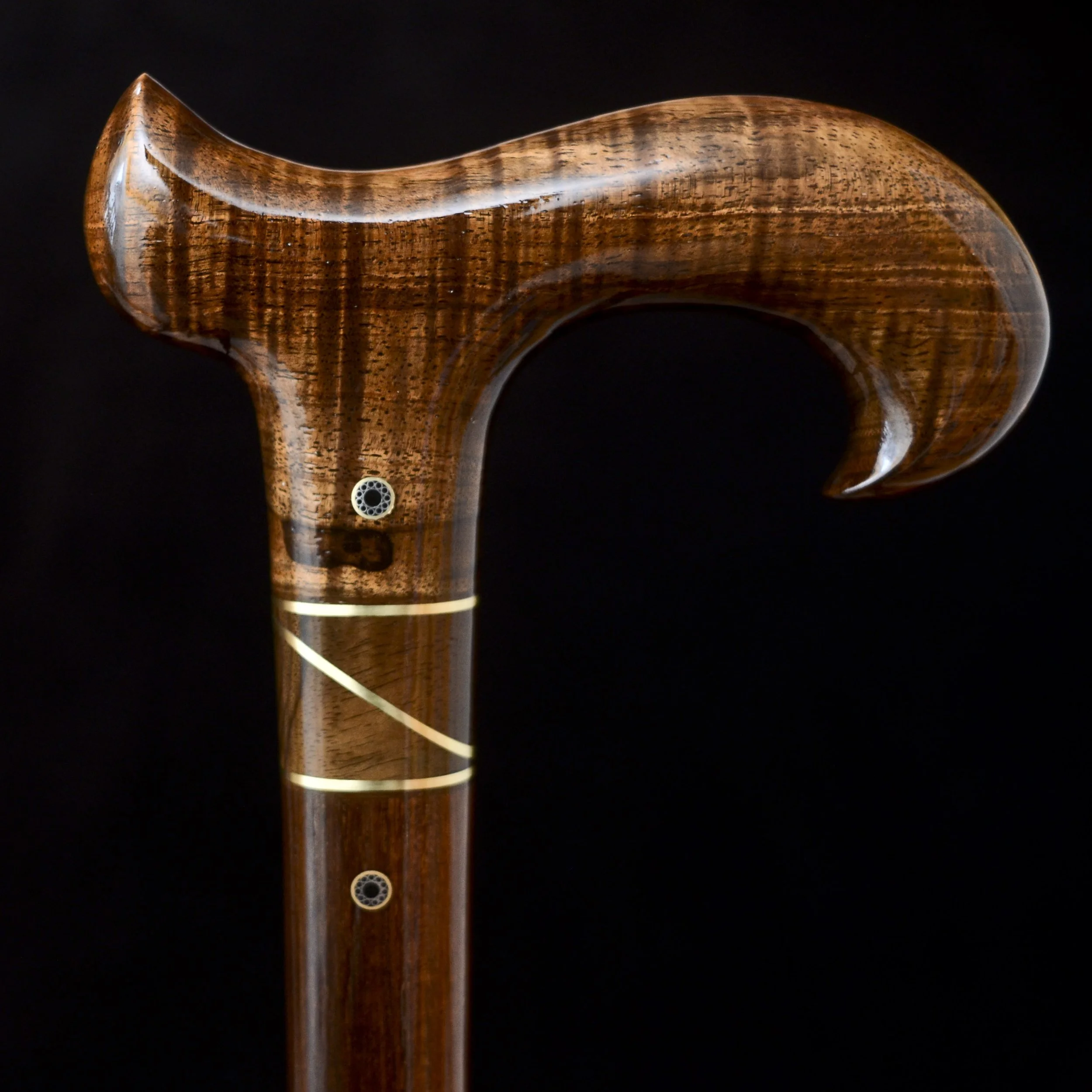
An heirloom quality walking cane made using a historic wood that I consider ancient. The handle is Huon Pine, the second longest lived species on earth after the Bristlecone pine. Huon only grows in Tasmania and individuals can live for well over a thousand years. Today it is a protected species with a mystic reputation. In 2020 I received a block of salvage harvested Huon pine from my Tasmanian contact that had the tightest growth rings of any piece of wood I've ever seen, counting over 500 years in a space of 4 inches. But the block came from a much larger tree and only represented a fraction of its growth, it was significantly older. Almost all ancient material I use lived a normal life and has been dead for a long time but preserved, this Huon pine had a tremendously long life and died recently.
It will be difficult to notice in the pictures but there is also a quilting effect in the grain that is smaller than any other quilting we have ever seen before, these "micro ripples" run along the length of the cane handle. Huon pine is a chatoyant wood and the fine quilting adds to the effect. Really cool wood! You probably cant see the annual growth rings in the pictures either, they are so small.
The divider draws the eye, its a piece of box elder burl with brass layers and lapidary centerpieces of green translucent jade stone. The green jade glows and complements the light yellow colors of the wood. The shaft is spectacular if you enjoy figured wood, its extremely chatoyant and highly figured mountain ash wood from Australia. A special cane with a great story, beautiful materials, and design harmony. Its medium - medium/light in weight, nimble enough for extended use and easily caried by anyone. There is a slight bend in the shaft, noticeable by looking along its length; its not perfectly straight. Total length measures 38" and can be shortened to fit.
M A T E R I A L S
Handle – Ancient Huon Pine from Tarkine, Tasmania
Divider - Box Elder Burl - New York - harvested myself Jade Stone
Shaft - Curl figured Australian Mountain Ash Wood
Rubber tip
Every Gillis Cane is a photographed original, you'll always receive the exact cane in the images.
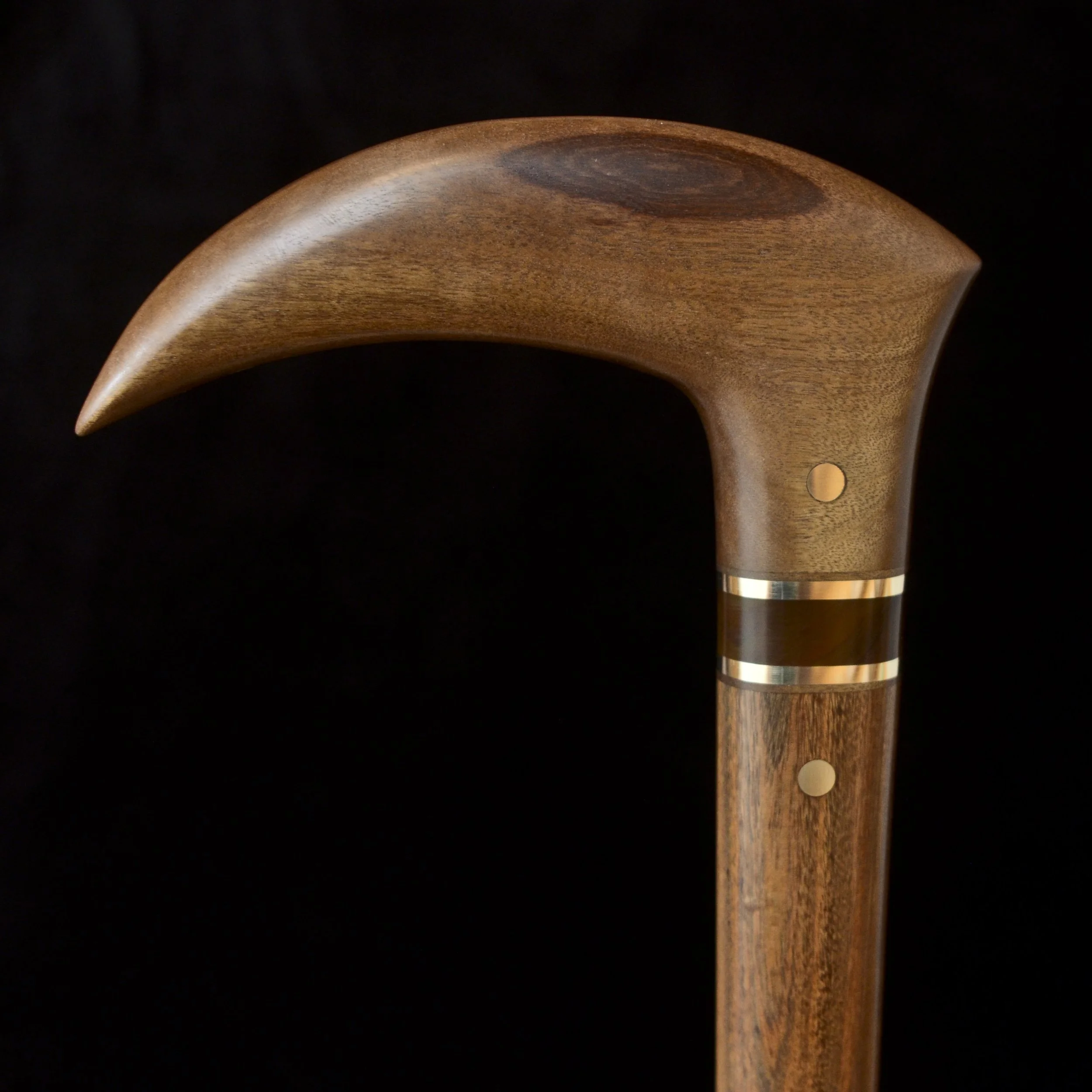
This cane is crafted exclusively from ancient Tasmanian blackwood with a strong 3D curl figure in the handle that is highly chatoyant. This wood is thousands of years old, it was recovered by hand and truck from a bog in the Tarkine rainforest on Tasmania. Wood like this is called "sinker" wood: a Tasmanian blackwood tree lives a typical life span but when it dies and falls it is covered in peat moss or falls into a bog, both of which create an oxygen deprived environment that perfectly preserves the wood. But the wood does absorb minerals from its surroundings and the result after thousands of years is a darker color. Ancient wood like this is very rare and difficult to find and is far more labor intensive to harvest than a standing tree. Ancient wood with figure such as the handle of this cane is exponentially rarer because very little wood ever grows with figure. A medium weight cane, suitable for most anyone and daily use appropriate. Total length measures 38" and can be shortened to fit. Also, did I mention the wood is chatoyant? Its a fabulously shimmery wood, especially with figure!
M A T E R I A L S
Handle – Ancient Tasmanian Blackwood
Divider – Ancient Tasmanian Blackwood and Brass
Shaft – Ancient Tasmanian Blackwood
Rubber tip
Every Gillis Cane is a photographed original, you’ll always receive the exact cane in the images.
Here’s an ancient cane with a refined craftsman look and feel. The handle is my most recently acquired ancient material, its West African Birch wood that was found sunk into a bog where it was resting for at least 1000 years! Its color is darker from mineral exposure and the wood is denser for the same reason. The bog birch is very dense and durable. This ancient timber has a remarkable story and there isn’t anything else quite like it. The divider has a center piece faux tortoise shell, a premium man-made resin product that is translucent. An Ipe wood shaft is a handsome complement that has beautiful grain top to bottom. Ipe is a recently protected species and its wood is super dense and durable. Cane weight is medium, suitable for most any user, but it has the feel of a cane made from dense, quality woods. It is daily use appropriate and functional. The Danish oil finish is buttery smooth and lustrous. Total length measures 38” and can be shortened to fit.
M A T E R I A L S
Handle – Ancient Bog Birch wood from West Africa
Divider – Faux Tortoise Shell, Brass
Shaft – Ipe from S. America
Rubber tip
Every Gillis cane is a photographed original, you’ll always receive the exact cane in the images.
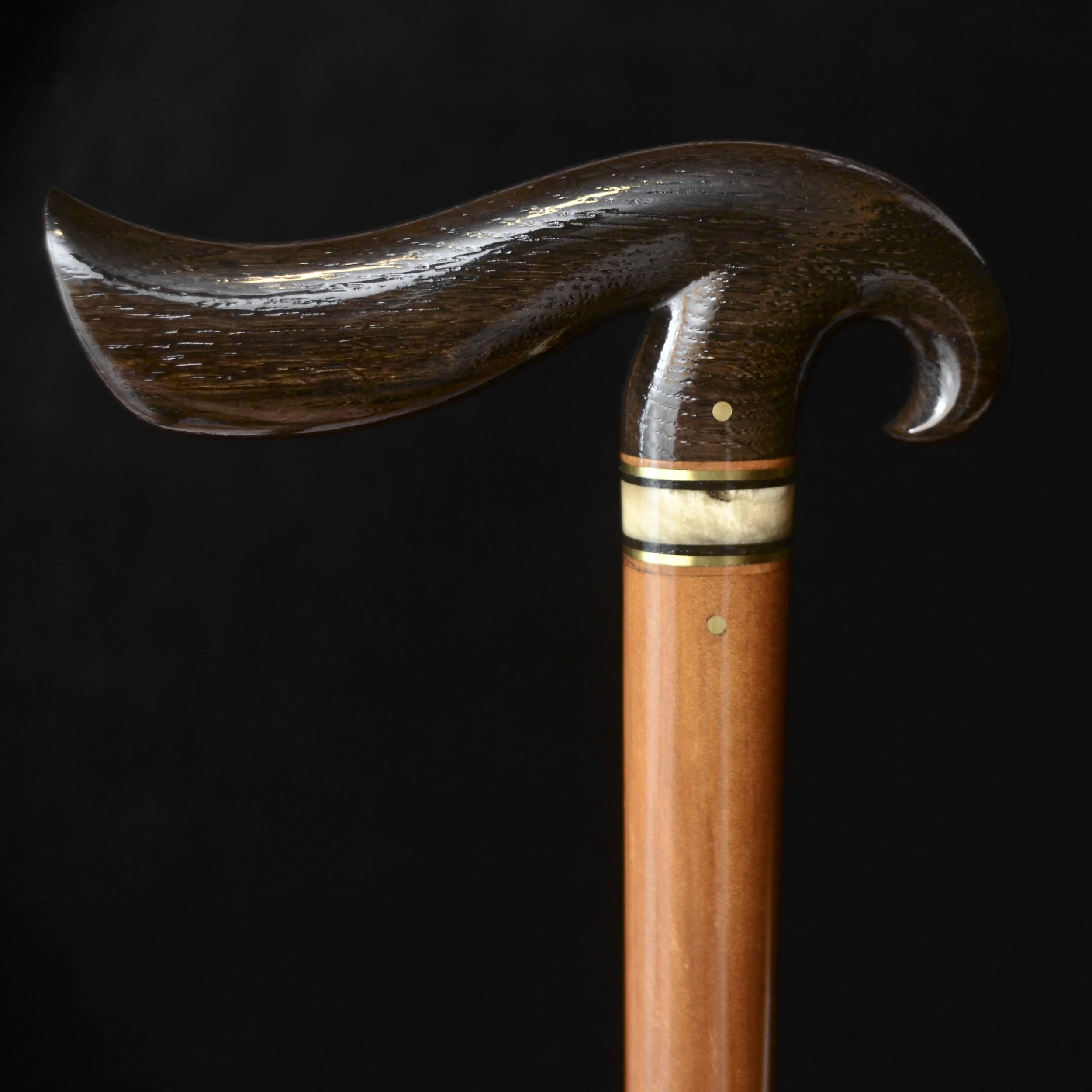
An exhibition quality cane with handsome woods grains, lovely chatoyance, and a story to tell! Both the handle and shaft are "sinker woods" and are ancient, the bog oak being 5-7,000 years old, and the Kauri being the oldest workable sinker wood in the world at 40,000 years old! Sinker wood starts with a typical life span but when the tree dies and falls it is covered in peat moss or falls into a bog, both of which create an oxygen deprived environment that perfectly preserves the wood. Ancient Kauri is from Northern New Zealand, and the bog oak came from Ukraine. History in your hands! The divider is brass and a centerpiece of muskox horn from Alaska. Cane has a lighter weight, could be used for long walks comfortably by anyone, good daily use piece. Ancient woods are not fragile because they are ancient, they work and behave just like regular wood because it has been so well preserved. Total length measures 38" and can be shortened to fit.
Second to last image is of an MASSIVE ancient Kauri being excavated back decades ago.
The last image is of a “log in the bog”, ancient bog oak being found and excavated.
M A T E R I A L S
Handle – Ancient Bog Oak from Ukraine
Divider – Brass, Alaskan Muskox Horn, thin matching bog oak and ancient kauri
Shaft – Ancient Kauri wood from New Zealand
Rubber Tip
Every Gillis Cane is a photographed original, you’ll always receive the exact cane in the images.
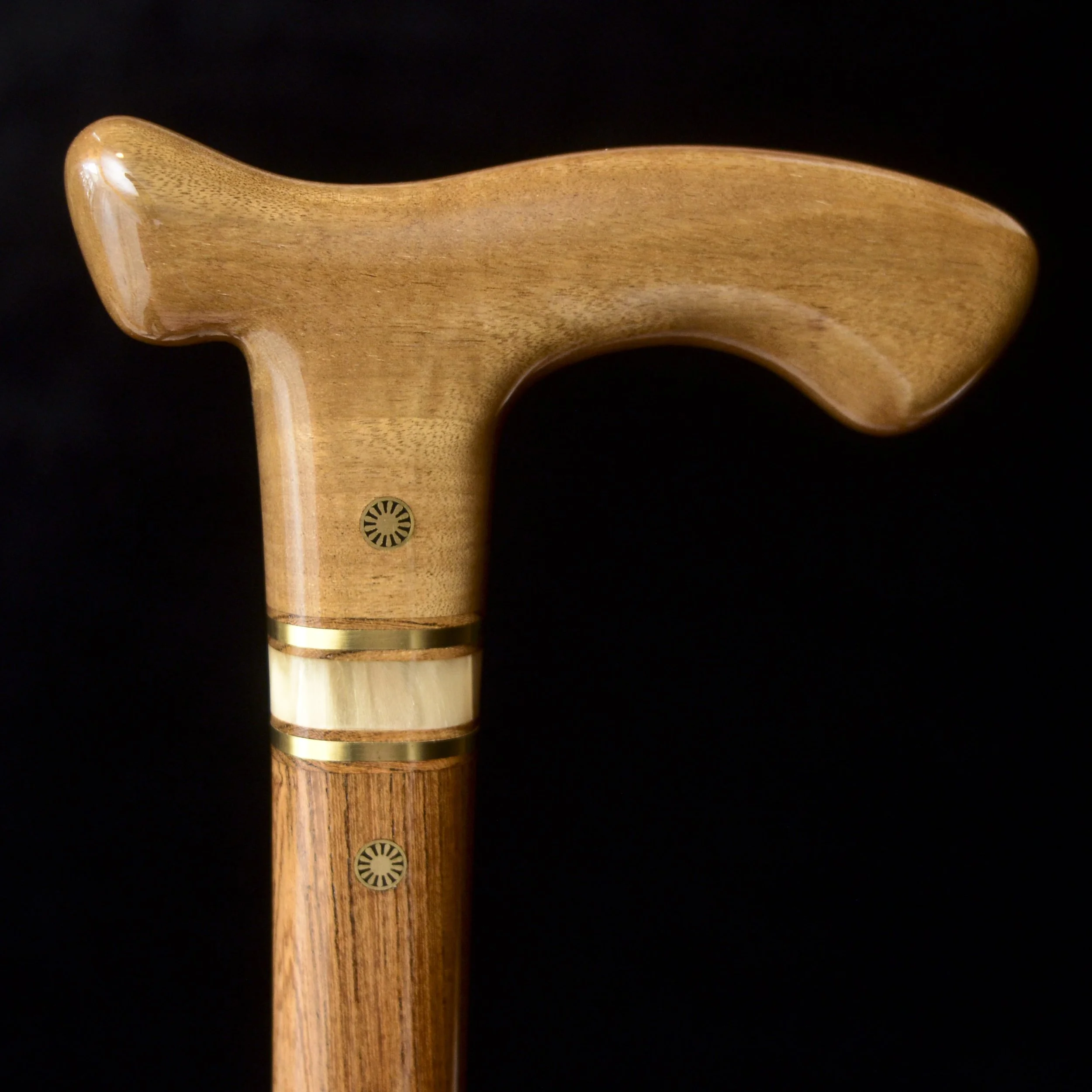
Here is one of my personal favorites among the ancient canes, in part because of its aesthetics, and in part for the story of these remarkable pieces of wood. The handle is my most recently acquired ancient material, its West African Birch wood that was found sunk into a bog where it was resting for at least 1000 years! Its color is darker from mineral exposure and the wood is denser for the same reason. The bog birch handle is chatoyant with a handsome shimmery grain, a dynamic effect only appreciated in person.
The shaft is another ancient wood, one with a more explosive story: Its Jindai Keyaki wood, or one of the Japanese elm species. My source in Japan explained to me that Keyaki is the rarest of the ancient (Jindai) timbers, and its the densest I have as well. The wood is approximately 2600 years old, and was buried under a volcanic eruption from Mt. Chokaisan. A massive, and famous volcano in Japan, Chokaisan had a large eruption 2600 years ago that caused a collapse of its summit and what’s called the Kisakata debris avalanche. The rocks and soil that collapsed flowed north-northwestward and were deposited widely in the current Kisakata and Nikaho towns. The volume is estimated to be 3 to 4 billion cubic meters of earth. It’s under all of this debris that some of the ancient forest has been preserved without decay from lack of oxygen, and some has been excavated.
The Japanese word “Jindai” means “The age of the Gods”, and speaks to the age of the material; its so old that its considered part of mythology! Its a privilege to offer such amazing and unique material in my work.
Finishing the cane is a translucent piece of Alaskan Muskox horn with brass and thin layers of Jindai Keyaki. Cane weight is medium, suitable for most any user. It is daily use appropriate and functional. Total length measures 38” and can be shortened to fit.
Note: Both woods have a nice chatoyance. This can make the wood on either the handle or shaft darker, or lighter depending on how the light is hitting it. Try to average out these shades and colors, because in person all are present simultaneously. The handle and shaft on this cane are almost perfect matches in color and shade.
Note: The shaft has a filled-in crack, this defect is photographed - second to last image. This will not effect the cane’s functionality.
M A T E R I A L S
Handle – Ancient Bog Birch wood from West Africa
Divider – Alaskan Muskox Horn and Brass
Shaft – “Jindai Keyaki” or ancient Japanese elm wood
Rubber tip
For more information on Mt. Chokaisan its volcanic activity, visit this Smithsonian Institute web page: https://volcano.si.edu/volcano.cfm?vn=283220
The last image is of Mt. Chokaisan
Every Gillis cane is a photographed original, you’ll always receive the exact cane in the images.
Feather Collection
Commodo cursus magna, vel scelerisque nisl consectetur et. Donec id elit non mi porta gravida at eget metus.
Lorem ipsum dolor sit amet, consectetur adipiscing elit. Vestibulum id ligula porta felis euismod semper.
Sed purus sem, scelerisque ac rhoncus eget, porttitor nec odio. Lorem ipsum dolor sit amet.
Vivamus pellentesque vitae neque at vestibulum. Donec efficitur mollis dui vel pharetra.
Praesent id libero id metus varius consectetur ac eget diam. Nulla felis nunc, consequat laoreet lacus id.
Donec id justo non metus auctor commodo ut quis enim. Mauris fringilla dolor vel condimentum imperdiet.
Commodo cursus magna, vel scelerisque nisl consectetur et. Donec id elit non mi porta gravida at eget metus.
Lorem ipsum dolor sit amet, consectetur adipiscing elit. Vestibulum id ligula porta felis euismod semper.
Sed purus sem, scelerisque ac rhoncus eget, porttitor nec odio. Lorem ipsum dolor sit amet.
Vivamus pellentesque vitae neque at vestibulum. Donec efficitur mollis dui vel pharetra.
Praesent id libero id metus varius consectetur ac eget diam. Nulla felis nunc, consequat laoreet lacus id.
Donec id justo non metus auctor commodo ut quis enim. Mauris fringilla dolor vel condimentum imperdiet.
Commodo cursus magna, vel scelerisque nisl consectetur et. Donec id elit non mi porta gravida at eget metus.
Lorem ipsum dolor sit amet, consectetur adipiscing elit. Vestibulum id ligula porta felis euismod semper.
Sed purus sem, scelerisque ac rhoncus eget, porttitor nec odio. Lorem ipsum dolor sit amet.
Vivamus pellentesque vitae neque at vestibulum. Donec efficitur mollis dui vel pharetra.
Praesent id libero id metus varius consectetur ac eget diam. Nulla felis nunc, consequat laoreet lacus id.
Donec id justo non metus auctor commodo ut quis enim. Mauris fringilla dolor vel condimentum imperdiet.
Commodo cursus magna, vel scelerisque nisl consectetur et. Donec id elit non mi porta gravida at eget metus.
Lorem ipsum dolor sit amet, consectetur adipiscing elit. Vestibulum id ligula porta felis euismod semper.
Sed purus sem, scelerisque ac rhoncus eget, porttitor nec odio. Lorem ipsum dolor sit amet.
Vivamus pellentesque vitae neque at vestibulum. Donec efficitur mollis dui vel pharetra.
Praesent id libero id metus varius consectetur ac eget diam. Nulla felis nunc, consequat laoreet lacus id.
Donec id justo non metus auctor commodo ut quis enim. Mauris fringilla dolor vel condimentum imperdiet.
Commodo cursus magna, vel scelerisque nisl consectetur et. Donec id elit non mi porta gravida at eget metus.
Lorem ipsum dolor sit amet, consectetur adipiscing elit. Vestibulum id ligula porta felis euismod semper.
Ammonite Staffs
Horns, Tusks, and teeth
Commodo cursus magna, vel scelerisque nisl consectetur et. Donec id elit non mi porta gravida at eget metus.
Lorem ipsum dolor sit amet, consectetur adipiscing elit. Vestibulum id ligula porta felis euismod semper.
Sed purus sem, scelerisque ac rhoncus eget, porttitor nec odio. Lorem ipsum dolor sit amet.
Vivamus pellentesque vitae neque at vestibulum. Donec efficitur mollis dui vel pharetra.
Praesent id libero id metus varius consectetur ac eget diam. Nulla felis nunc, consequat laoreet lacus id.
Donec id justo non metus auctor commodo ut quis enim. Mauris fringilla dolor vel condimentum imperdiet.
Commodo cursus magna, vel scelerisque nisl consectetur et. Donec id elit non mi porta gravida at eget metus.
Lorem ipsum dolor sit amet, consectetur adipiscing elit. Vestibulum id ligula porta felis euismod semper.
Sed purus sem, scelerisque ac rhoncus eget, porttitor nec odio. Lorem ipsum dolor sit amet.
Vivamus pellentesque vitae neque at vestibulum. Donec efficitur mollis dui vel pharetra.
Praesent id libero id metus varius consectetur ac eget diam. Nulla felis nunc, consequat laoreet lacus id.
Donec id justo non metus auctor commodo ut quis enim. Mauris fringilla dolor vel condimentum imperdiet.
Commodo cursus magna, vel scelerisque nisl consectetur et. Donec id elit non mi porta gravida at eget metus.
Lorem ipsum dolor sit amet, consectetur adipiscing elit. Vestibulum id ligula porta felis euismod semper.
Sed purus sem, scelerisque ac rhoncus eget, porttitor nec odio. Lorem ipsum dolor sit amet.
Vivamus pellentesque vitae neque at vestibulum. Donec efficitur mollis dui vel pharetra.
Praesent id libero id metus varius consectetur ac eget diam. Nulla felis nunc, consequat laoreet lacus id.
Donec id justo non metus auctor commodo ut quis enim. Mauris fringilla dolor vel condimentum imperdiet.
Commodo cursus magna, vel scelerisque nisl consectetur et. Donec id elit non mi porta gravida at eget metus.
Lorem ipsum dolor sit amet, consectetur adipiscing elit. Vestibulum id ligula porta felis euismod semper.
Sed purus sem, scelerisque ac rhoncus eget, porttitor nec odio. Lorem ipsum dolor sit amet.
Vivamus pellentesque vitae neque at vestibulum. Donec efficitur mollis dui vel pharetra.
Praesent id libero id metus varius consectetur ac eget diam. Nulla felis nunc, consequat laoreet lacus id.
Donec id justo non metus auctor commodo ut quis enim. Mauris fringilla dolor vel condimentum imperdiet.
Commodo cursus magna, vel scelerisque nisl consectetur et. Donec id elit non mi porta gravida at eget metus.
Lorem ipsum dolor sit amet, consectetur adipiscing elit. Vestibulum id ligula porta felis euismod semper.
Lathe Turned Sticks

This stick is made out of East Indian rosewood, one of the classic rosewoods that has been well loved for hundreds of years. As will all woods that are in high demand they are over harvested, East Indian rosewood is no exception. But demand also lead this species to be grown in plantations, which is where the shaft came from several decades ago. The handle however is old growth forest material that is even older. The shaft is representative of what most East Indian rosewood looks like, plantation or forest grown - mostly dark brown with a distinct purple hue. This handle though is just superb with a deep magenta color. The top is suitable for most hand sizes with a maximum diameter of 2 inches (52mm) with a rounded top that fits in the palm nicely. It is completed with a handsome ferrule bottom and low profile rubber tip, total length measures 40" and can not be adjusted.
M A T E R I A L S
Handle – East Indian Rosewood from India
Divider - Copper
Shaft – East Indian Rosewood from Java
Rubber tip
Every Gillis Cane (stick) is a photographed original, you’ll always receive the exact stick in the images.
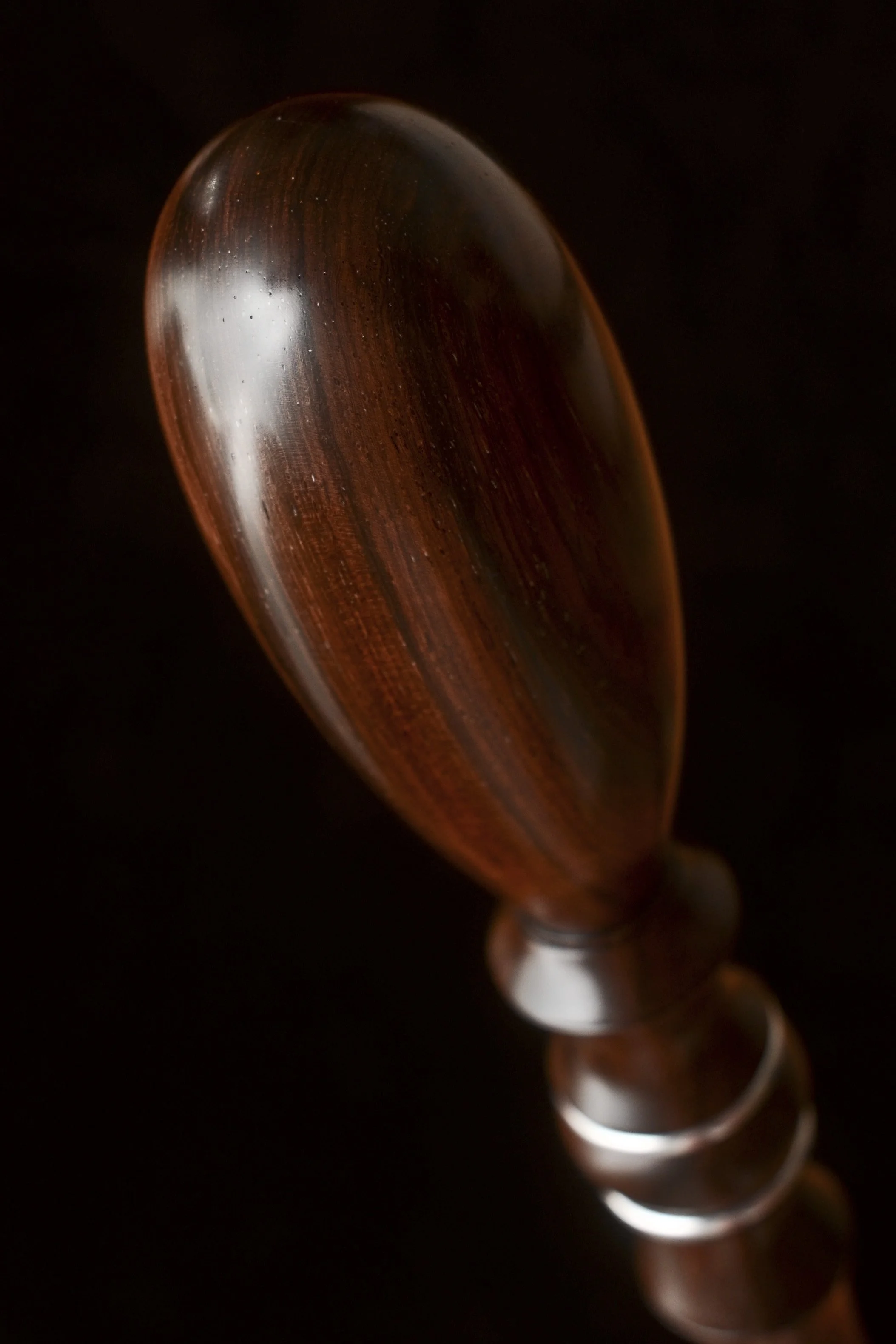
Here is a classy and timeless piece made out of a rare and beautiful true rosewood species called "amazon rosewood" with a scientific name of "Dalbergia Spruceana". This species has been protected for some time, and the material I was able to find is quite old and special. It's overall a dark brown color with black veins and a warm red hue that is subtle but apparent in brighter light. The divider has two layers of aluminum polished to a bright shine with a centerpiece of the same rosewood as the rest of the stick but oriented 90 degrees to show the grain differently. The top is suitable for most hand sizes with a maximum diameter of 2 inches (52mm) and has a comfortable, gentle curvature. It is fitted with a handsome ferrule bottom and low profile rubber tip, total length measures 38" and can not be adjusted.
M A T E R I A L S
Handle – Dalbergia Spruceana from the Amazon
Divider – Aluminum
Shaft – Dalbergia Spruceana from the Amazon
Every Gillis Cane (stick) is a photographed original, you’ll always receive the exact stick in the images.
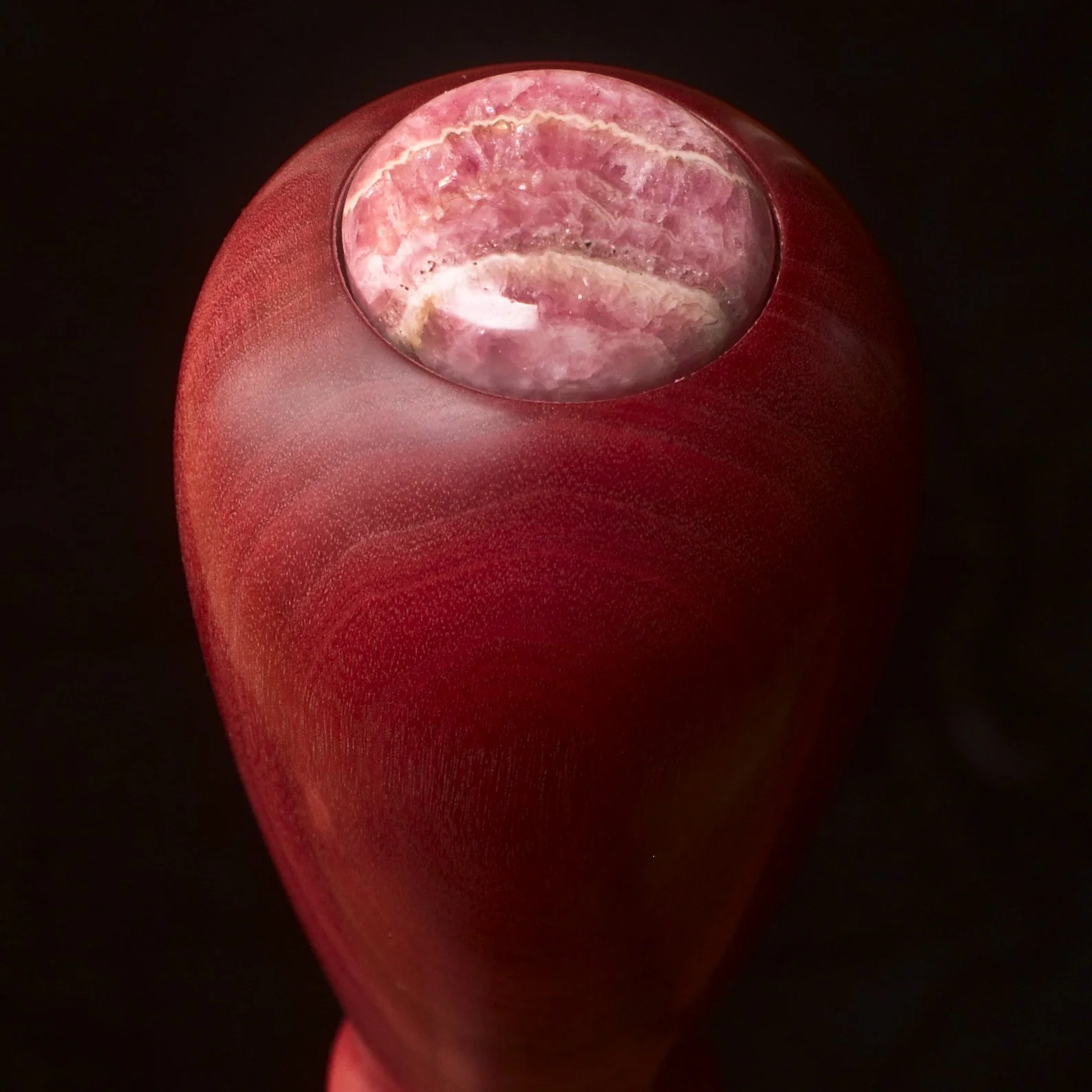
A pinky and pretty stick with classy design elements. The handle is exhibition quality pink Ivory wood, this species is the most pink colored wood in the world, and it is really pink! The wood is so rare that historically in South Africa anyone in possession of Pink Ivory except for the Zulu king would be put to death; they considered it rarer than diamonds. The shaft is even rarer now-a-days, its Brazilian Tulipwood, a highly sought after and elusive rosewood species. Tulipwood is highly protected and a trade restricted species, so all tulipwood available today is very old stock from personal collections. It is special that we were able to acquire tulipwood large enough to make this lathe-turned shaft. Tulipwood is also pinky-peachy colored and very pretty. Rhodochrosite is just the perfect lapidary inlay, its pinks and patterns complete this cane perfectly. Copper in the divider and a copper ferrule with rubber tip finishes the bottom for a total length of 37" and is not adjustable on account of the ferrule. This stick would make a comfortable and sturdy companion.
M A T E R I A L S
Handle – Pink Ivory from S. Africa
Divider – Copper
Shaft – Brazilian Tulipwood
Lapidary - Rhodochrosite, from an old collection, origins unknown
Every Gillis Cane (stick) is a photographed original, you’ll always receive the exact stick in the images.

This heirloom walking stick is simply gorgeous! from the colors to the grains, this piece is an instant favorite. The handle is red mallee burl from Australia with a pinkish toned red color and intricate burl grain. Its a long handle which leads into a curvy divider of copper and rosewood, terminating in a rosewood shaft. The rosewood is Dalbergia Oliveri from S. E. Asia, an obscure and rare rosewood that's almost unheard of in the western world, it is more subdued in color than the handle but shares the same tonal qualities and has a chatoyant grain. Along the length of the shaft is a strong cathedral grain pattern. The top is suitable for most hand sizes with a maximum diameter of 2 inches (52mm) with a rounded top that fits in the palm nicely. It is completed with a handsome ferrule bottom and low profile rubber tip, total length measures 38.25" and can not be adjusted.
M A T E R I A L S
Handle – Red Mallee Burl from Australia
Divider - Copper and Dalbergia Oliveri
Shaft – Dalbergia Oliveri
Rubber tip
Every Gillis Cane (stick) is a photographed original, you’ll always receive the exact stick in the images.
Stone Sphere Sticks
Commodo cursus magna, vel scelerisque nisl consectetur et. Donec id elit non mi porta gravida at eget metus.
Lorem ipsum dolor sit amet, consectetur adipiscing elit. Vestibulum id ligula porta felis euismod semper.
Sed purus sem, scelerisque ac rhoncus eget, porttitor nec odio. Lorem ipsum dolor sit amet.
Vivamus pellentesque vitae neque at vestibulum. Donec efficitur mollis dui vel pharetra.
Praesent id libero id metus varius consectetur ac eget diam. Nulla felis nunc, consequat laoreet lacus id.
Donec id justo non metus auctor commodo ut quis enim. Mauris fringilla dolor vel condimentum imperdiet.
Commodo cursus magna, vel scelerisque nisl consectetur et. Donec id elit non mi porta gravida at eget metus.
Lorem ipsum dolor sit amet, consectetur adipiscing elit. Vestibulum id ligula porta felis euismod semper.
Sed purus sem, scelerisque ac rhoncus eget, porttitor nec odio. Lorem ipsum dolor sit amet.
Vivamus pellentesque vitae neque at vestibulum. Donec efficitur mollis dui vel pharetra.
Praesent id libero id metus varius consectetur ac eget diam. Nulla felis nunc, consequat laoreet lacus id.
Donec id justo non metus auctor commodo ut quis enim. Mauris fringilla dolor vel condimentum imperdiet.
Commodo cursus magna, vel scelerisque nisl consectetur et. Donec id elit non mi porta gravida at eget metus.
Lorem ipsum dolor sit amet, consectetur adipiscing elit. Vestibulum id ligula porta felis euismod semper.
Sed purus sem, scelerisque ac rhoncus eget, porttitor nec odio. Lorem ipsum dolor sit amet.
Vivamus pellentesque vitae neque at vestibulum. Donec efficitur mollis dui vel pharetra.
Praesent id libero id metus varius consectetur ac eget diam. Nulla felis nunc, consequat laoreet lacus id.
Donec id justo non metus auctor commodo ut quis enim. Mauris fringilla dolor vel condimentum imperdiet.
Commodo cursus magna, vel scelerisque nisl consectetur et. Donec id elit non mi porta gravida at eget metus.
Lorem ipsum dolor sit amet, consectetur adipiscing elit. Vestibulum id ligula porta felis euismod semper.
Sed purus sem, scelerisque ac rhoncus eget, porttitor nec odio. Lorem ipsum dolor sit amet.
Vivamus pellentesque vitae neque at vestibulum. Donec efficitur mollis dui vel pharetra.
Praesent id libero id metus varius consectetur ac eget diam. Nulla felis nunc, consequat laoreet lacus id.
Donec id justo non metus auctor commodo ut quis enim. Mauris fringilla dolor vel condimentum imperdiet.
Commodo cursus magna, vel scelerisque nisl consectetur et. Donec id elit non mi porta gravida at eget metus.
Lorem ipsum dolor sit amet, consectetur adipiscing elit. Vestibulum id ligula porta felis euismod semper.
Fibonacci Staffs
Hiking Staffs

This tall hiking staff is a unique combination of rugged practicality and tasteful artistry wrapped up in fine craftsmanship. The staff is East Indian Rosewood, Dalbergia Latifolia in Latin. This precious wood has always been one of the most popular and coveted rosewoods for its lovely grain and rich colors. This particular piece is dark brown with a purple hue and deep reds. A long piece of rosewood like this staff is becoming quite a rare piece of wood. This particular piece came from a decades old inventory from a seller I normally buy ebony from, its a leftover from times past.
The top of the staff has a lapidary piece of dinosaur bone from Utah. Amazing! It’s actual dinosaur bone that has been fossilized into stone, the cell structure of the bone was perfectly preserved as it fossilized into colorful agate over millions of years. Dinosaur bone can turn a wide variety of colors, this one has several, and the red cells make quite a statement. This is exhibition quality dinosaur bone. The other lapidary piece inlaid into the side of the staff is Carnelian, a semi-transparent stone that is highlighted different reds when exposed to light - gorgeous. Above and below the carnelian are steel mosaic pins, and rotating the staff 90 degrees there is a steel lanyard tube. A lanyard can be a helpful aid during a hike, a lanyard is not provided with the stick.
This staff is 64 inches (over 5 feet) tall, and can be shortened by request. It’s intended to be held from the side, not from the top. It is a straight stick with a gentle taper. Most of the stick is an oval shape, which is better for grasping, and tapers to round. The bottom is rounded and can be fitted with the included rubber tip. The finish is the same finish I use on my walking canes, it’s a durable gun stock oil finish that is intended for high-use, hand-held implements.
This artistic hiking staff is ready for an adventure!
FOR INTERNATIONAL ORDERS, CONTACT FOR SHIPPING QUOTE, LONG PACKAGE LENGTH
Every Gillis Cane (staff) is a photographed original, you’ll always receive the exact staff in the images.
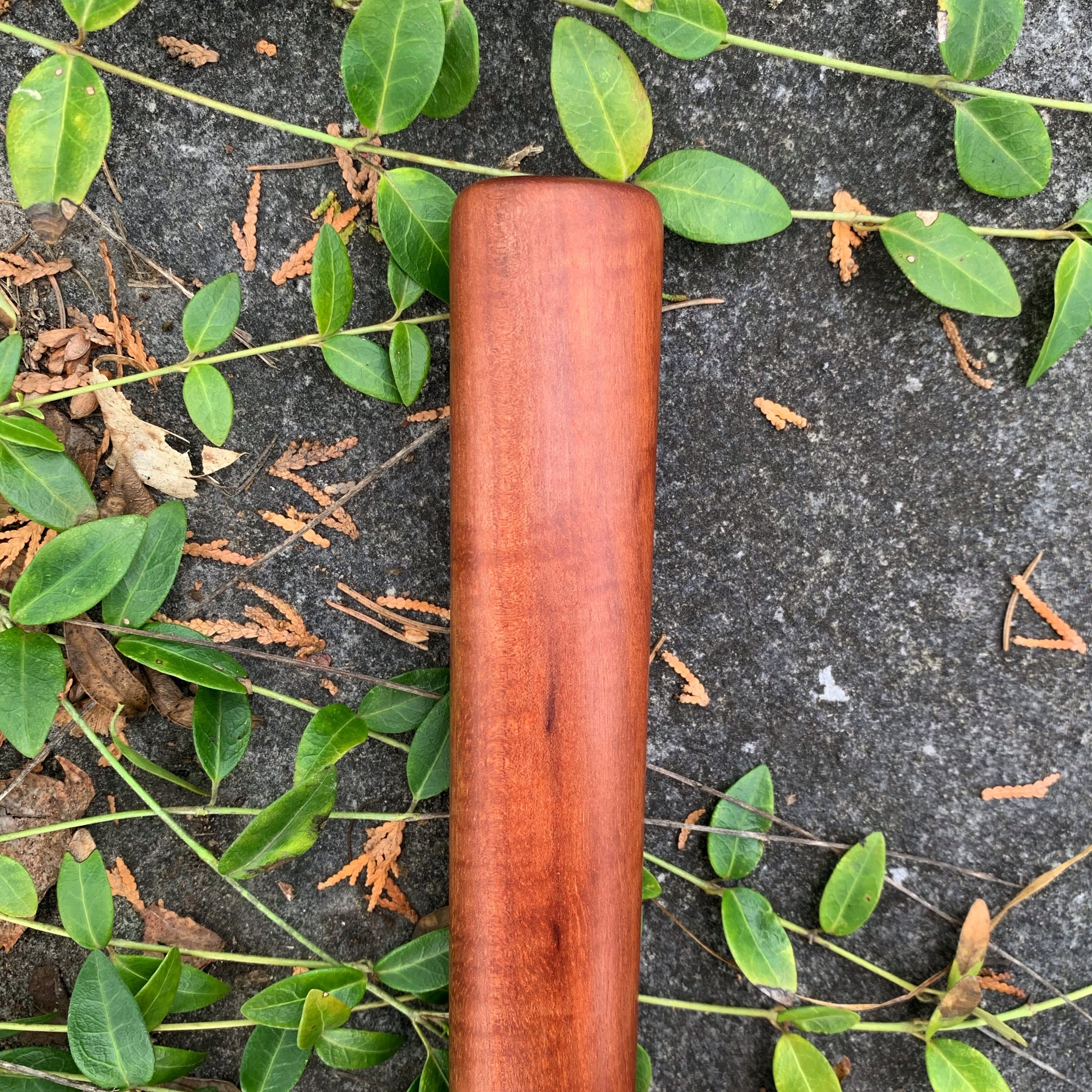
Here is a tall eucalyptus wood staff with curl figured grain. It was made completely by hand by myself, no extras, just rugged practicality and a beautiful wood. This eucalyptus wood was sold to me as a “mystery wood”, it has been held it storage for decades and its origins became lost to the owner. I have worked with enough woods to make a good educated guess, but I will say I can’t be 100% sure either. Even still if it is eucalyptus wood, there are over 700 eucalyptus species! All that aside, its very dense and durable wood with a pleasant color and grain.
This staff is just shy of 69 inches (nearing 6 feet) tall, and can be shortened by request. It’s intended to be held from the side at shoulder height. It is a straight stick with a gentle taper. Most of the stick is oval shape, which is better for grasping, and tapers consistently. The bottom and top are both rounded. It has a satiny Danish oil finish that penetrates and protects the wood, but wears gracefully for demanding usage. The surface is smooth but not so polished that the hand slips, a “just right” feel in the hand.
This hiking staff is ready for an adventure!
FOR INTERNATIONAL ORDERS, CONTACT FOR SHIPPING QUOTE, LONG PACKAGE LENGTH
Every Gillis Cane (staff) is a photographed original, you’ll always receive the exact staff in the images.

This tall hiking staff is a unique combination of rugged practicality and tasteful artistry wrapped up in fine craftsmanship. The wood is vibrant orange Pernambuco wood from Brazil. This wood became so prized and coveted by European explorers during the discovery of America that the wood is actually responsible for naming the country of Brazil! I believe it is the only wood in the world with such a claim. Today Pernambuco is nearly extinct, highly protected, and very scarce. Finding a piece of this wood long enough to make this hiking staff was a surprise.
Lapidary work at the top of the staff adds more colors and uniqueness. The very top is a kind of jasper with matching orange colored “drops” within a grey matrix. And of course no one can miss the green Malachite inlay on the side of the stick.
This staff is about 5 feet tall, and can be shortened by request. It’s intended to be held from the side, not from the top. It is a straight stick with a gentle taper. Most of the stick is an oval shape, which is better for grasping, and eventually tapers to round. The bottom is rounded and can be fitted with the included rubber tip. The finish is the same finish I use on my walking canes, it’s a durable gun stock oil finish that is intended for high-use, hand-held implements.
This artistic hiking staff is ready for an adventure!
FOR INTERNATIONAL ORDERS, CONTACT FOR SHIPPING QUOTE, LONG PACKAGE LENGTH
Every Gillis Cane (staff) is a photographed original, you’ll always receive the exact staff in the images.
Dyed and Stabilized Handles
Lorem ipsum dolor sit amet, consectetur adipiscing elit. Vestibulum id ligula porta felis euismod semper.
Sed purus sem, scelerisque ac rhoncus eget, porttitor nec odio. Lorem ipsum dolor sit amet.
Vivamus pellentesque vitae neque at vestibulum. Donec efficitur mollis dui vel pharetra.
Praesent id libero id metus varius consectetur ac eget diam. Nulla felis nunc, consequat laoreet lacus id.
Donec id justo non metus auctor commodo ut quis enim. Mauris fringilla dolor vel condimentum imperdiet.
Commodo cursus magna, vel scelerisque nisl consectetur et. Donec id elit non mi porta gravida at eget metus.
Lorem ipsum dolor sit amet, consectetur adipiscing elit. Vestibulum id ligula porta felis euismod semper.
Sed purus sem, scelerisque ac rhoncus eget, porttitor nec odio. Lorem ipsum dolor sit amet.
Vivamus pellentesque vitae neque at vestibulum. Donec efficitur mollis dui vel pharetra.
Praesent id libero id metus varius consectetur ac eget diam. Nulla felis nunc, consequat laoreet lacus id.
Donec id justo non metus auctor commodo ut quis enim. Mauris fringilla dolor vel condimentum imperdiet.
Commodo cursus magna, vel scelerisque nisl consectetur et. Donec id elit non mi porta gravida at eget metus.
Lorem ipsum dolor sit amet, consectetur adipiscing elit. Vestibulum id ligula porta felis euismod semper.
Sed purus sem, scelerisque ac rhoncus eget, porttitor nec odio. Lorem ipsum dolor sit amet.
Vivamus pellentesque vitae neque at vestibulum. Donec efficitur mollis dui vel pharetra.
Praesent id libero id metus varius consectetur ac eget diam. Nulla felis nunc, consequat laoreet lacus id.
Donec id justo non metus auctor commodo ut quis enim. Mauris fringilla dolor vel condimentum imperdiet.
Commodo cursus magna, vel scelerisque nisl consectetur et. Donec id elit non mi porta gravida at eget metus.
Lorem ipsum dolor sit amet, consectetur adipiscing elit. Vestibulum id ligula porta felis euismod semper.
Sed purus sem, scelerisque ac rhoncus eget, porttitor nec odio. Lorem ipsum dolor sit amet.
Vivamus pellentesque vitae neque at vestibulum. Donec efficitur mollis dui vel pharetra.
Praesent id libero id metus varius consectetur ac eget diam. Nulla felis nunc, consequat laoreet lacus id.
Donec id justo non metus auctor commodo ut quis enim. Mauris fringilla dolor vel condimentum imperdiet.
Commodo cursus magna, vel scelerisque nisl consectetur et. Donec id elit non mi porta gravida at eget metus.
Lorem ipsum dolor sit amet, consectetur adipiscing elit. Vestibulum id ligula porta felis euismod semper.
Cane and Knife Sets
Sed purus sem, scelerisque ac rhoncus eget, porttitor nec odio. Lorem ipsum dolor sit amet.
Vivamus pellentesque vitae neque at vestibulum. Donec efficitur mollis dui vel pharetra.
Praesent id libero id metus varius consectetur ac eget diam. Nulla felis nunc, consequat laoreet lacus id.
Donec id justo non metus auctor commodo ut quis enim. Mauris fringilla dolor vel condimentum imperdiet.
Commodo cursus magna, vel scelerisque nisl consectetur et. Donec id elit non mi porta gravida at eget metus.
Lorem ipsum dolor sit amet, consectetur adipiscing elit. Vestibulum id ligula porta felis euismod semper.
Sed purus sem, scelerisque ac rhoncus eget, porttitor nec odio. Lorem ipsum dolor sit amet.
Vivamus pellentesque vitae neque at vestibulum. Donec efficitur mollis dui vel pharetra.
Praesent id libero id metus varius consectetur ac eget diam. Nulla felis nunc, consequat laoreet lacus id.
Donec id justo non metus auctor commodo ut quis enim. Mauris fringilla dolor vel condimentum imperdiet.
Commodo cursus magna, vel scelerisque nisl consectetur et. Donec id elit non mi porta gravida at eget metus.
Lorem ipsum dolor sit amet, consectetur adipiscing elit. Vestibulum id ligula porta felis euismod semper.
Sed purus sem, scelerisque ac rhoncus eget, porttitor nec odio. Lorem ipsum dolor sit amet.
Vivamus pellentesque vitae neque at vestibulum. Donec efficitur mollis dui vel pharetra.
Praesent id libero id metus varius consectetur ac eget diam. Nulla felis nunc, consequat laoreet lacus id.
Donec id justo non metus auctor commodo ut quis enim. Mauris fringilla dolor vel condimentum imperdiet.
Commodo cursus magna, vel scelerisque nisl consectetur et. Donec id elit non mi porta gravida at eget metus.
Lorem ipsum dolor sit amet, consectetur adipiscing elit. Vestibulum id ligula porta felis euismod semper.
Sed purus sem, scelerisque ac rhoncus eget, porttitor nec odio. Lorem ipsum dolor sit amet.
Vivamus pellentesque vitae neque at vestibulum. Donec efficitur mollis dui vel pharetra.
Praesent id libero id metus varius consectetur ac eget diam. Nulla felis nunc, consequat laoreet lacus id.
Donec id justo non metus auctor commodo ut quis enim. Mauris fringilla dolor vel condimentum imperdiet.
Commodo cursus magna, vel scelerisque nisl consectetur et. Donec id elit non mi porta gravida at eget metus.
Lorem ipsum dolor sit amet, consectetur adipiscing elit. Vestibulum id ligula porta felis euismod semper.
Sed purus sem, scelerisque ac rhoncus eget, porttitor nec odio. Lorem ipsum dolor sit amet.
Vivamus pellentesque vitae neque at vestibulum. Donec efficitur mollis dui vel pharetra.
Wizard Staffs
Commodo cursus magna, vel scelerisque nisl consectetur et. Donec id elit non mi porta gravida at eget metus.
Lorem ipsum dolor sit amet, consectetur adipiscing elit. Vestibulum id ligula porta felis euismod semper.
Sed purus sem, scelerisque ac rhoncus eget, porttitor nec odio. Lorem ipsum dolor sit amet.
Vivamus pellentesque vitae neque at vestibulum. Donec efficitur mollis dui vel pharetra.
Praesent id libero id metus varius consectetur ac eget diam. Nulla felis nunc, consequat laoreet lacus id.
Donec id justo non metus auctor commodo ut quis enim. Mauris fringilla dolor vel condimentum imperdiet.
Commodo cursus magna, vel scelerisque nisl consectetur et. Donec id elit non mi porta gravida at eget metus.
Lorem ipsum dolor sit amet, consectetur adipiscing elit. Vestibulum id ligula porta felis euismod semper.
Sed purus sem, scelerisque ac rhoncus eget, porttitor nec odio. Lorem ipsum dolor sit amet.
Vivamus pellentesque vitae neque at vestibulum. Donec efficitur mollis dui vel pharetra.
Praesent id libero id metus varius consectetur ac eget diam. Nulla felis nunc, consequat laoreet lacus id.
Donec id justo non metus auctor commodo ut quis enim. Mauris fringilla dolor vel condimentum imperdiet.
Commodo cursus magna, vel scelerisque nisl consectetur et. Donec id elit non mi porta gravida at eget metus.
Lorem ipsum dolor sit amet, consectetur adipiscing elit. Vestibulum id ligula porta felis euismod semper.
Sed purus sem, scelerisque ac rhoncus eget, porttitor nec odio. Lorem ipsum dolor sit amet.
Vivamus pellentesque vitae neque at vestibulum. Donec efficitur mollis dui vel pharetra.
Praesent id libero id metus varius consectetur ac eget diam. Nulla felis nunc, consequat laoreet lacus id.
Donec id justo non metus auctor commodo ut quis enim. Mauris fringilla dolor vel condimentum imperdiet.
Commodo cursus magna, vel scelerisque nisl consectetur et. Donec id elit non mi porta gravida at eget metus.
Lorem ipsum dolor sit amet, consectetur adipiscing elit. Vestibulum id ligula porta felis euismod semper.
Sed purus sem, scelerisque ac rhoncus eget, porttitor nec odio. Lorem ipsum dolor sit amet.
Vivamus pellentesque vitae neque at vestibulum. Donec efficitur mollis dui vel pharetra.
Praesent id libero id metus varius consectetur ac eget diam. Nulla felis nunc, consequat laoreet lacus id.
Donec id justo non metus auctor commodo ut quis enim. Mauris fringilla dolor vel condimentum imperdiet.
Commodo cursus magna, vel scelerisque nisl consectetur et. Donec id elit non mi porta gravida at eget metus.
Lorem ipsum dolor sit amet, consectetur adipiscing elit. Vestibulum id ligula porta felis euismod semper.
This is a colorful, heirloom quality rosewood cane with intricate grain and rare wood. The handle is Dalbergia Bariensis, an obscure rosewood from Southern Vietnam. When this tree was originally discovered by French botanist Jean Baptiste Louis Pierre it was thought to be a unique species. Modern times its been shown genetically tested to be the same species as Dalbergia Oliveri, but with some regional differences in its growth. When I purchased this old rosewood it was still labeled “Dalbergia Bariensis”, an interesting story for this very rare rosewood. The divider is Dalbergia Oliveri with a more purple hue to its coloration and interesting bands of beige, it is flanks by solid layers of copper. The shaft is bubinga wood from Africa, a gorgeous rosewood-like species that is chatoyant, dense, and durable. This should prove to be a great every day cane for most anyone.
D E T A I L S
Cane Length: 38" (can be shortened to fit, just leave a note with your order)
Cane Weight: 1 lb. 5 oz.
Handle Material: Dalbergia Bariensis Rosewood from Southern, Vietnam
Divider Material: Dalbergia Oliveri Rosewood and solid copper
Shaft Material: Bubinga from Africa
Includes Rubber Tip
Every Gillis Cane is a photographed original, you’ll always receive the exact cane in the images.