"Sonoran Sunrise"
"Sonoran Sunrise"
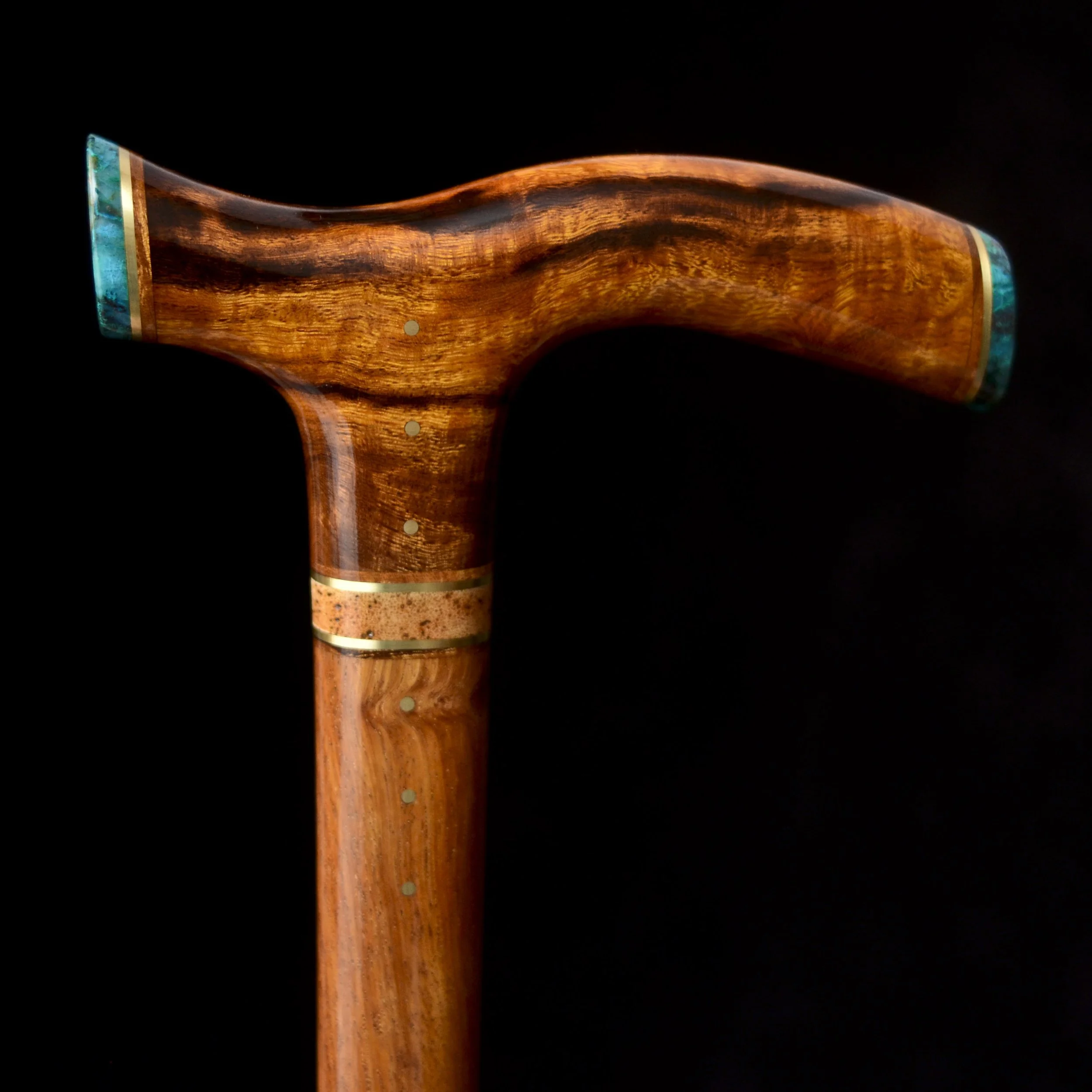
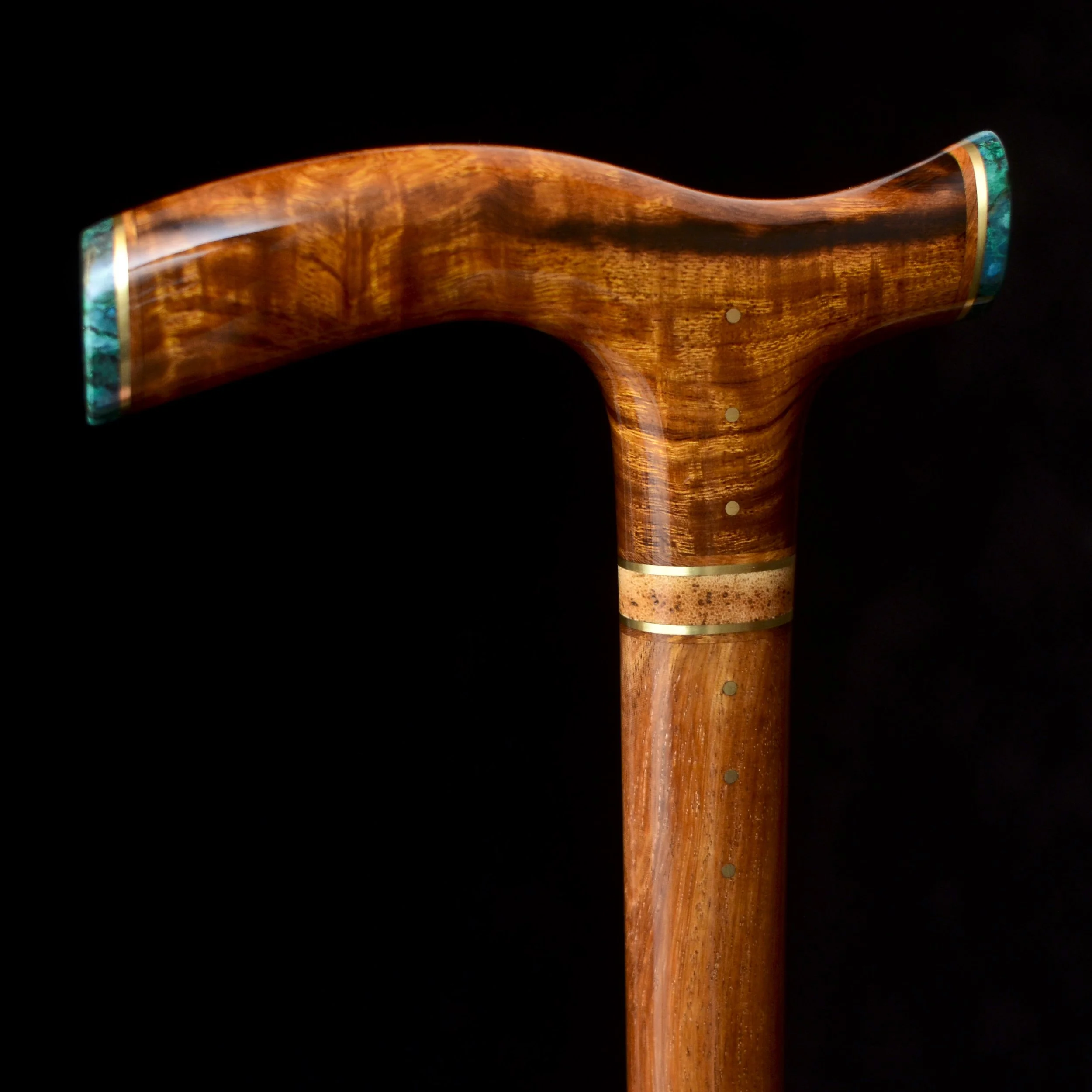
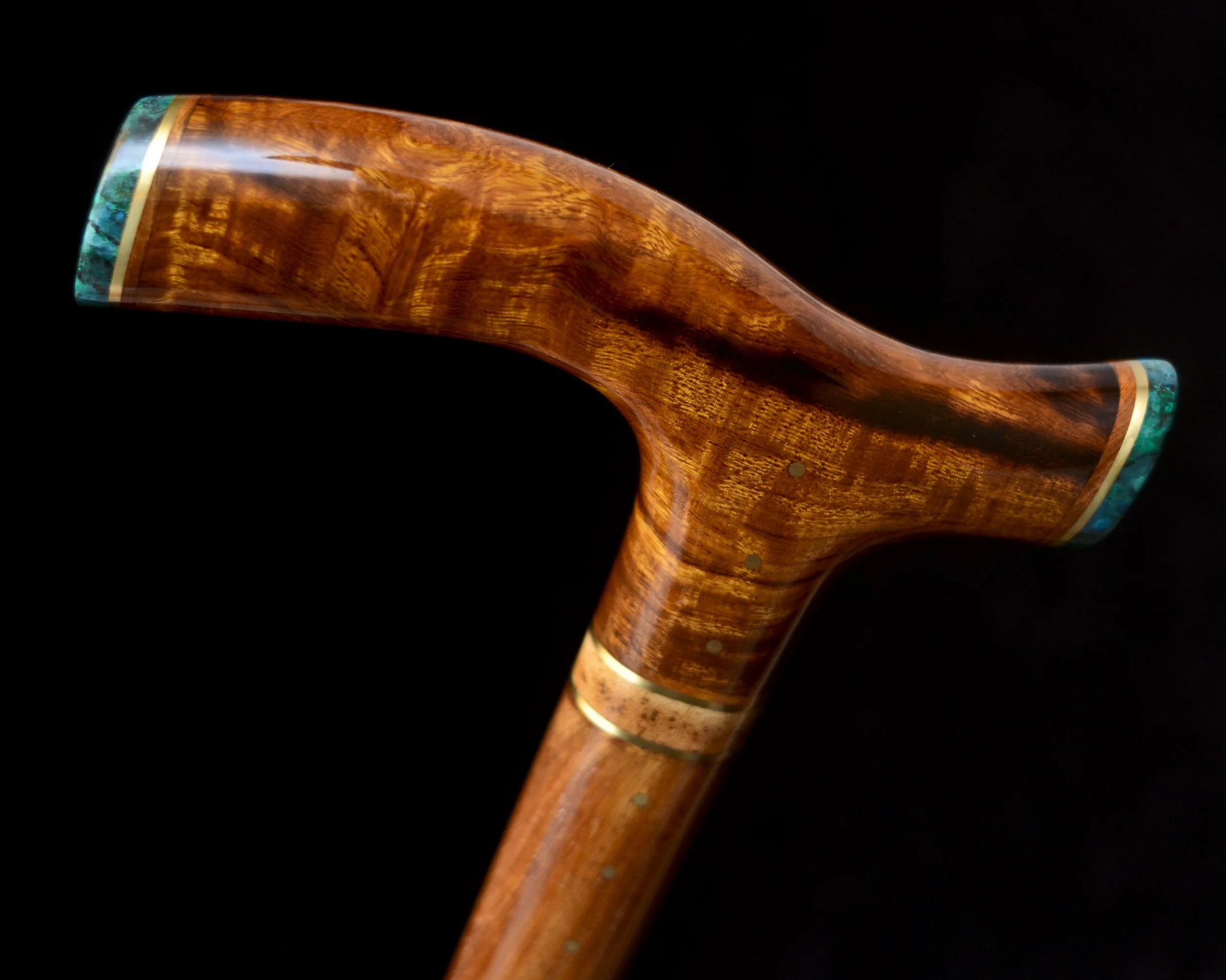
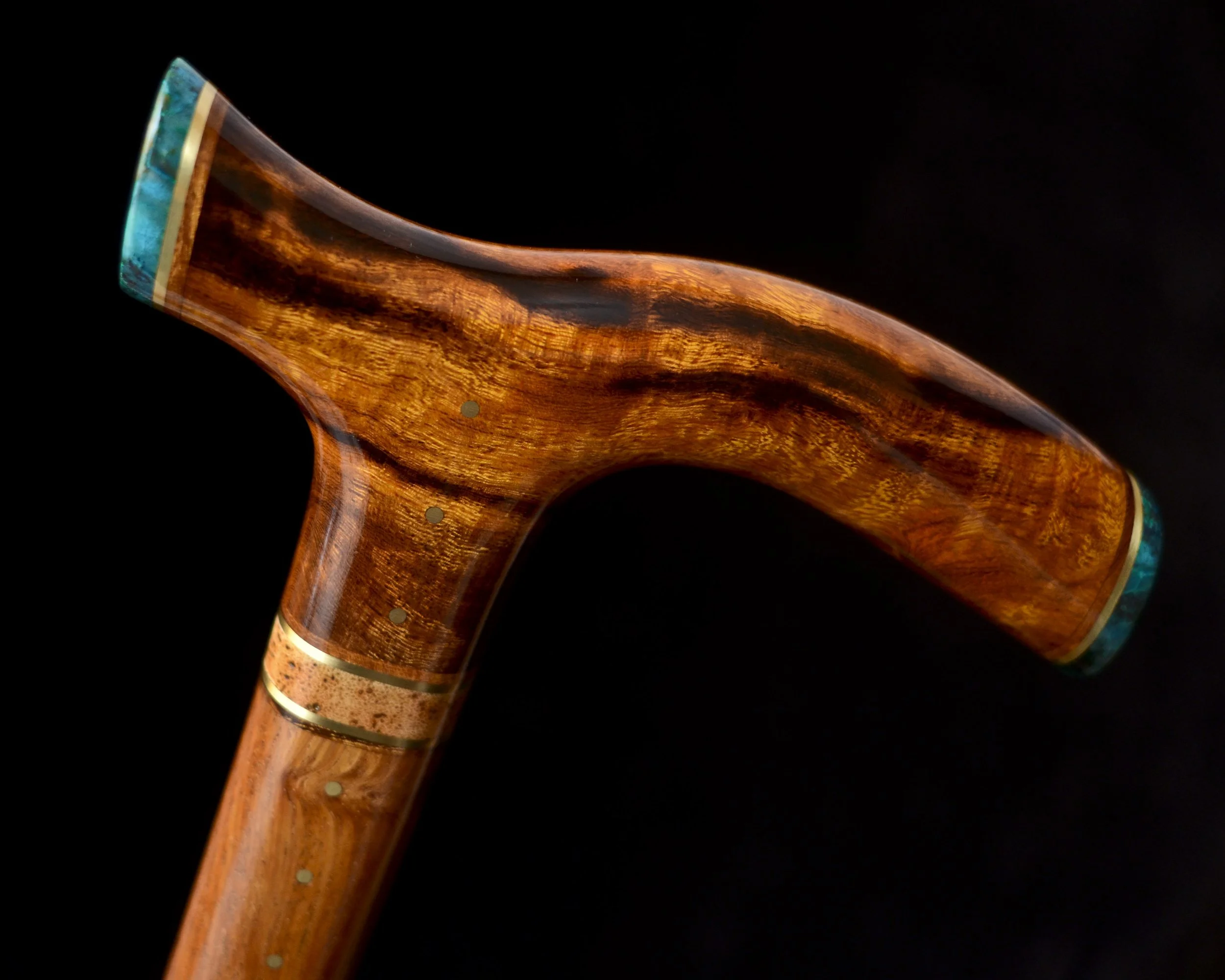
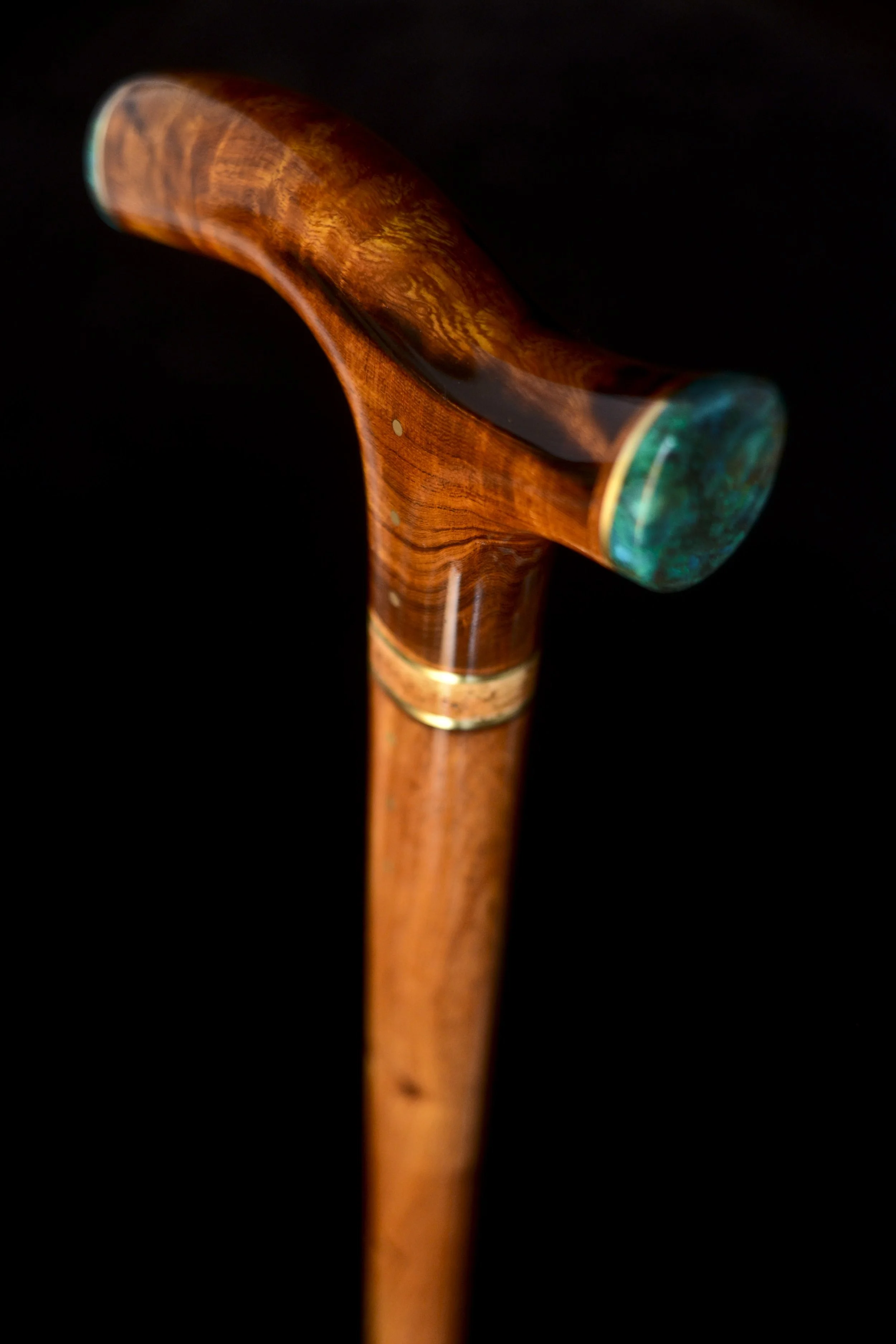
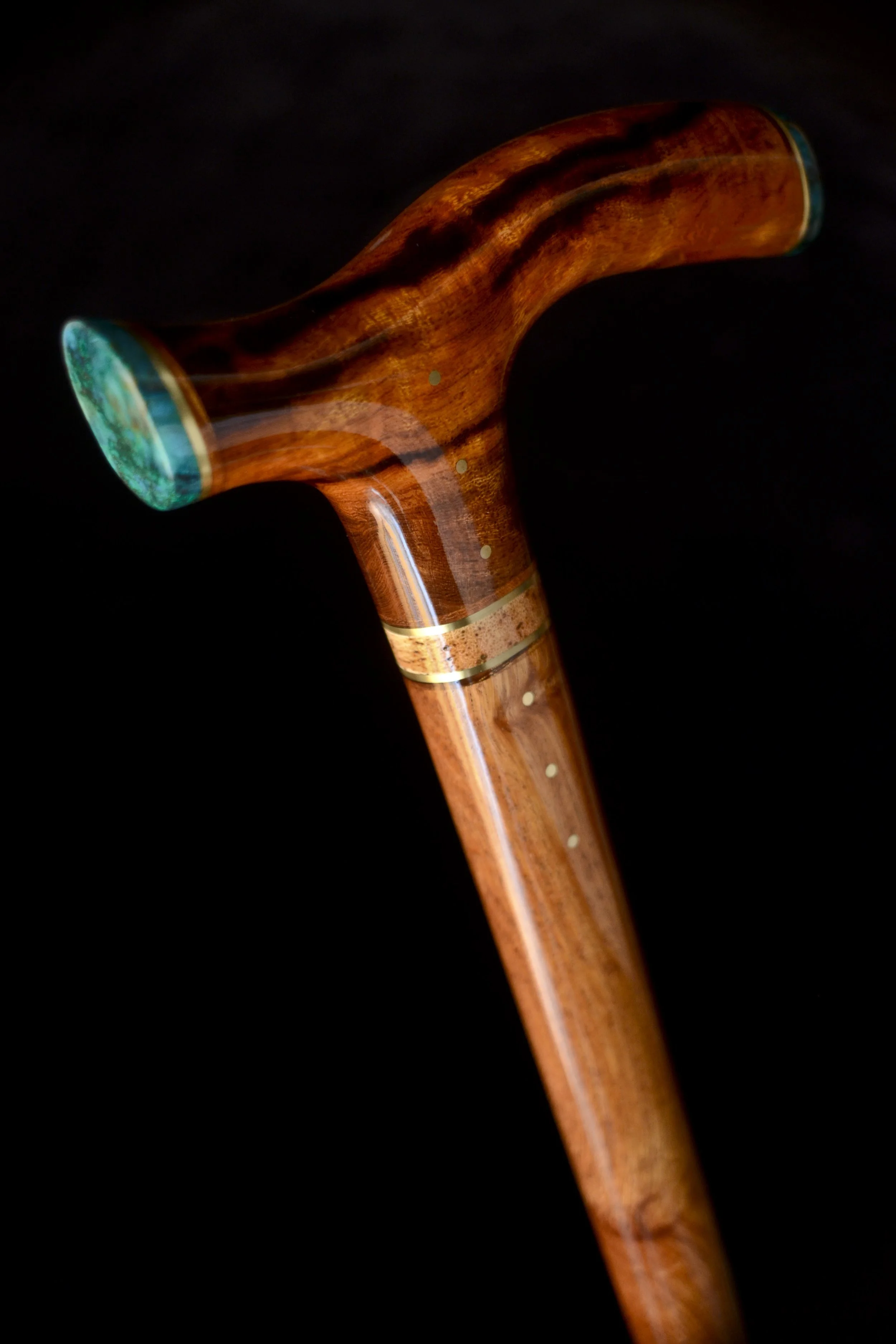
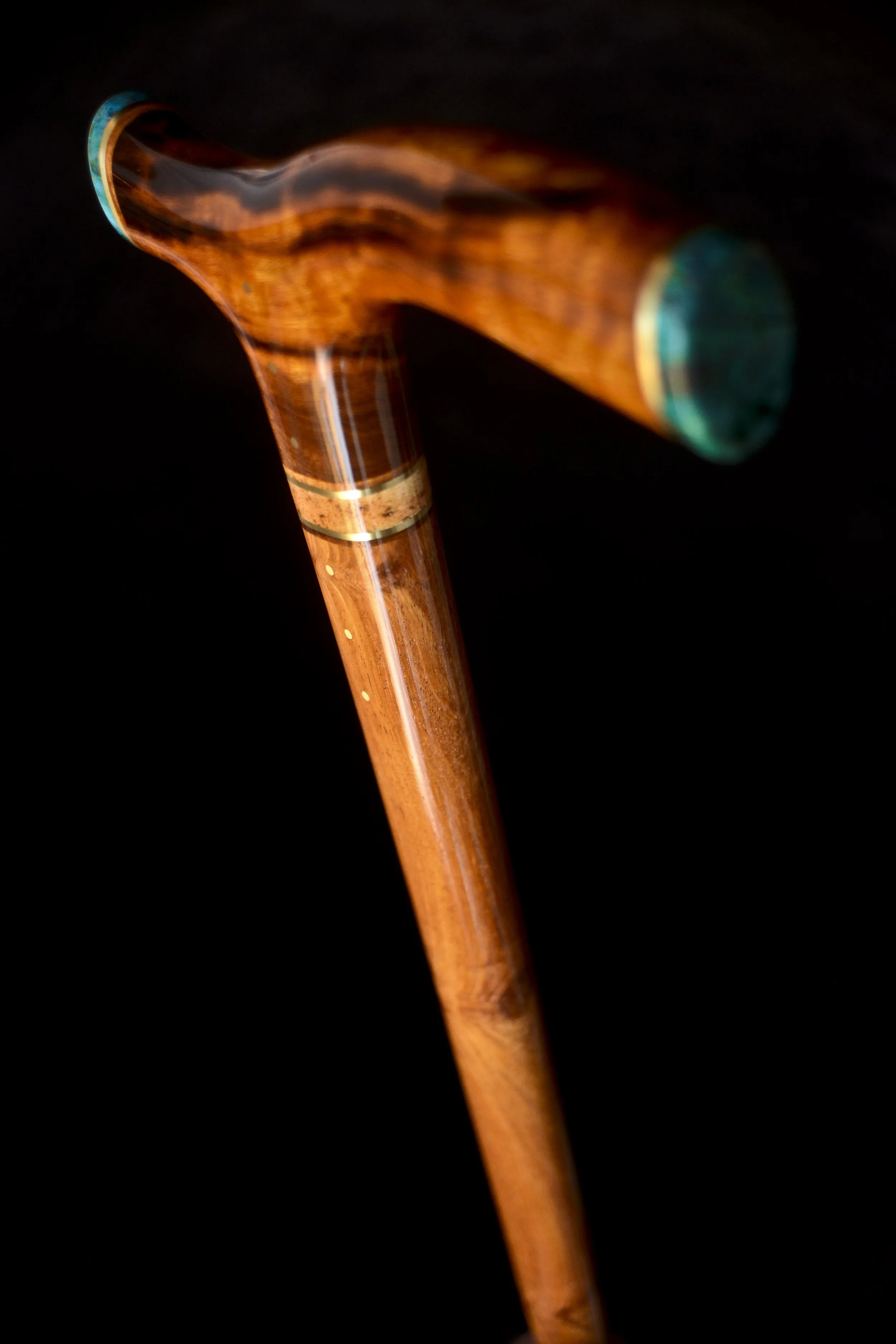
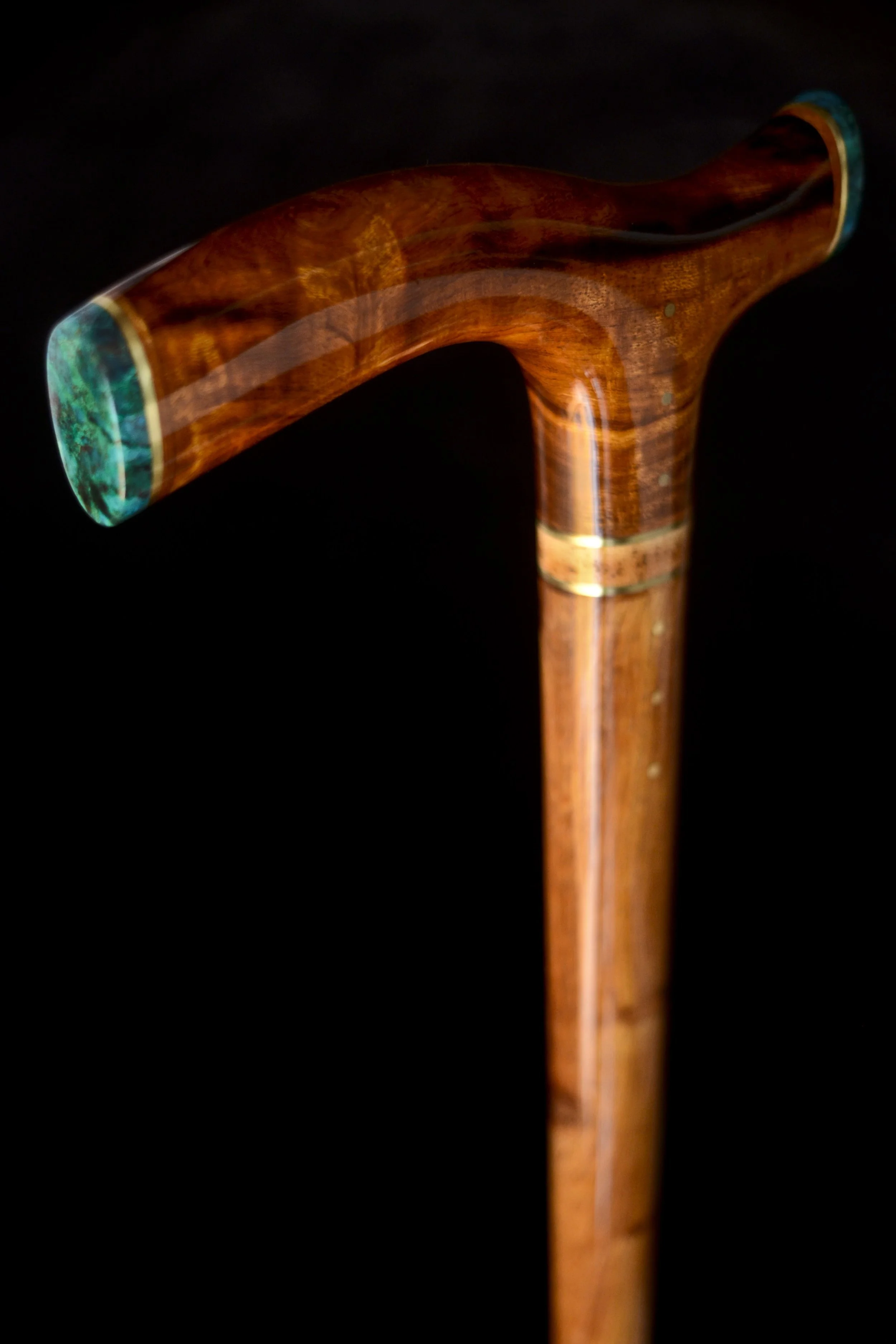
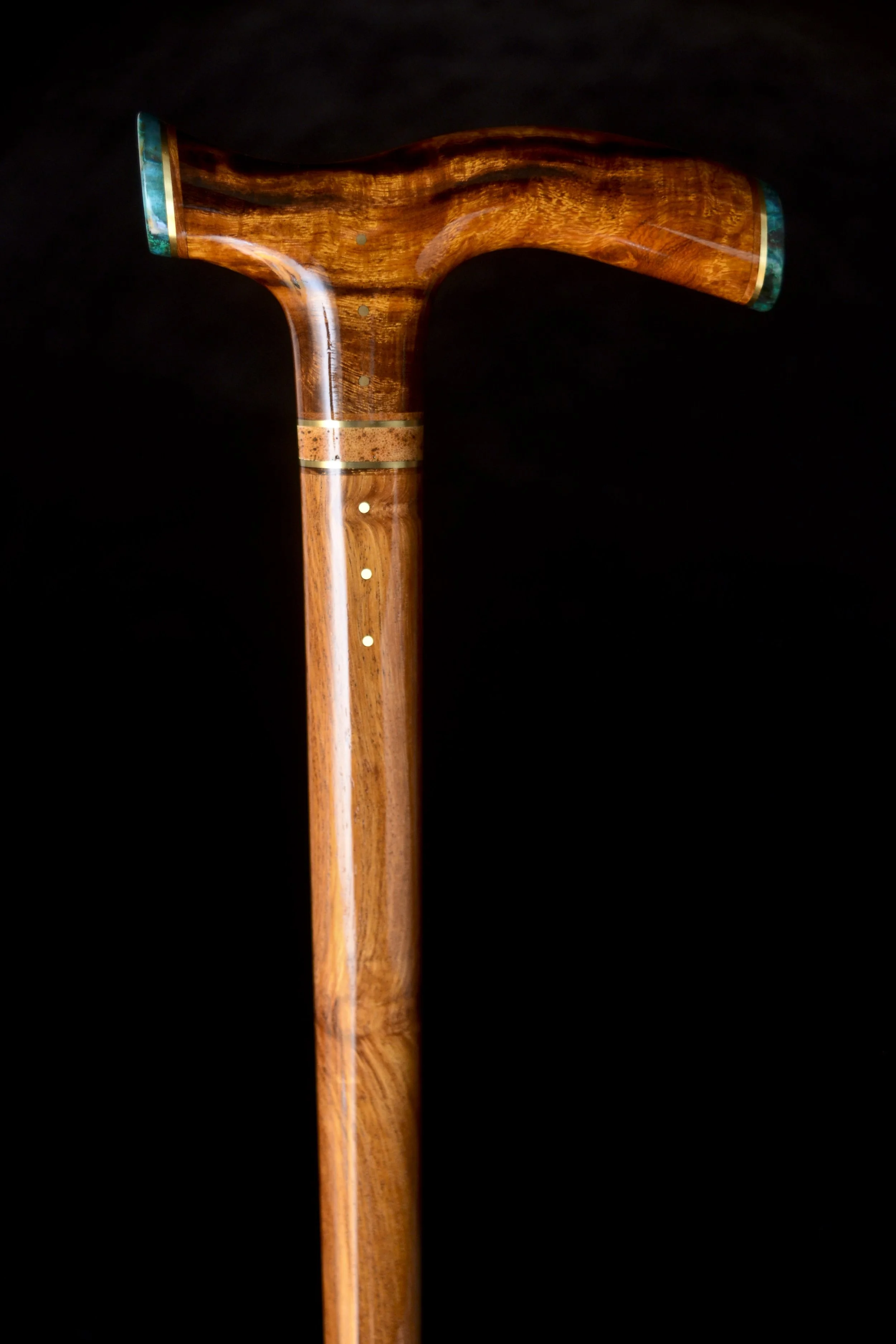
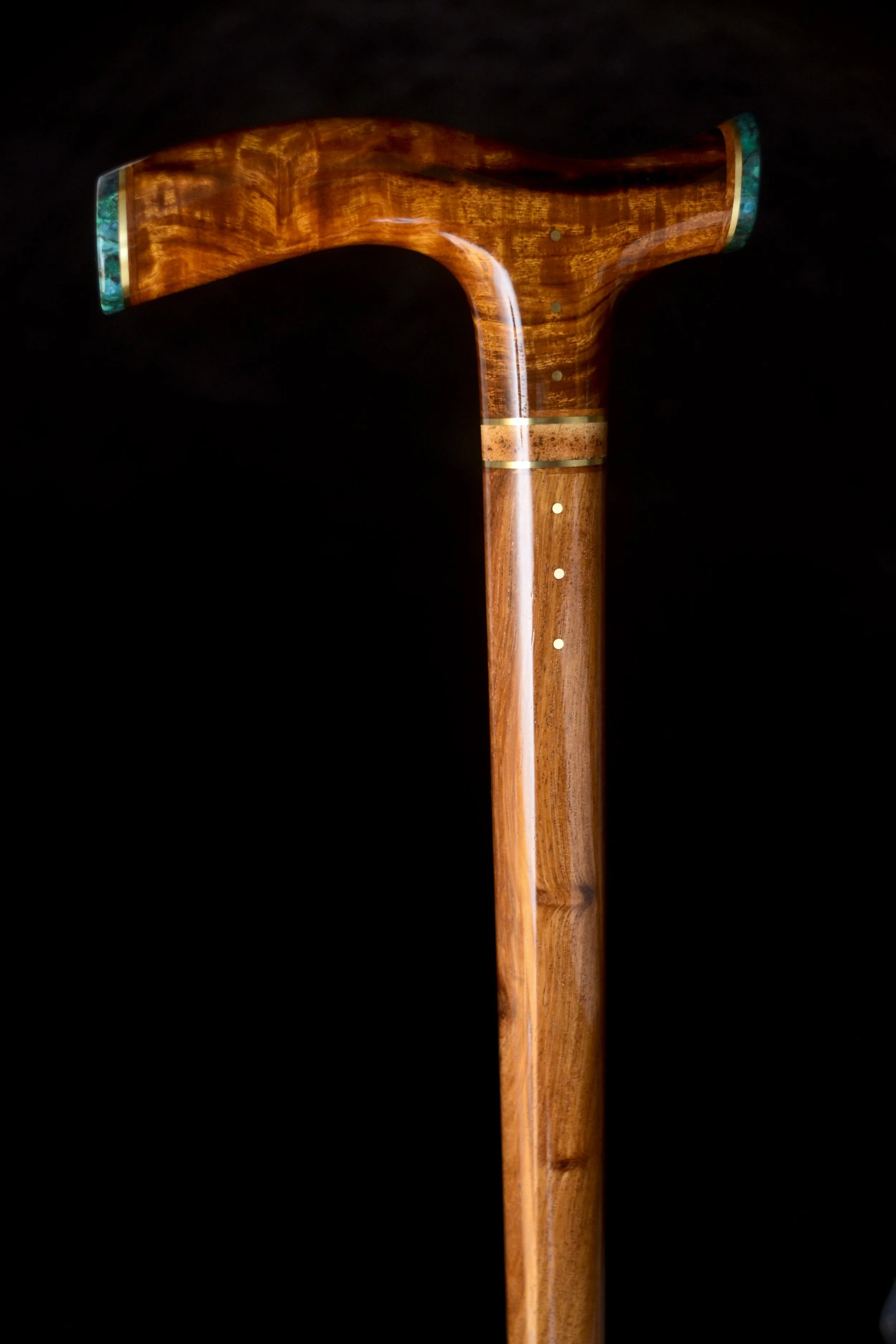
This exhibition-worthy walking cane Is made using figured Sonoran desert ironwood, my favorite wood species (which is saying a lot for how many species I have used!). The handle has a rich, chatoyant golden color and curl figure with very dark streaks running through. Desert ironwood is dense, durable, chatoyant, colorful, and in this example its figured - can wood get better? The species has been protected now for decades, it’s very slow growing and it has a vital ecological presence. The tree itself is stunted, small, and scraggly, see the last image for an example of the ironwood tree in its native range.
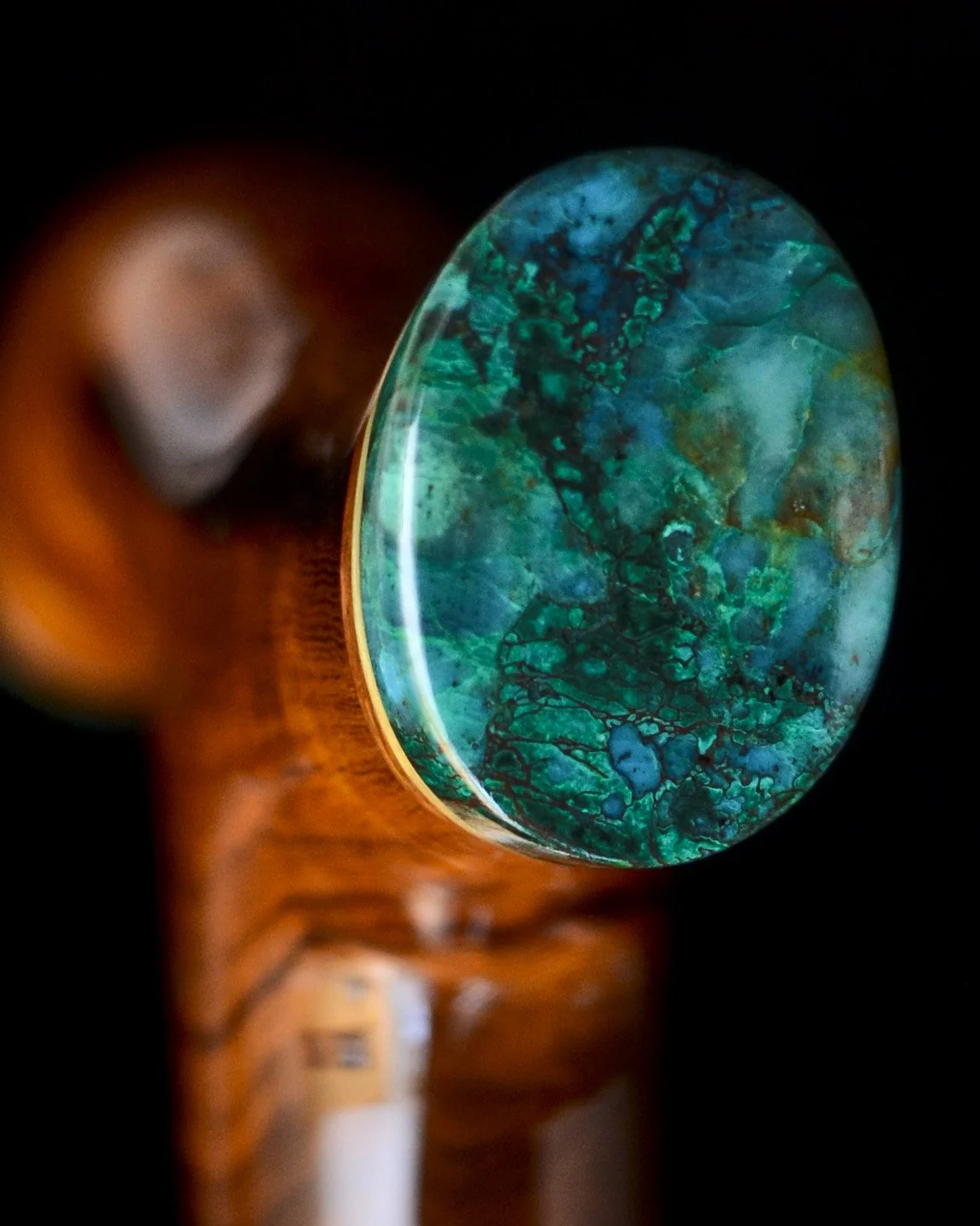
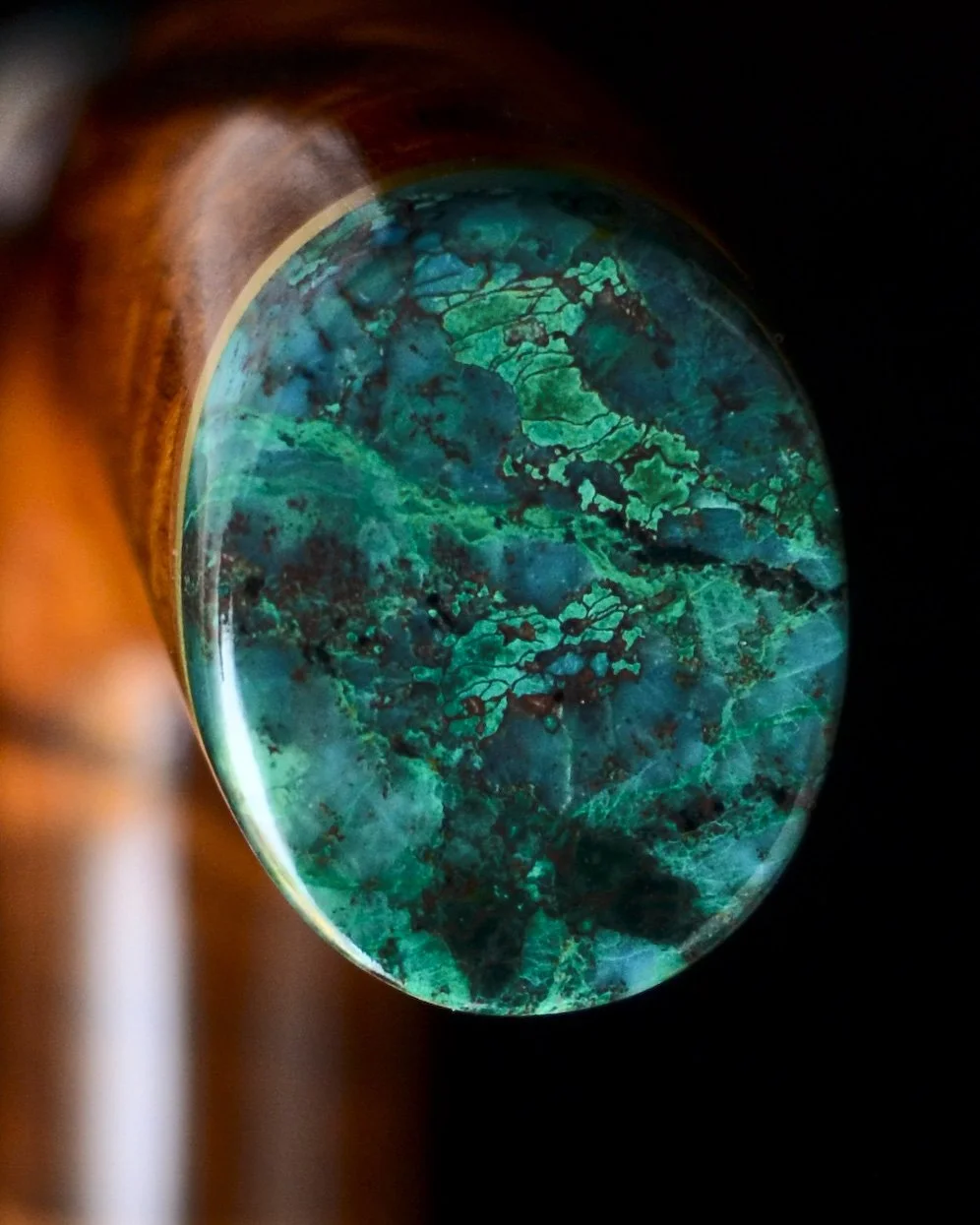
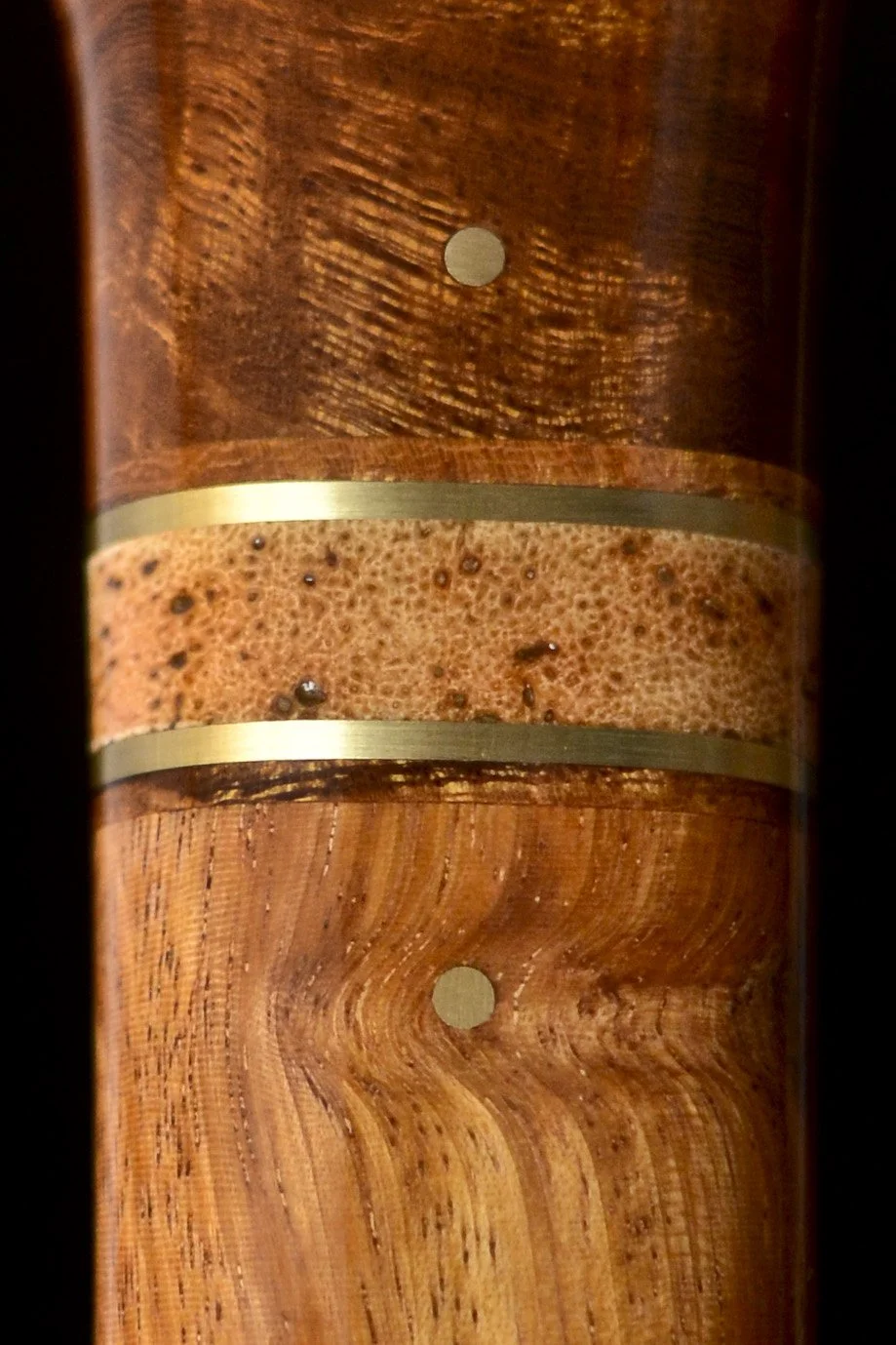
The lapidary elements are a turquoise colored stone also from the Sonoran Desert called “Chrysocolla”. The shaft is Cumaru wood, another profoundly dense and durable hardwood, it has small burl clusters along its length that add some wavy, interesting grain.
The centerpiece of the divider is rib bone from an extinct mammal called the “Steller’s Sea Cow”. This species went extinct in the 1700’s, just a few decades after it was first discovered by western explorers venturing into the northern most reaches of North America. It was the largest member of the dugong family of species which includes the manatee. The Steller’s Sea Cow had likely been on decline since the last ice age and few remained. The Inuit people of Alaska had been hunting and co-existing with this species for thousands of years, and it was during excavations of ancient Inuit hunting grounds on St. Lawrence Island that this rib bone and others were excavated. It’s thousands of years old and tells a unique story. Despite being ancient It’s very durable bone, preserved in the ice, the Steller’s Sea Cow was massive and had the densest bones of any marine species ever known.
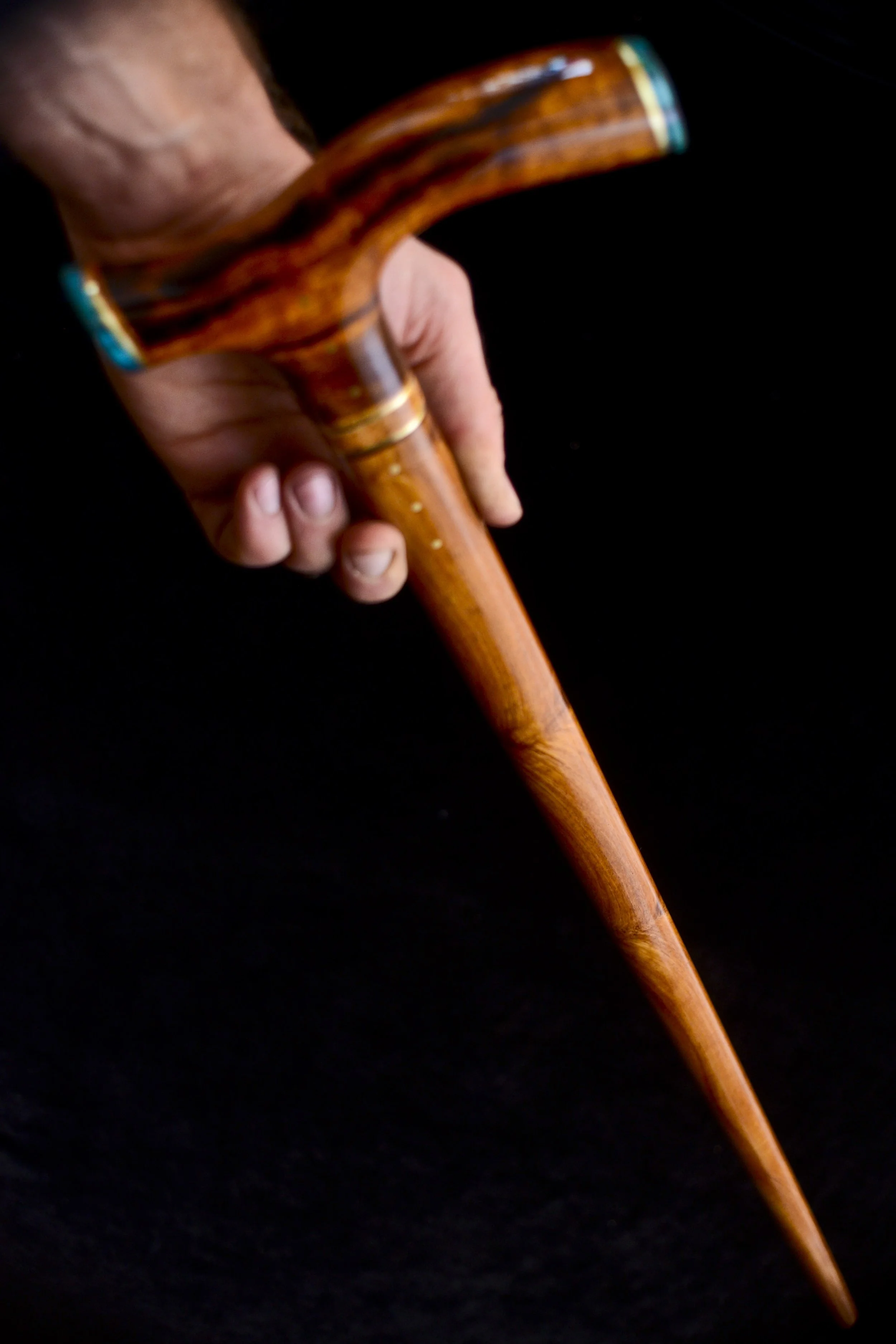
This is a fairly heavy cane, it has a substantial feel in the hand and a solid, high-quality feel. Users of small stature may tire with use. Total length measures 38" and can be shortened to fit.
M A T E R I A L S
Handle – Desert Ironwood burl from Arizona
Shaft – Cumaru wood from S. America
Divider - Steller’s sea cow bone from Alaska
Lapidary - Chrysocolla
Rubber tip
Every Gillis Cane is a photographed original, you’ll always receive the exact cane in the images.