Lignum and Gidgee Cane


Lignum and Gidgee Cane
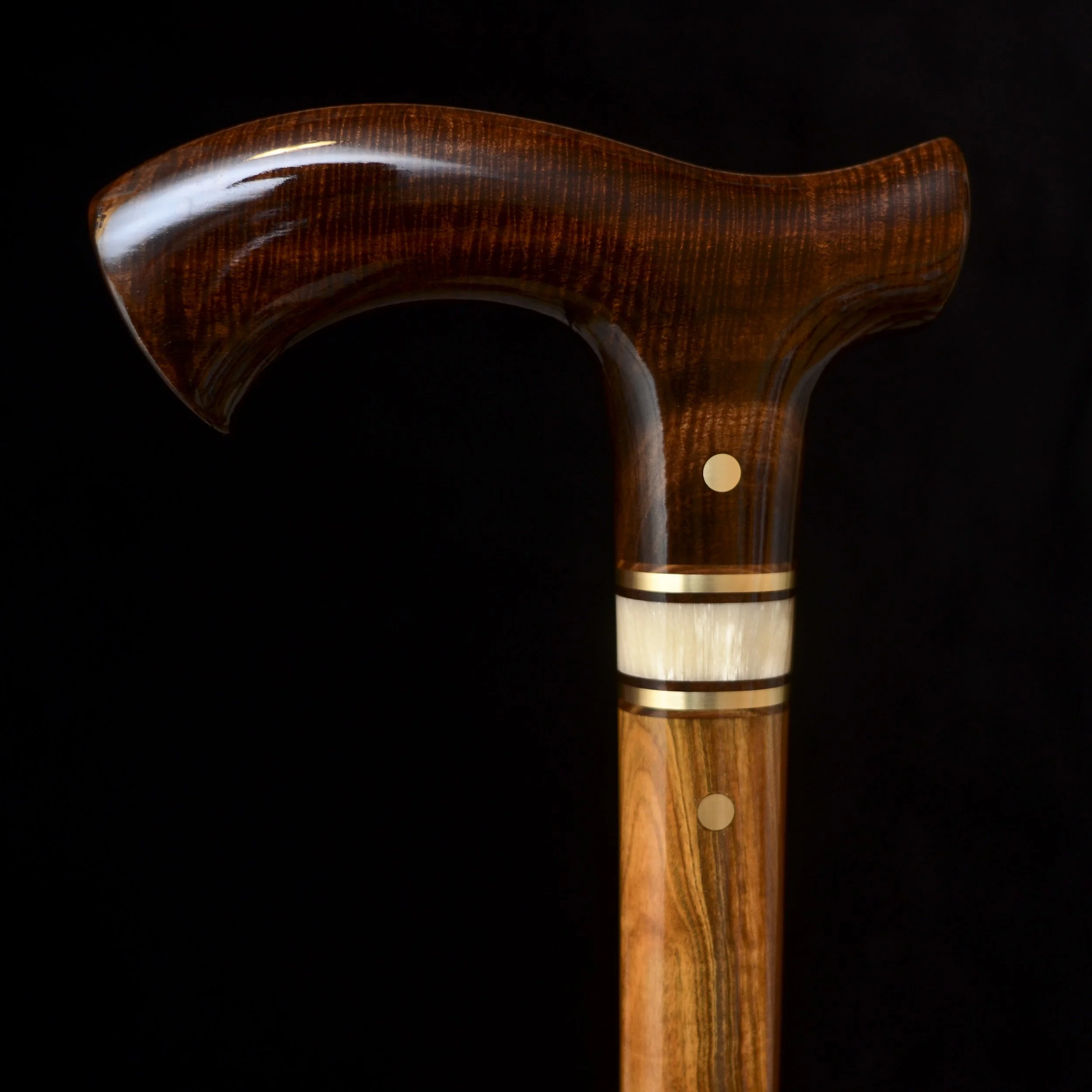
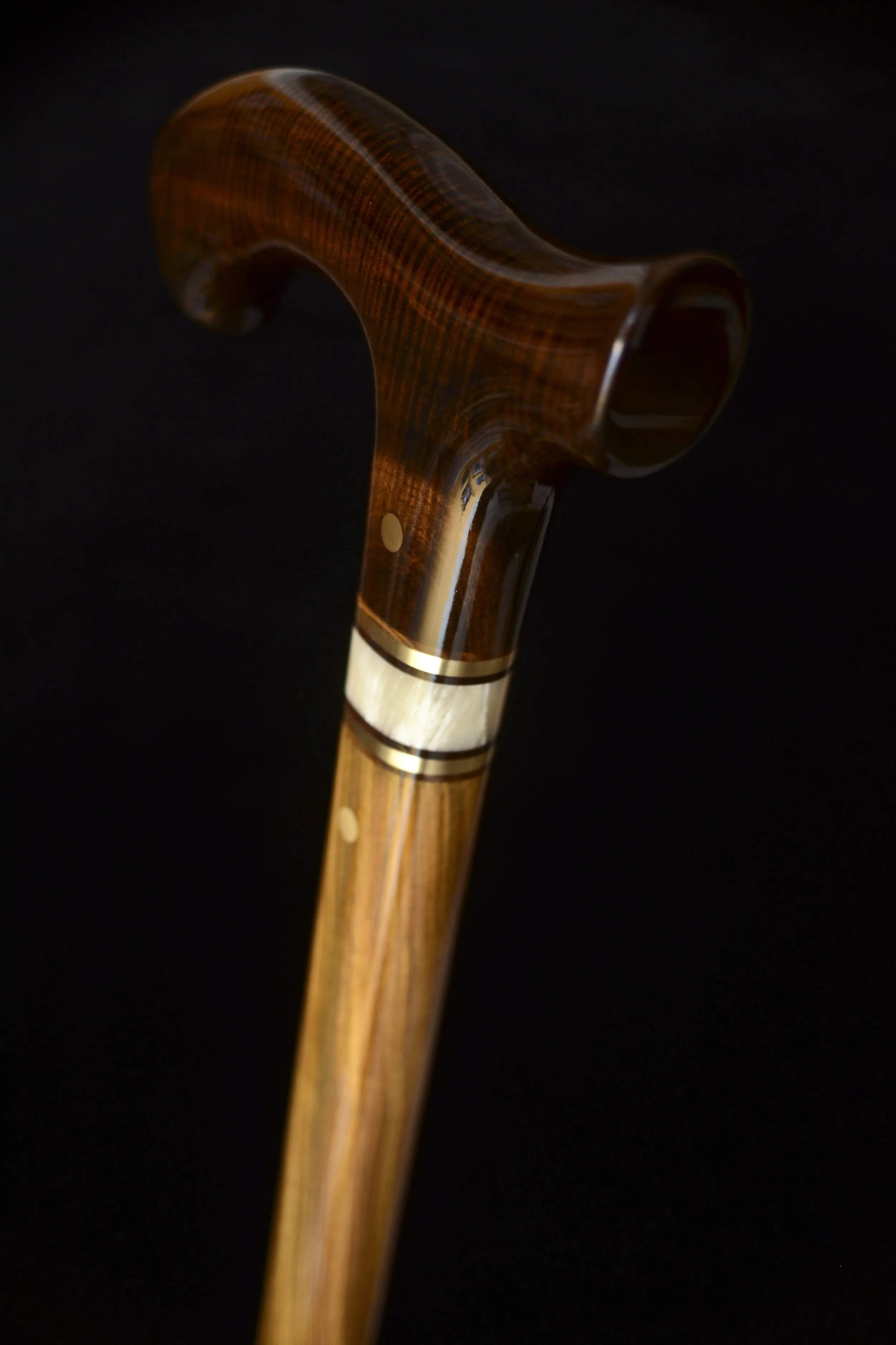
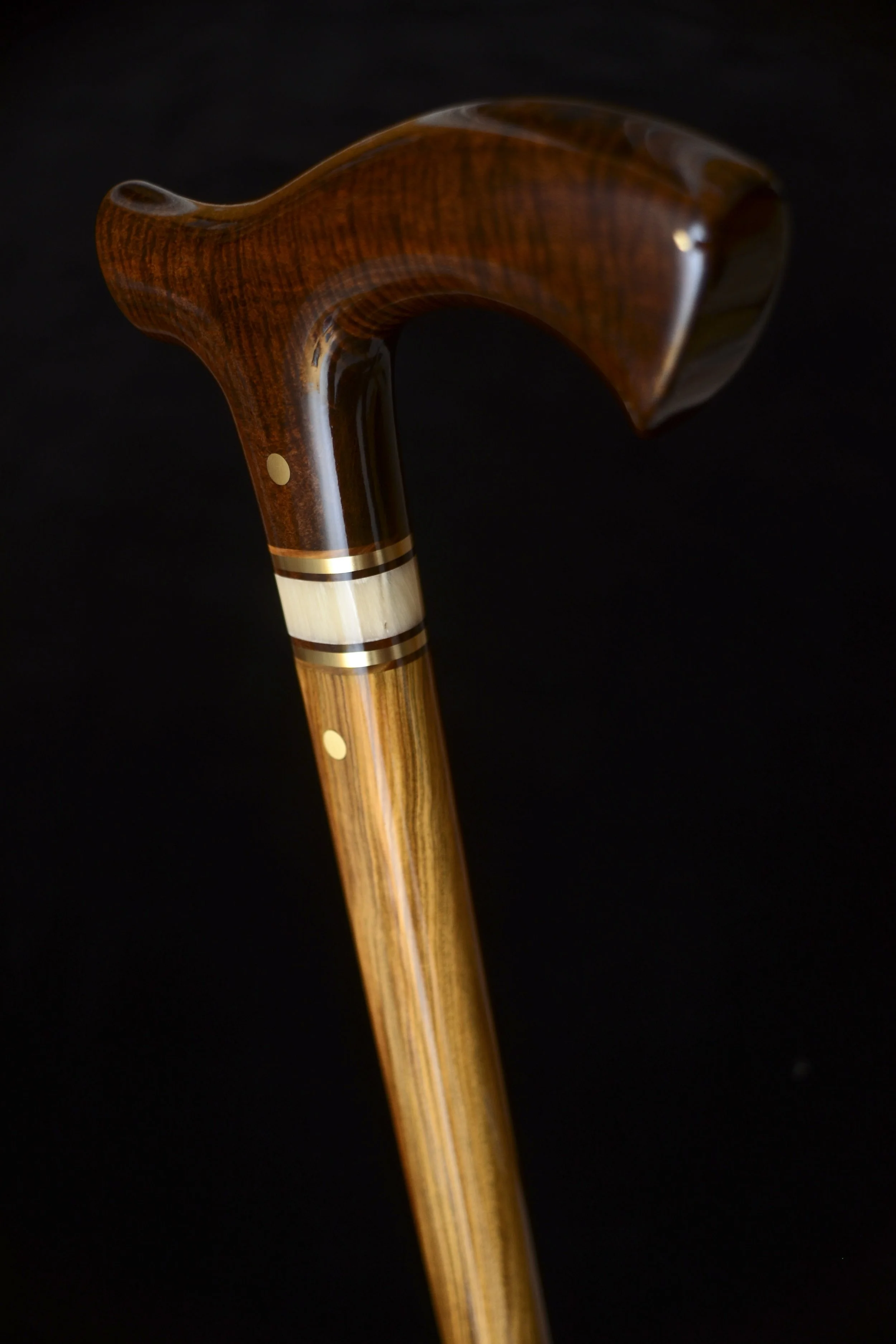
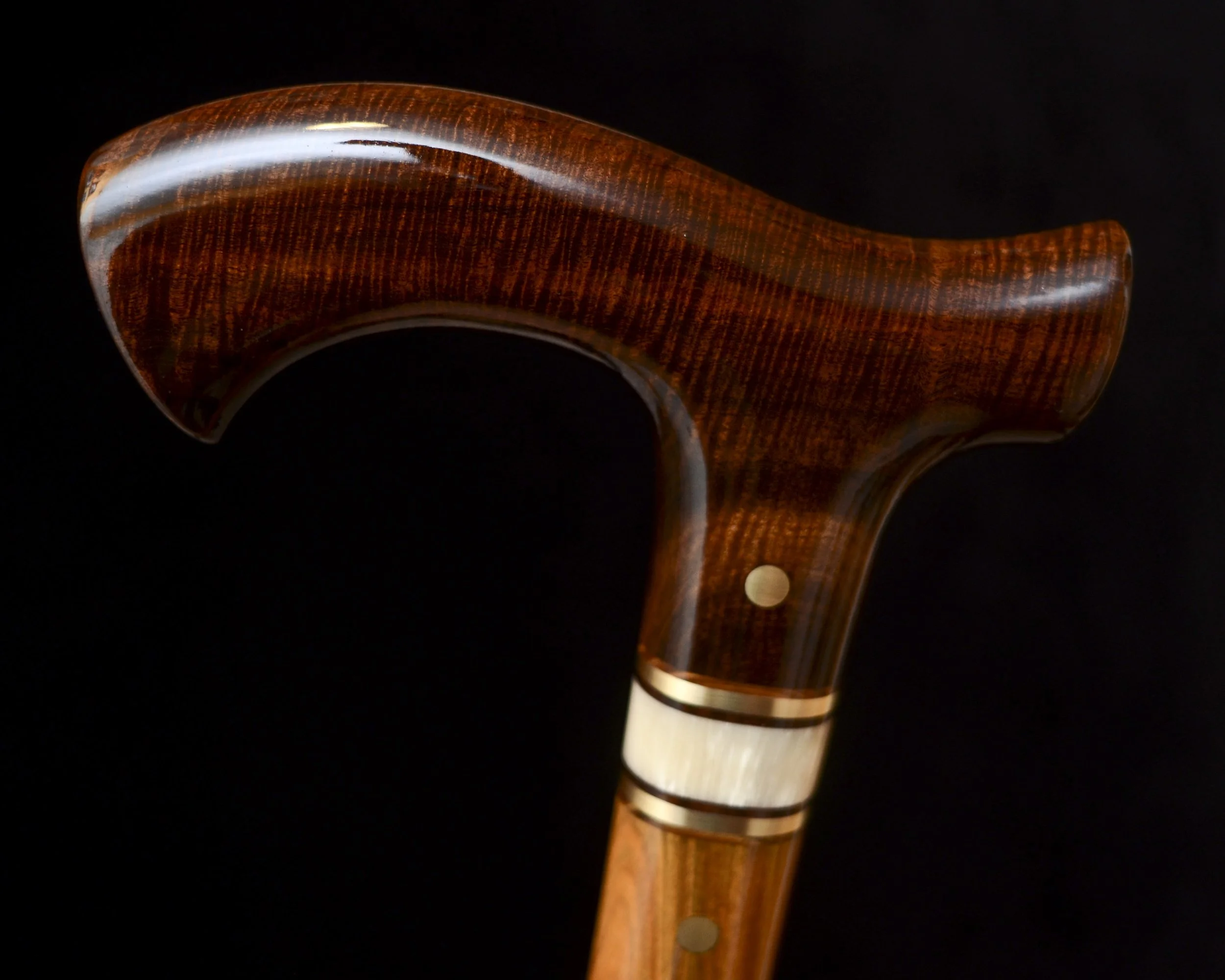
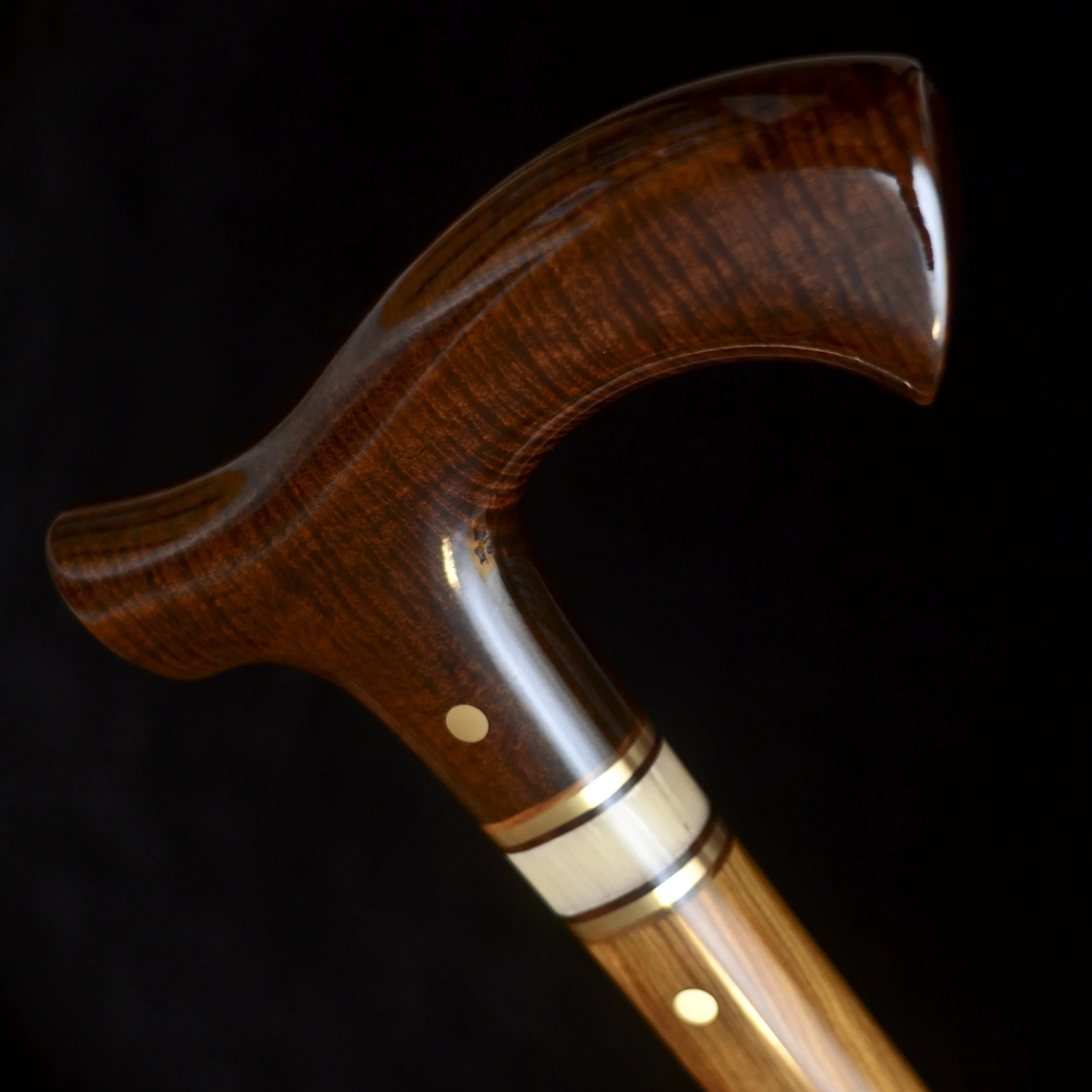
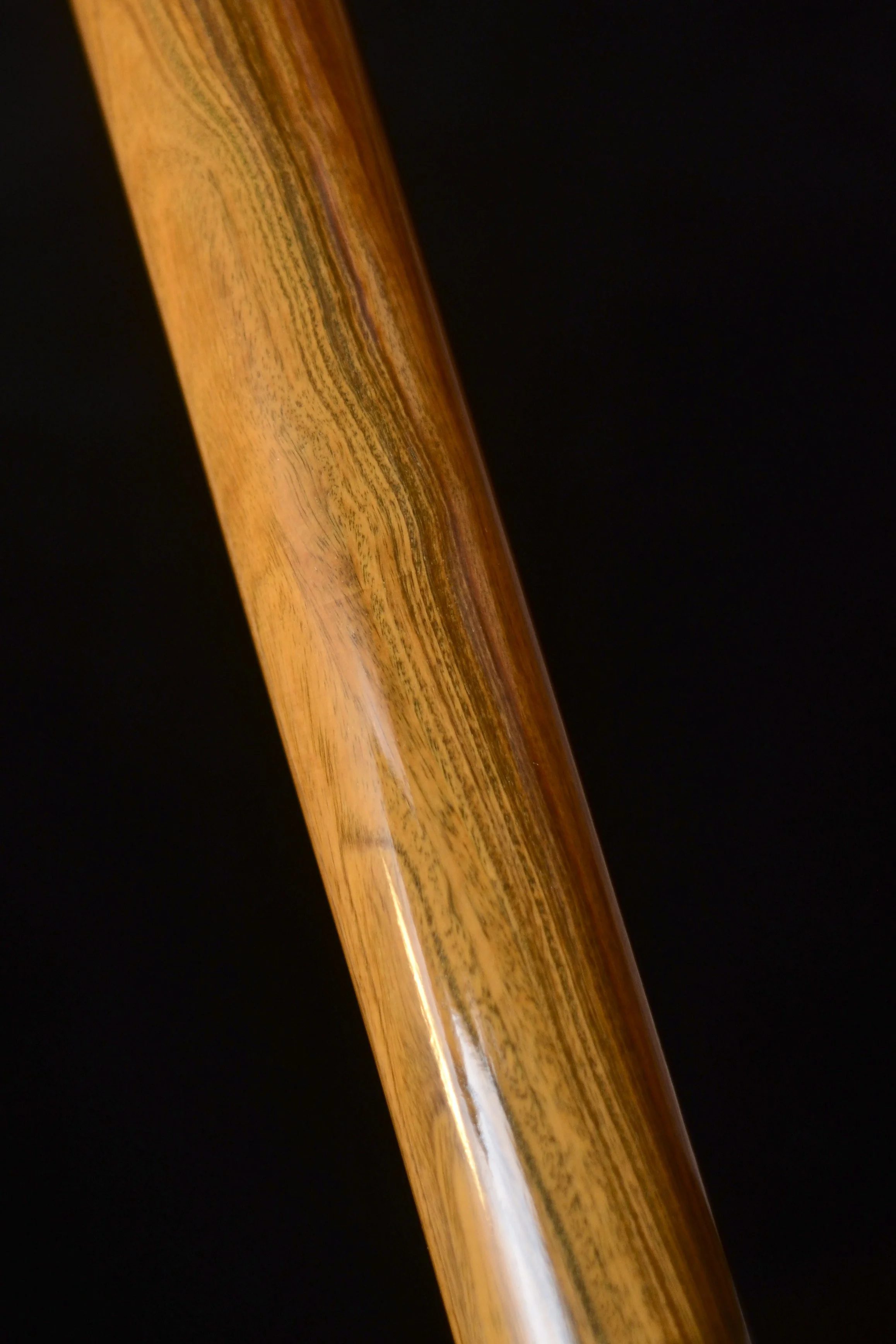
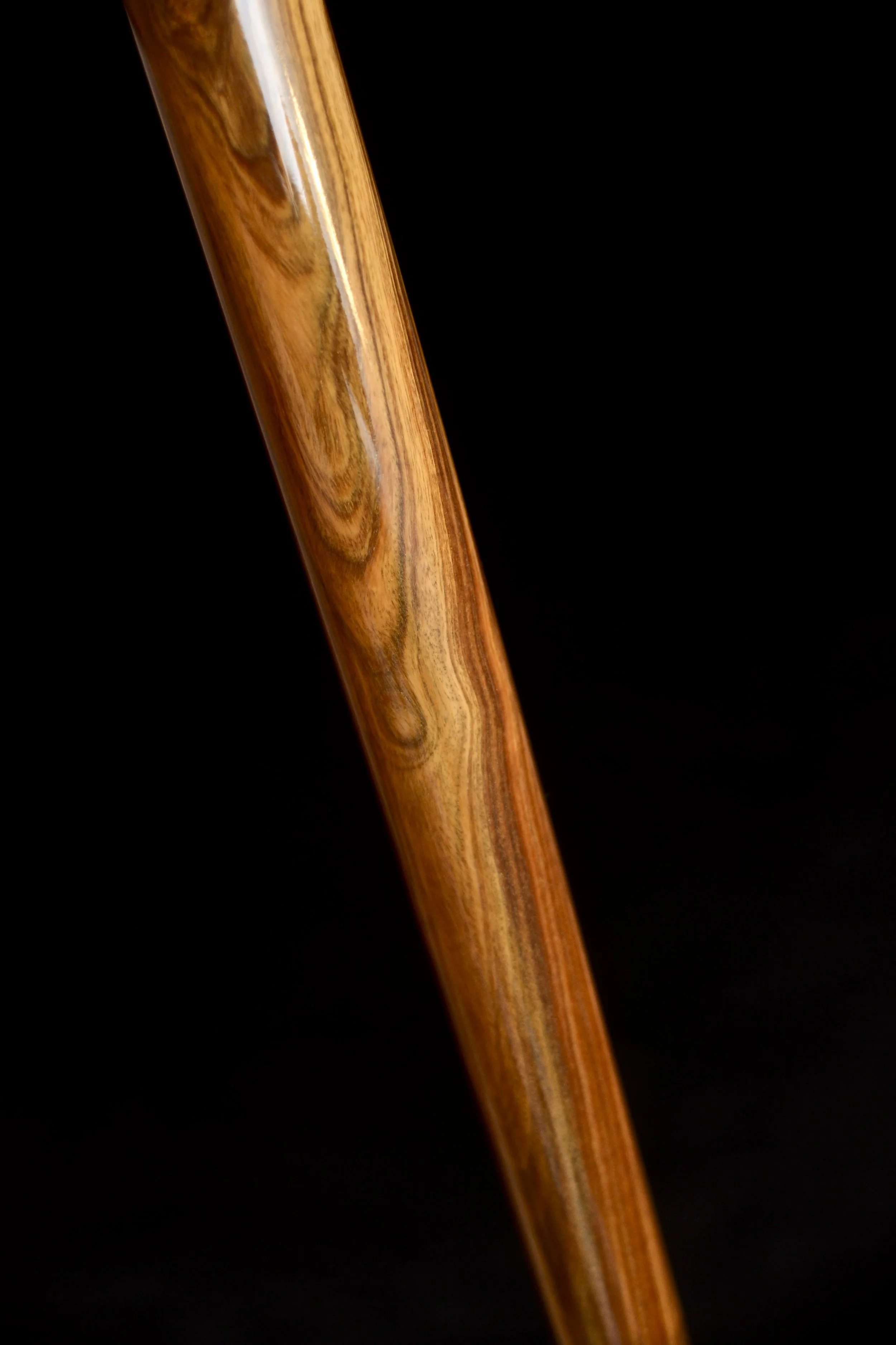
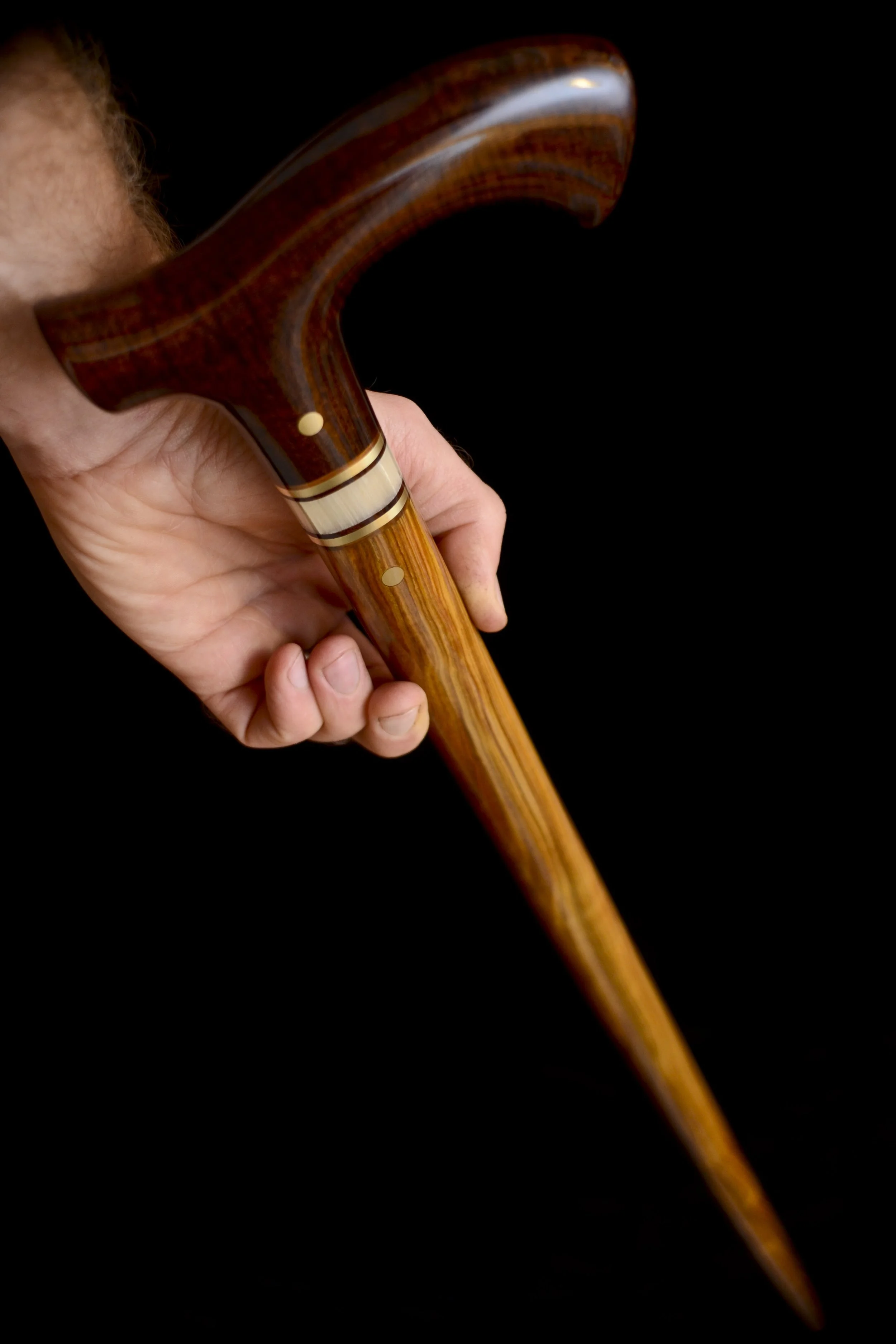
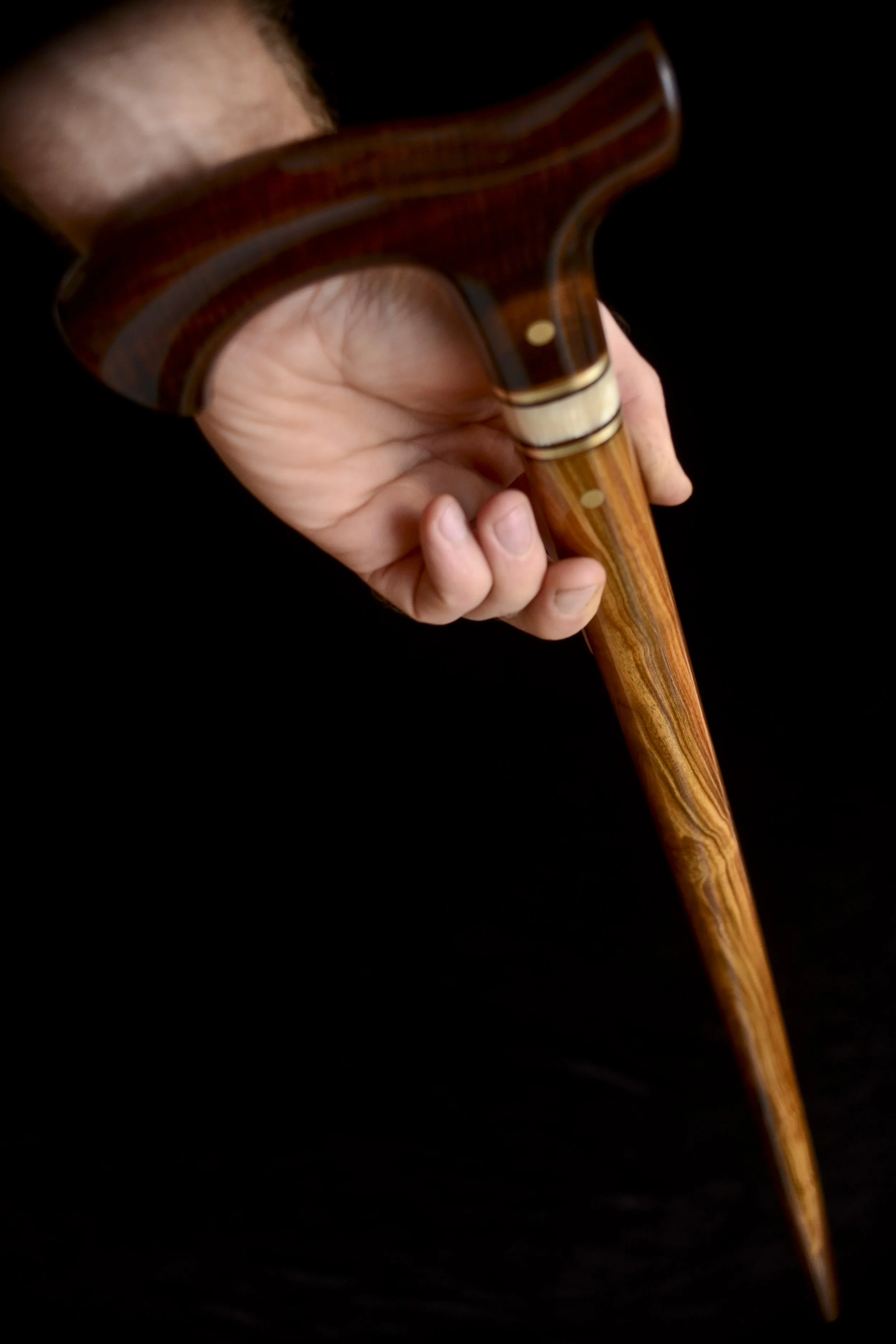
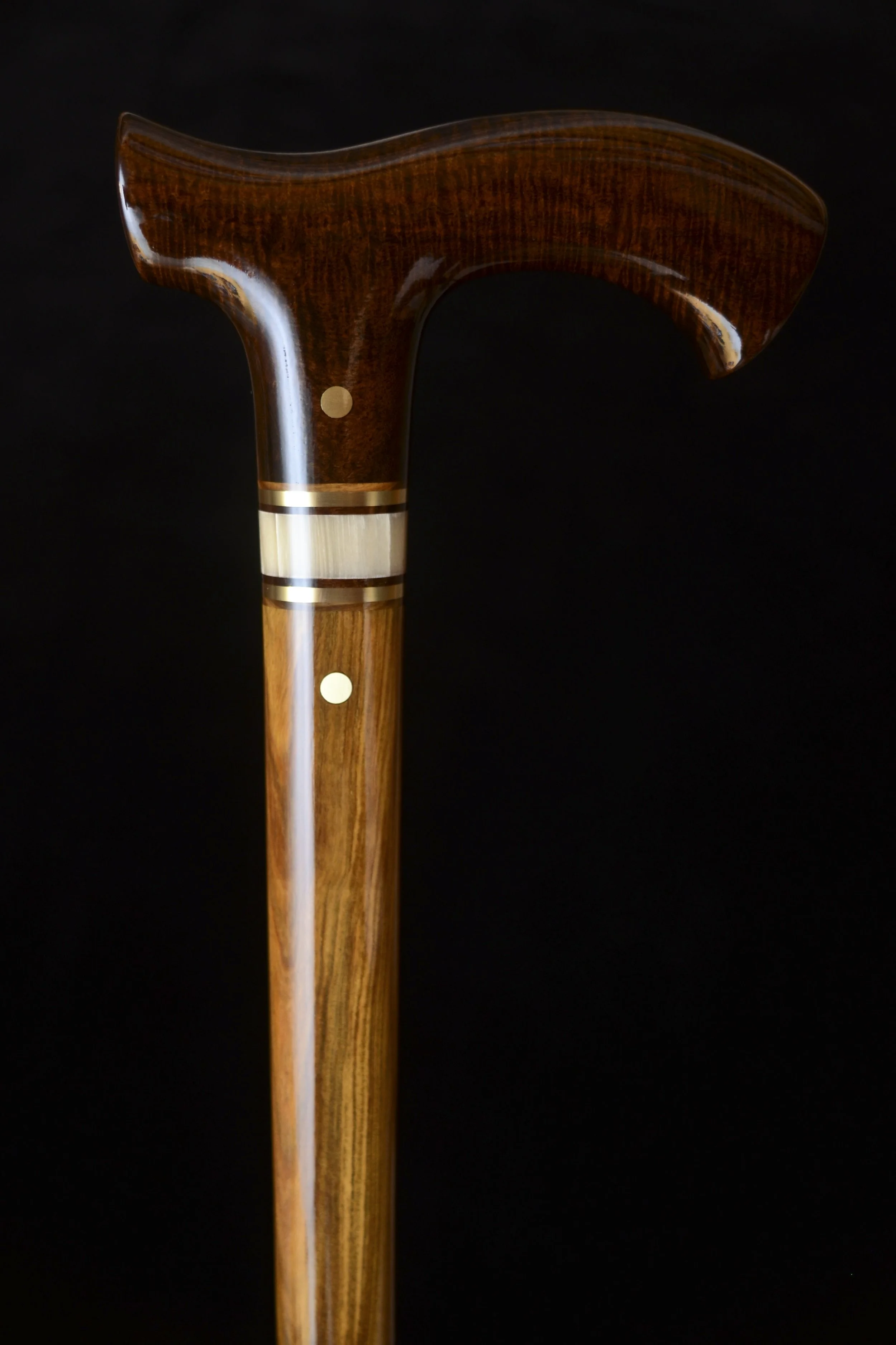
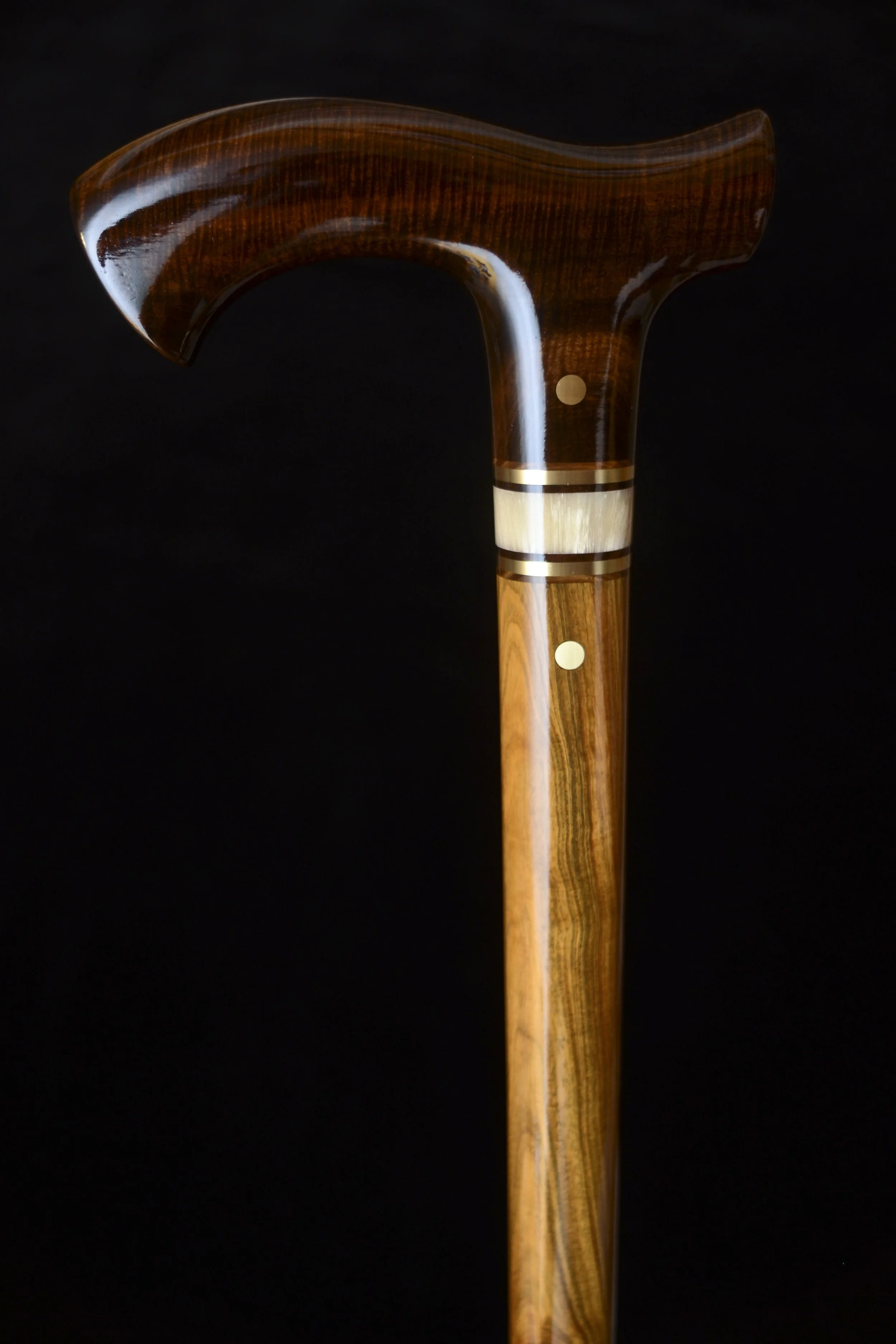
This heirloom quality cane is handmade using two wonderful examples of the densest woods in the world. Commonly regarded as the number 1 spot is Lignum Vitae, the densest wood in the whole world, which is the shaft of the cane. This slow growing, semi arid region tree from Central America is never too large so it is always a special pleasure to be able to offer cane shafts out of lignum wood - I have only done a handful of them in my career. Lignum had been in such high demand for centuries that is now a highly protected species and its wood is very rare and when found is very old. It’s grain is attractive and presents with various orange, yellow and green hues.
The handle is another stand-out piece, its Gidgee wood, an arid region acacia species from Australia with extremely fine curl figure dominating its appearance. Curl figure this fine is as good as it comes. This wood is basically tied with lignum’s density! Another profoundly dense and heavy wood, dark and beautiful as well with a nice chatoyance.
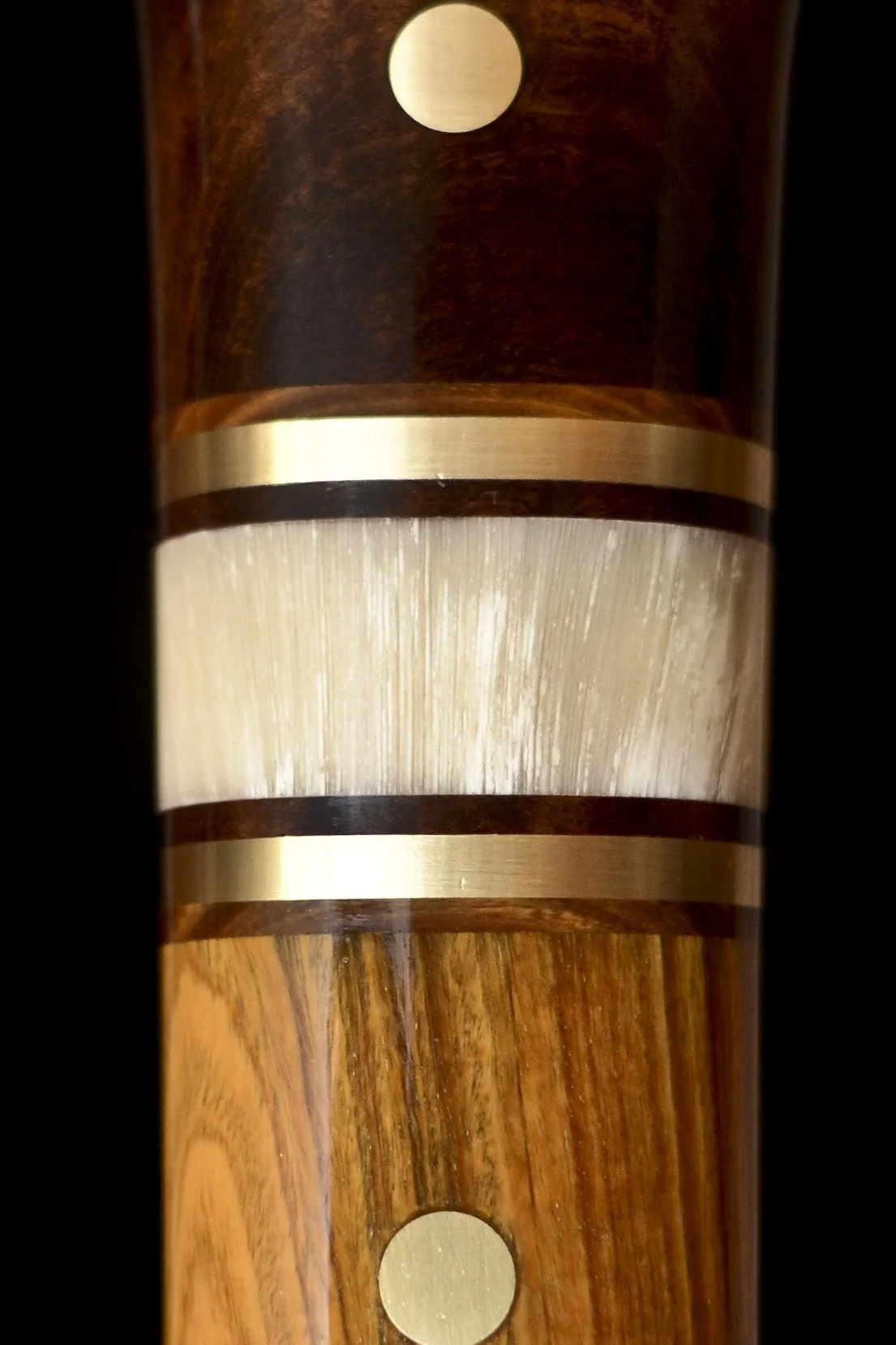
The divider is unique, its Alaskan muskox horn, which has a translucent surface and depth, it has brass layers above and below with thin lignum and gidgee. This is a heavy cane, it may even be surprising, when held, that a cane made out of wood can have such a respectable heft and not be massively chunky. Not recommended for users of small or frail stature, it may not be enjoyable to use. Total length measures 38” and can be shortened to fit.
Interesting fact, every tree species has a range of density to its wood that it is capable of producing, many factors influence the growth of the tree. So for example its very possible to have a handful of other species produce a denser wood than lignum, or not all lignum is the exact same density. That being said, its actually possible that in this cane the gidgee is denser than the lignum, since their possible ranges overlap. But, both were very challenging to work with as a woodworker and both super dense.
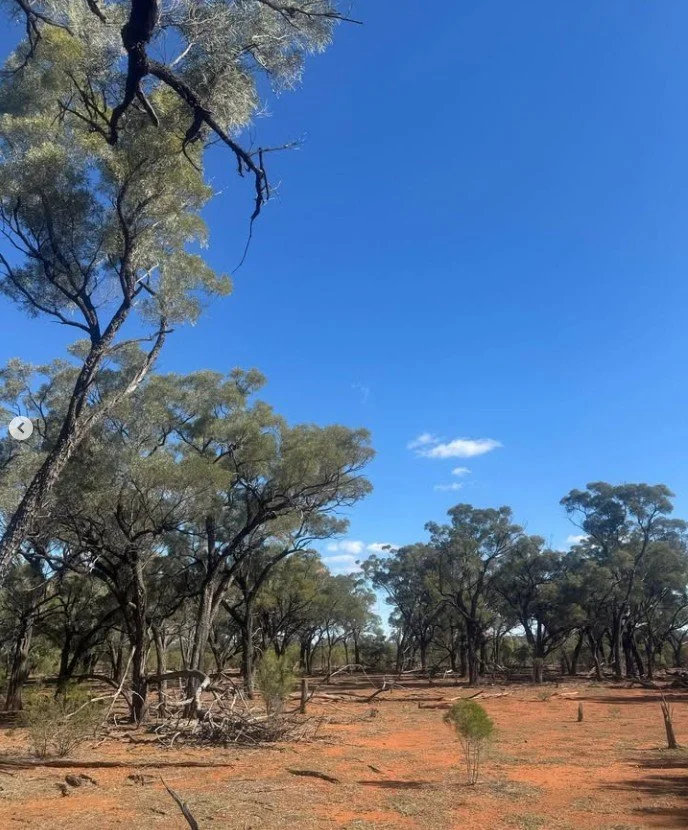
Last image is of a gidgee tree in its native habitat.
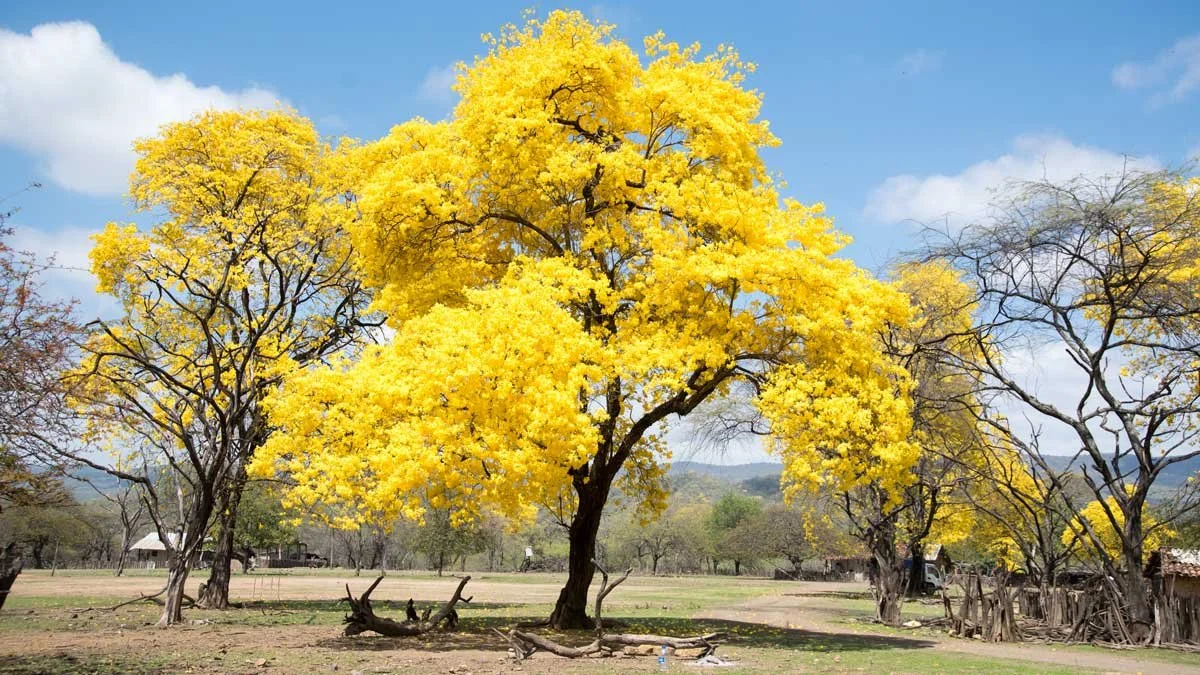
Second to last image is of a lignum tee in its native habitat.